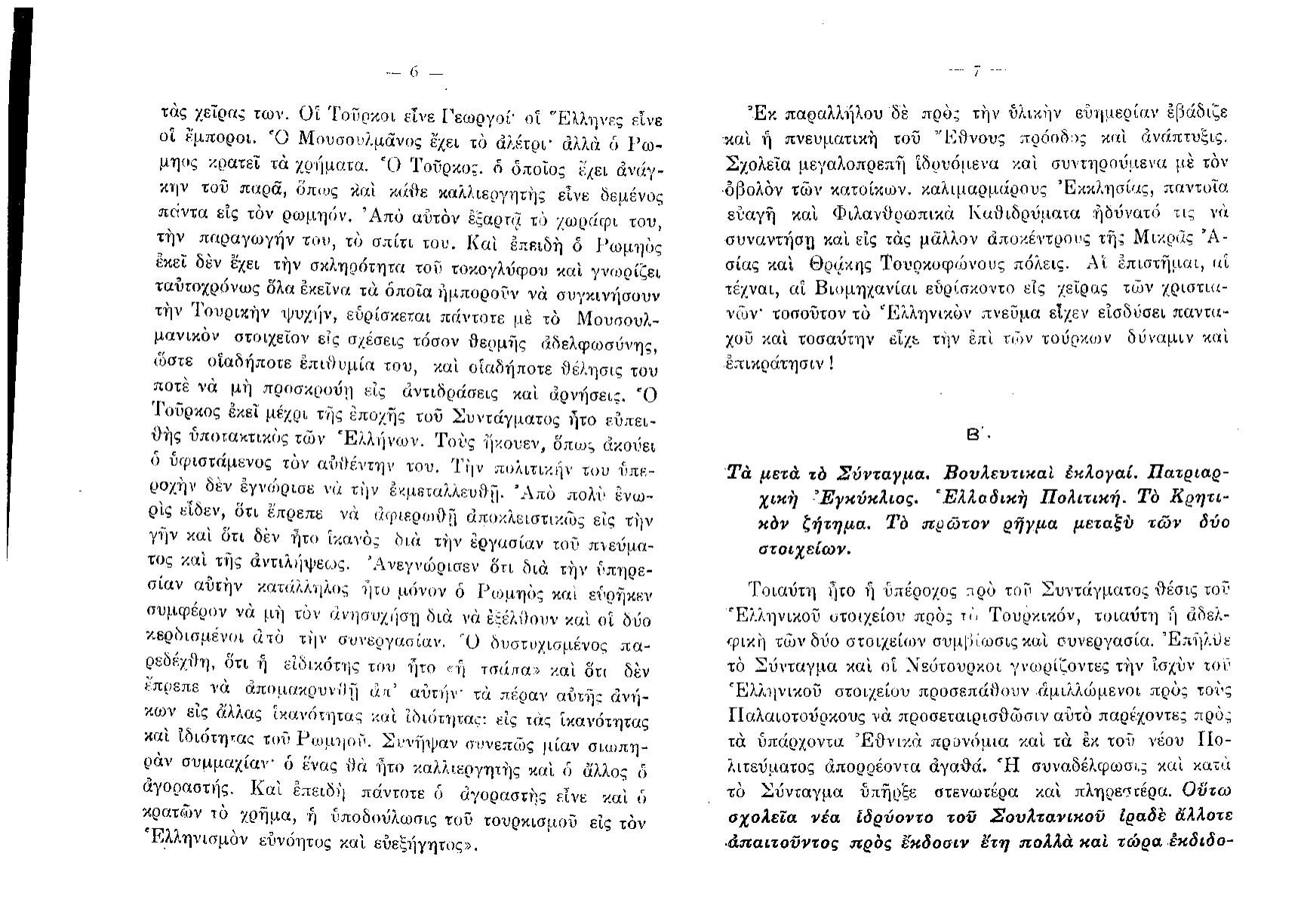
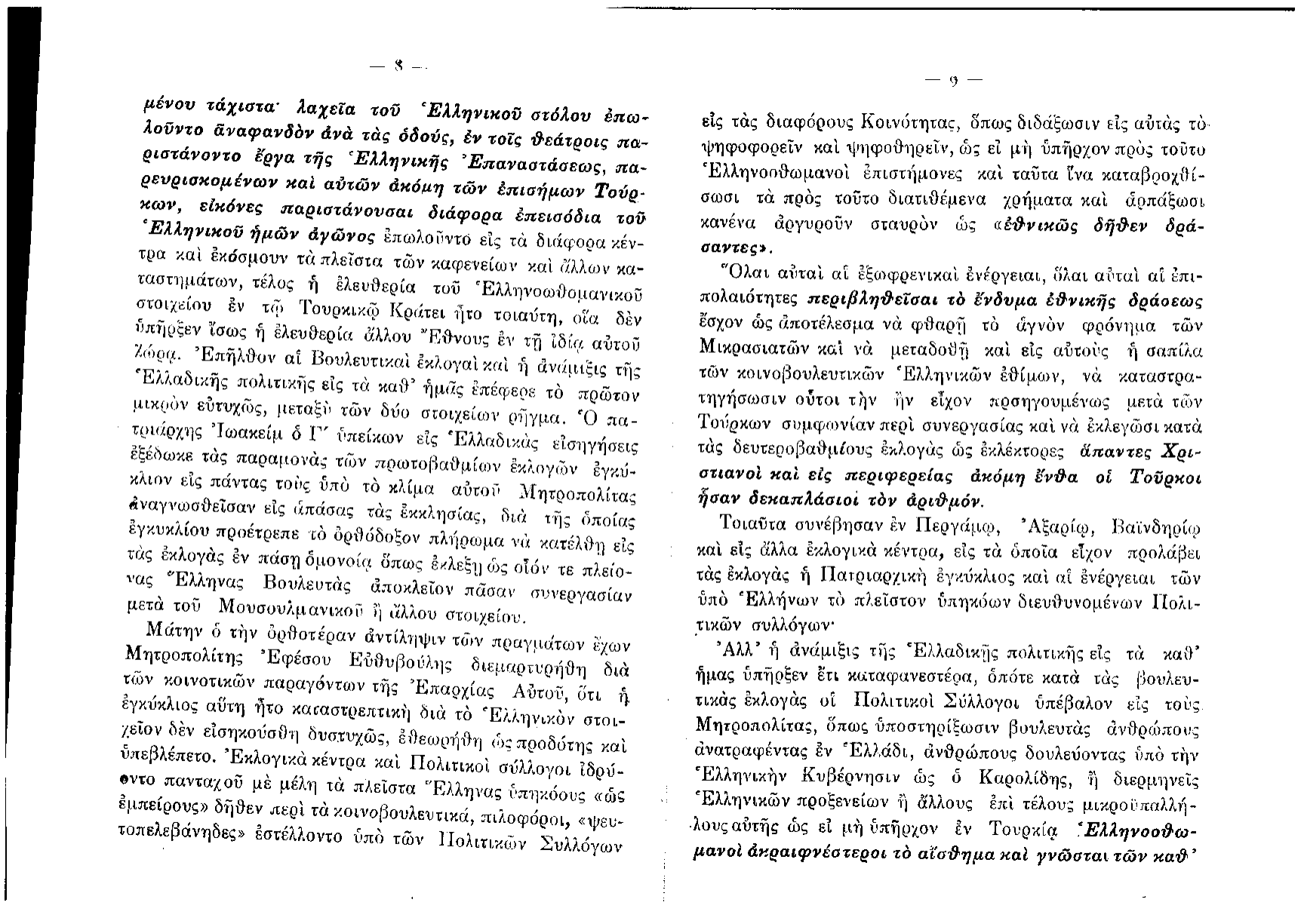
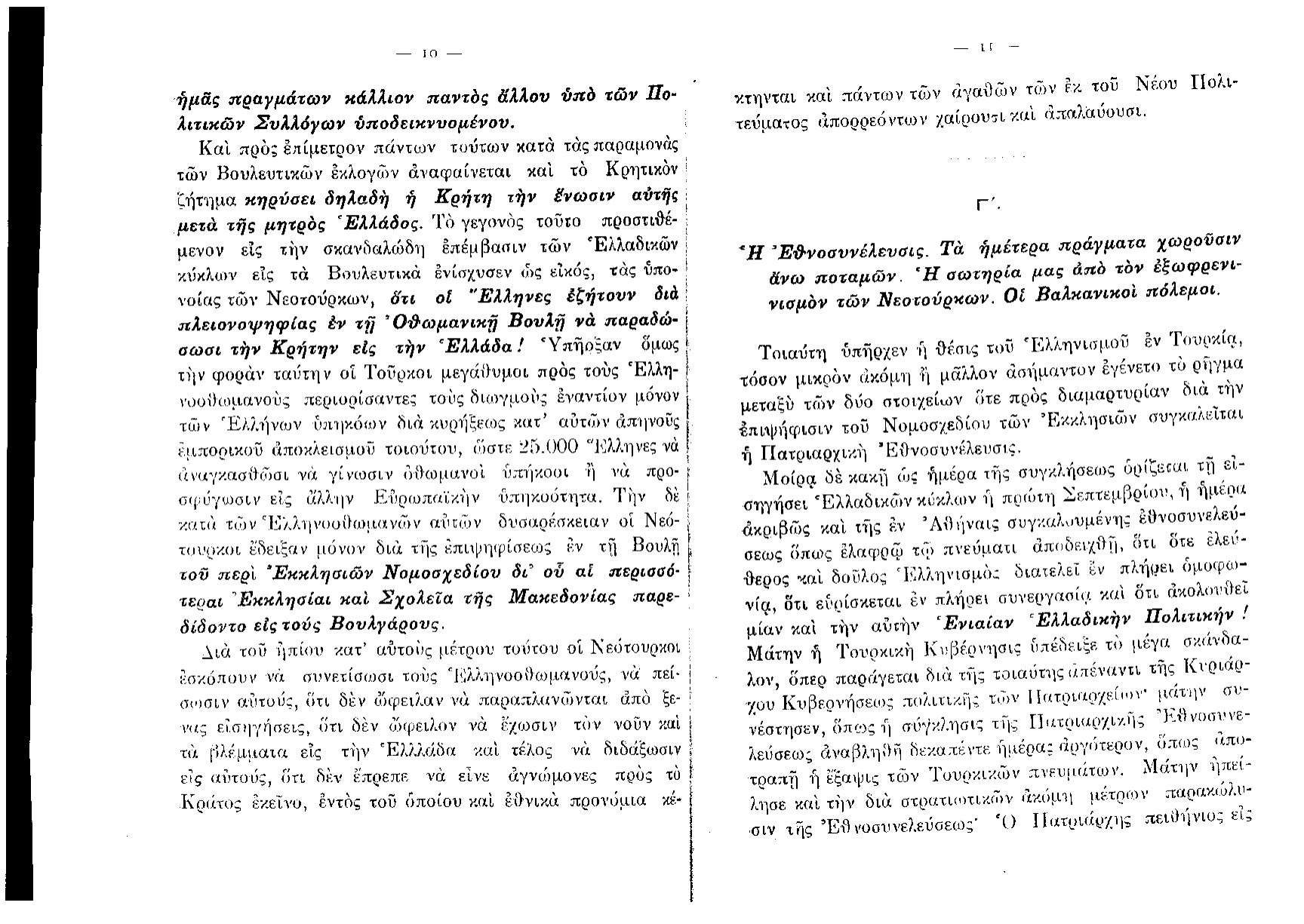
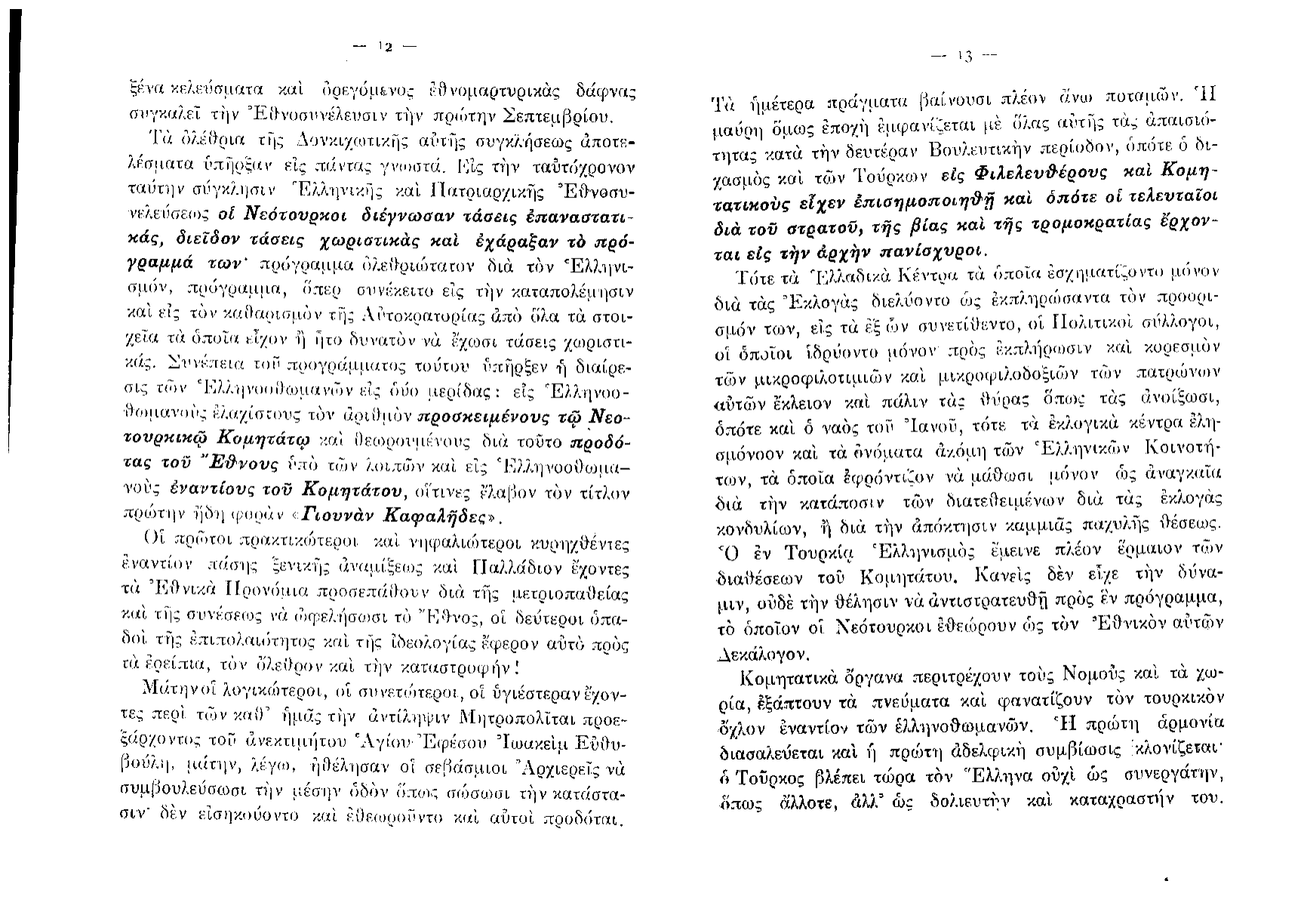
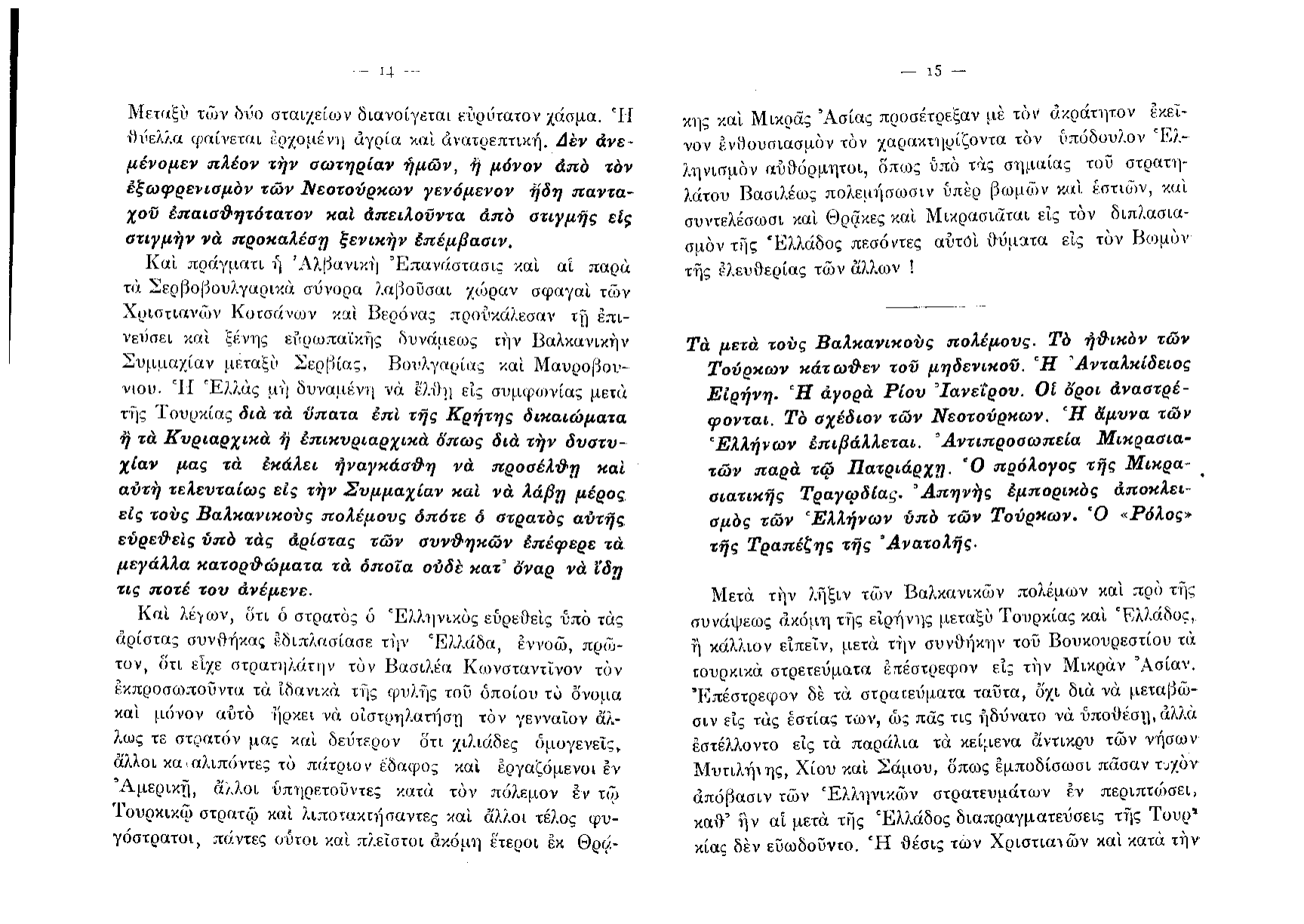
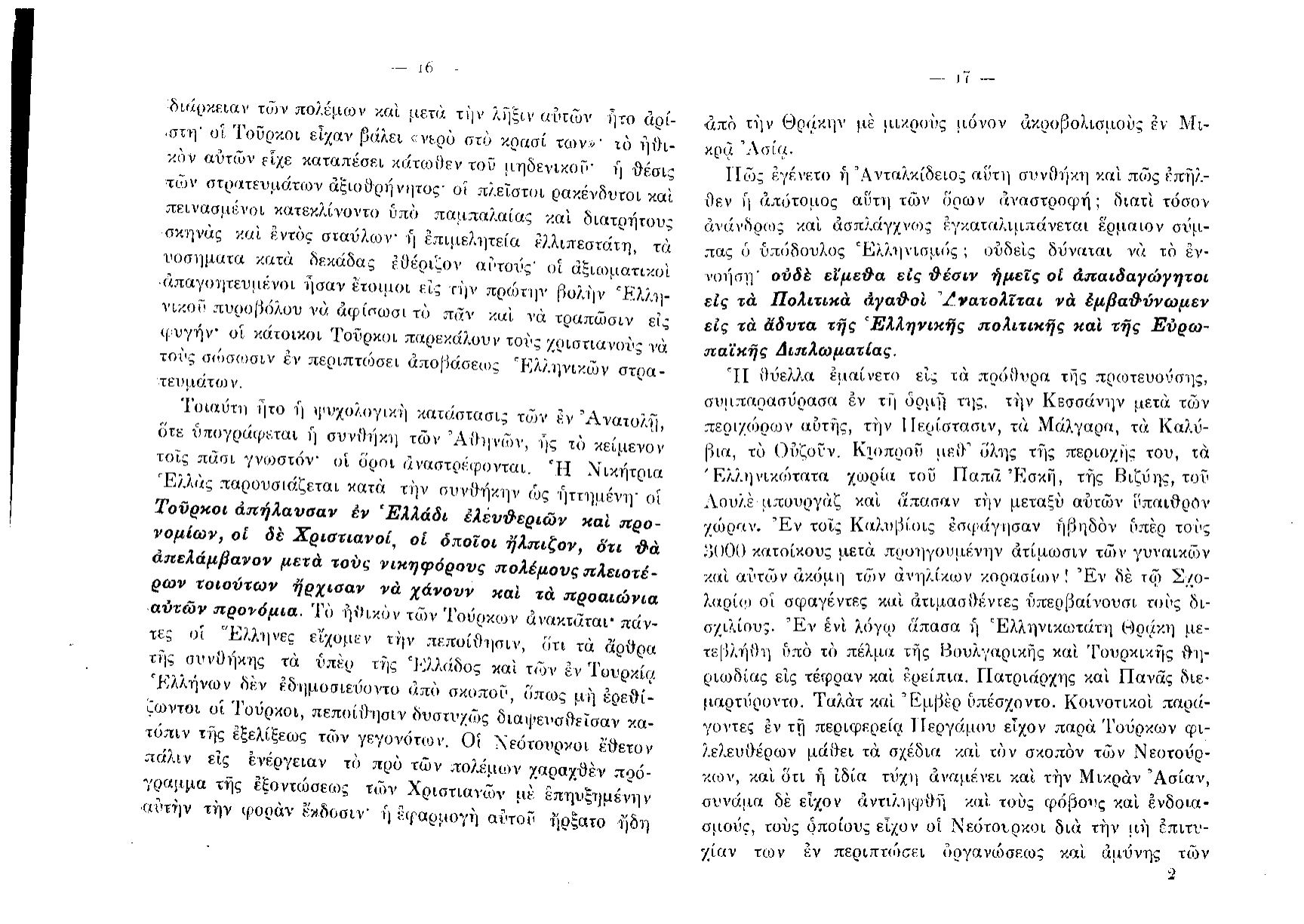
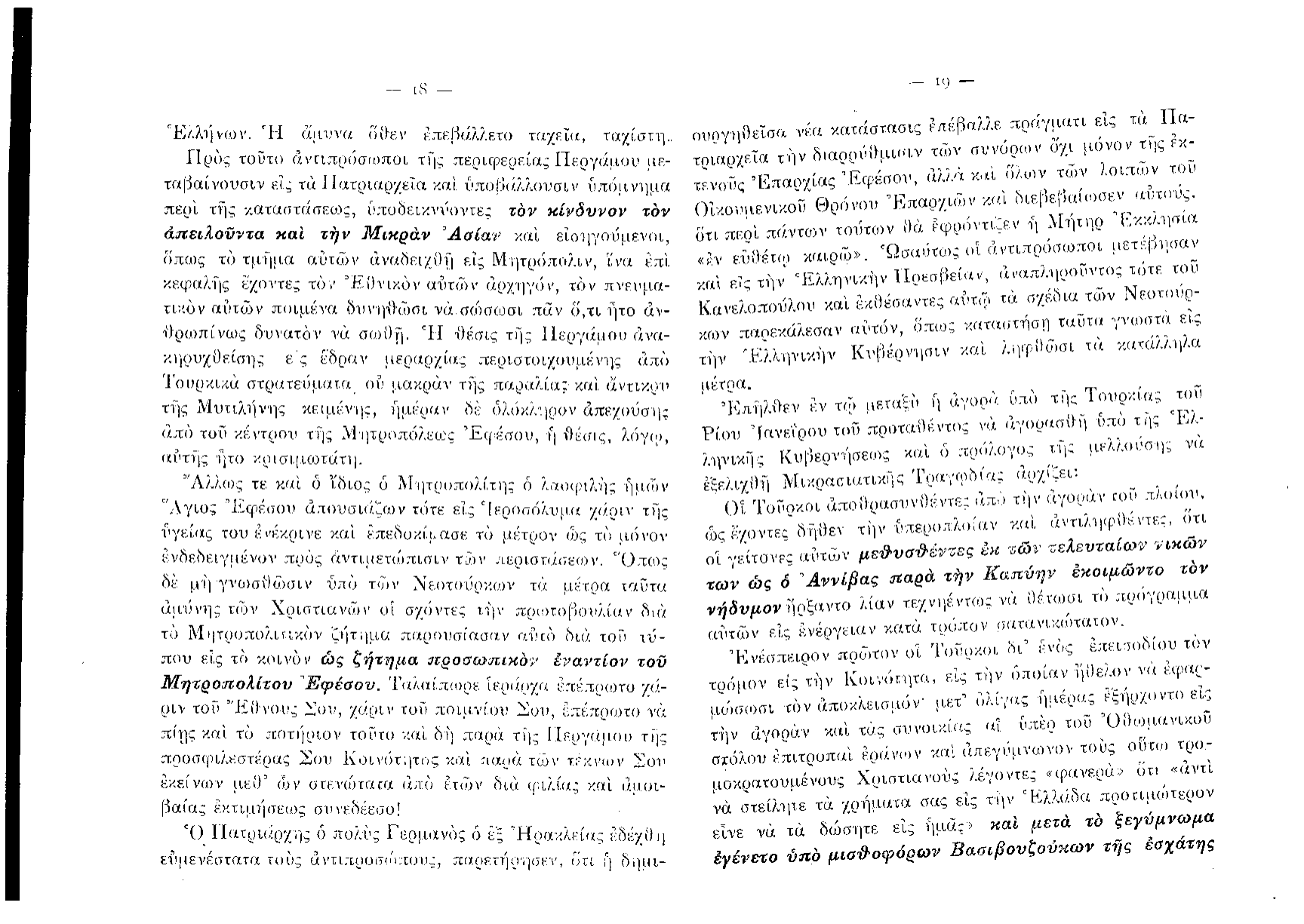
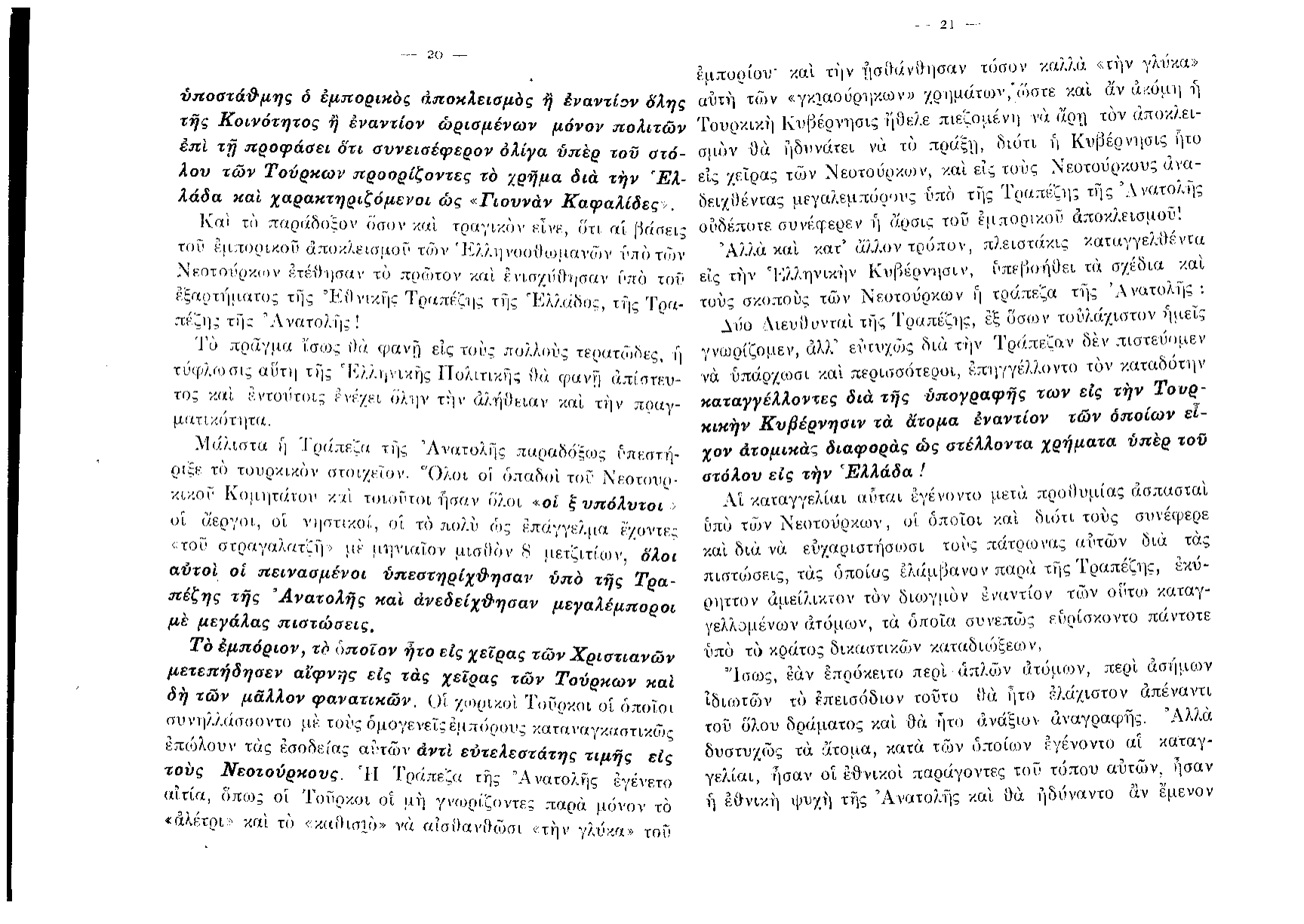
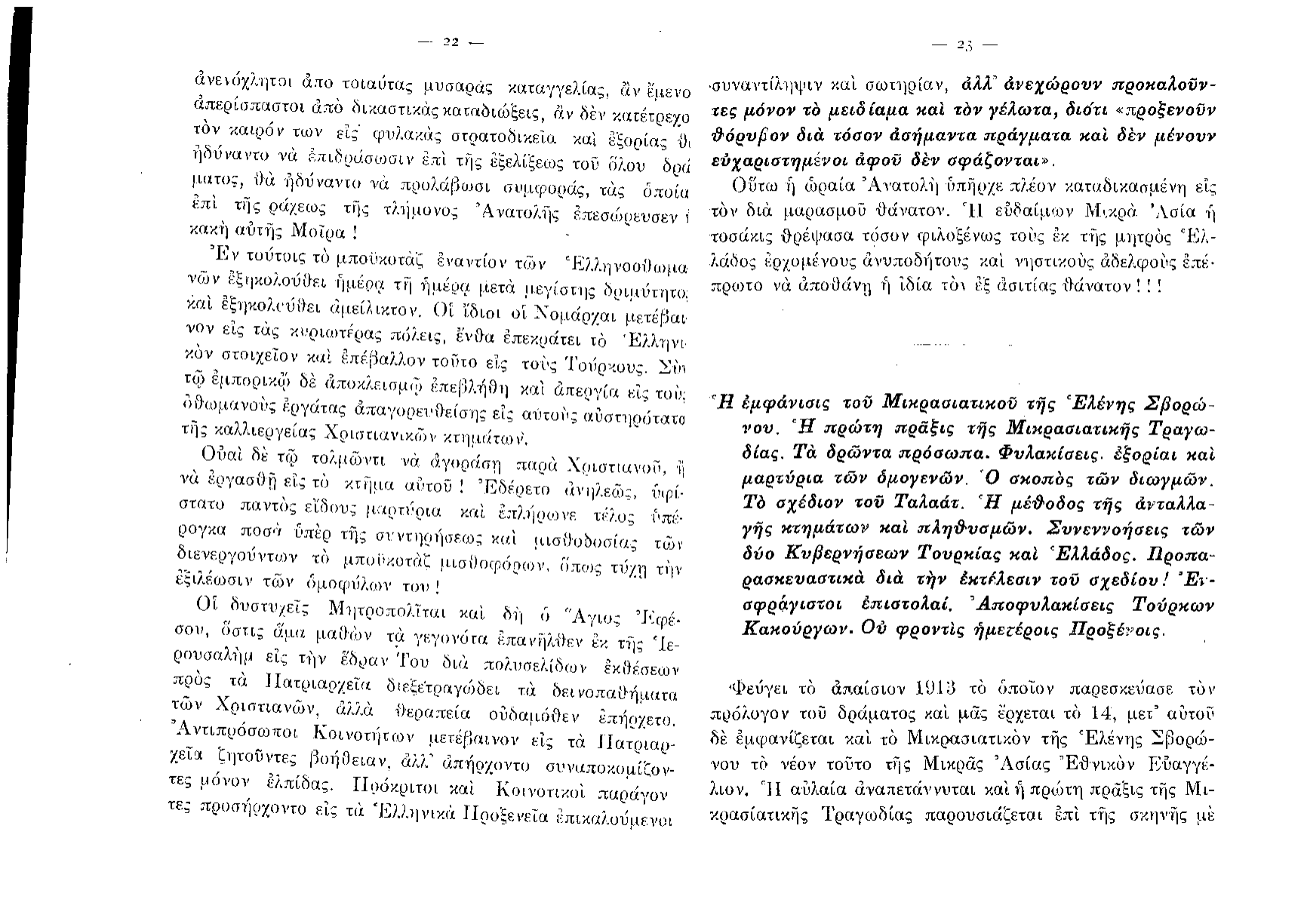
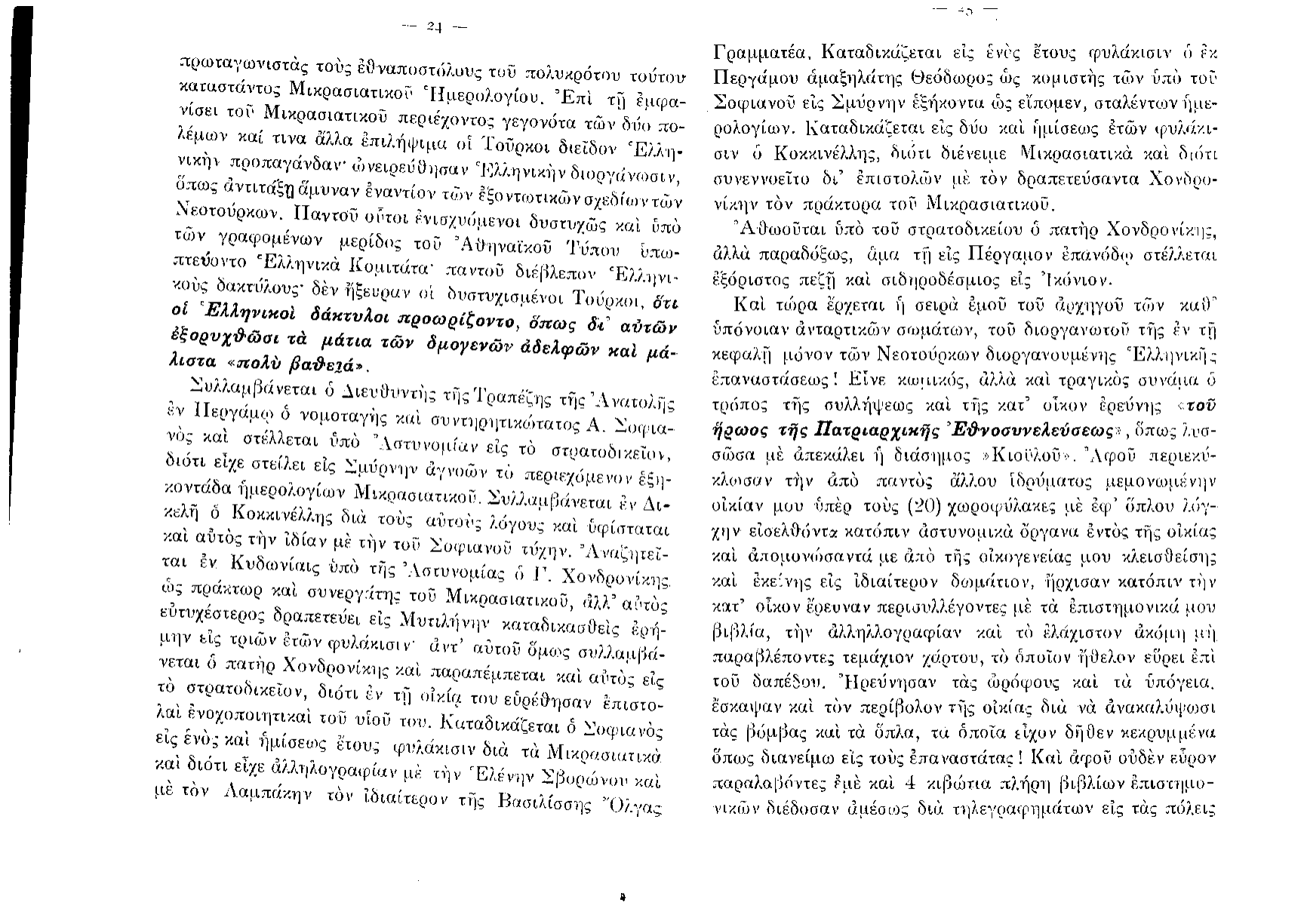
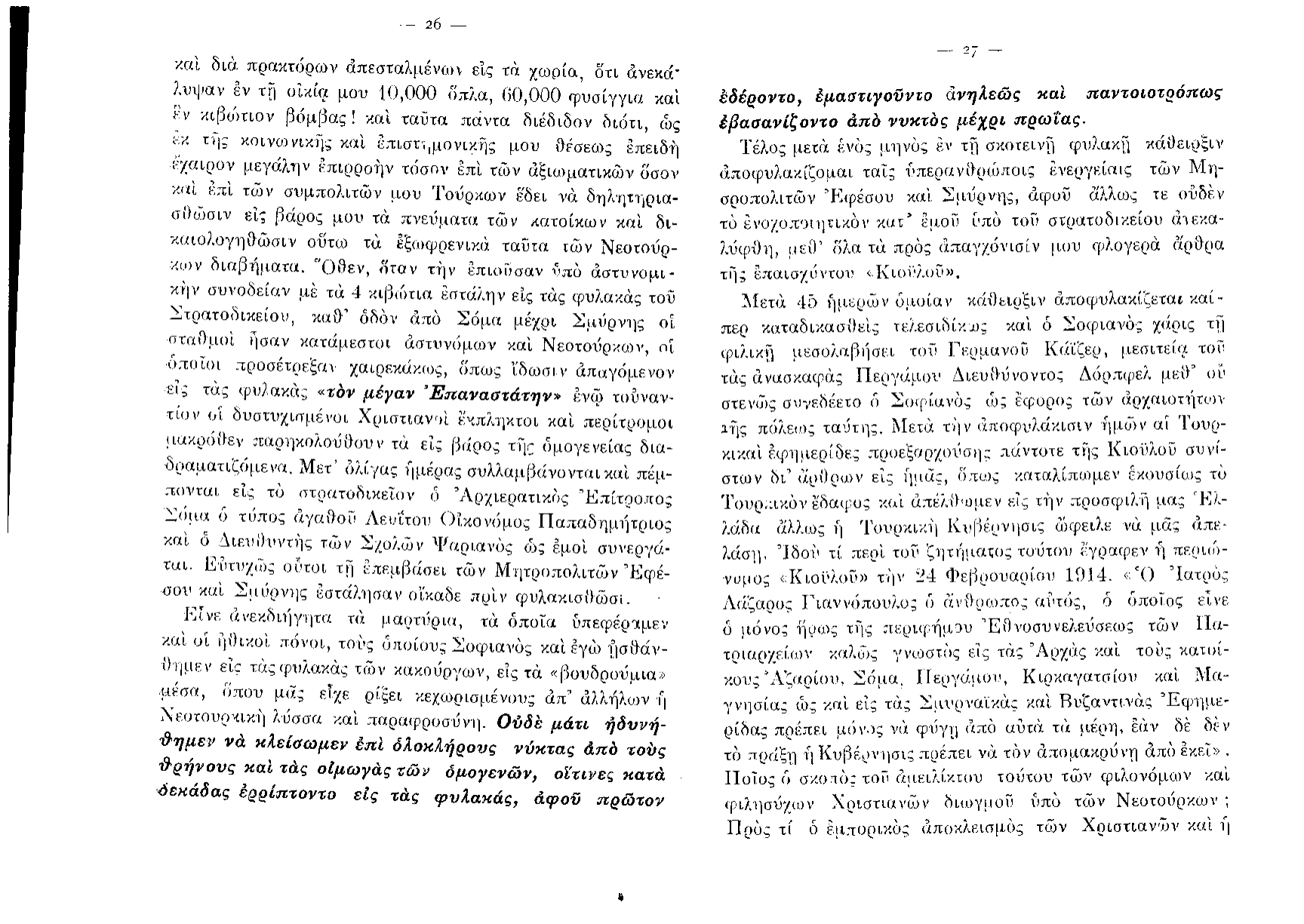
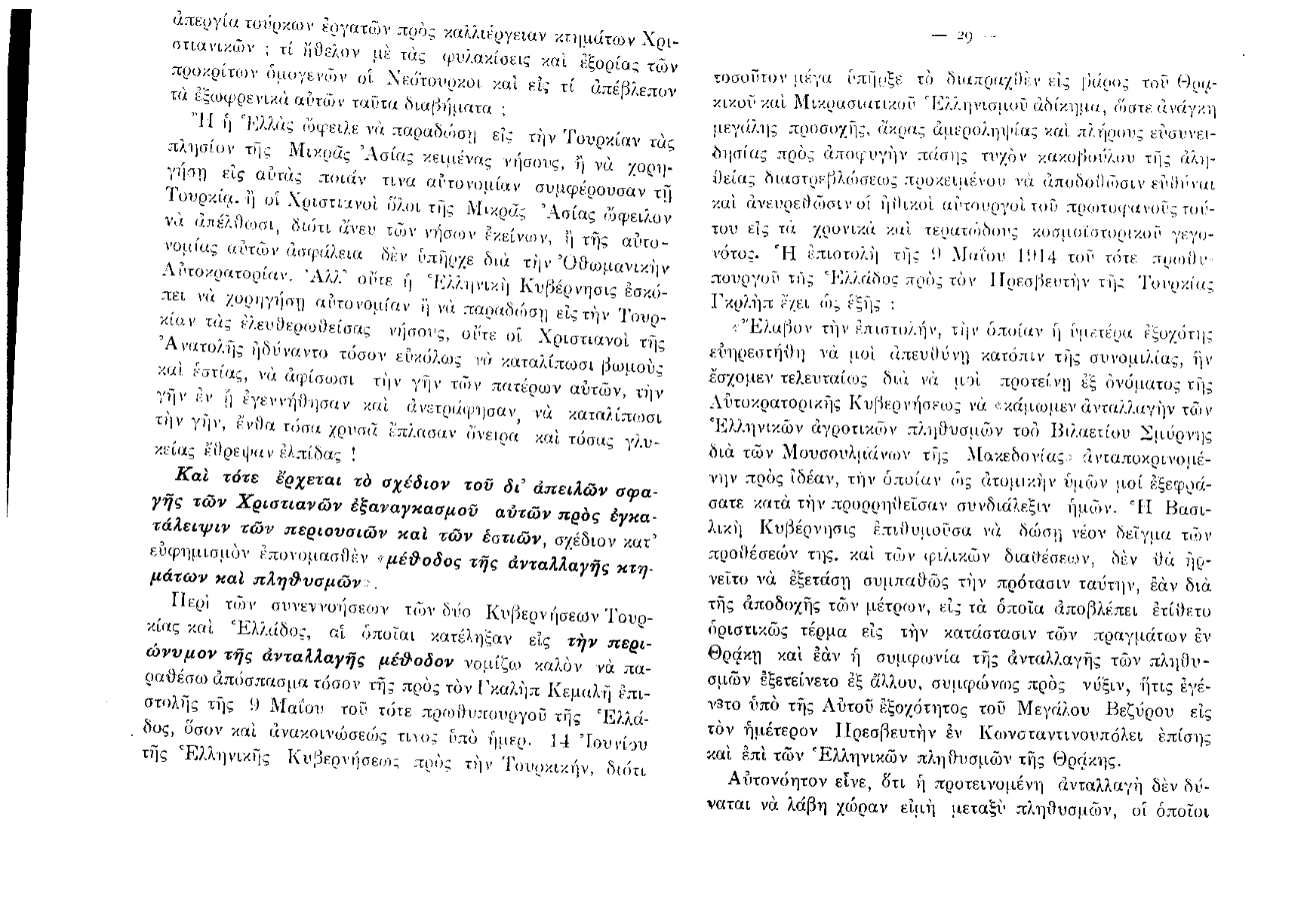
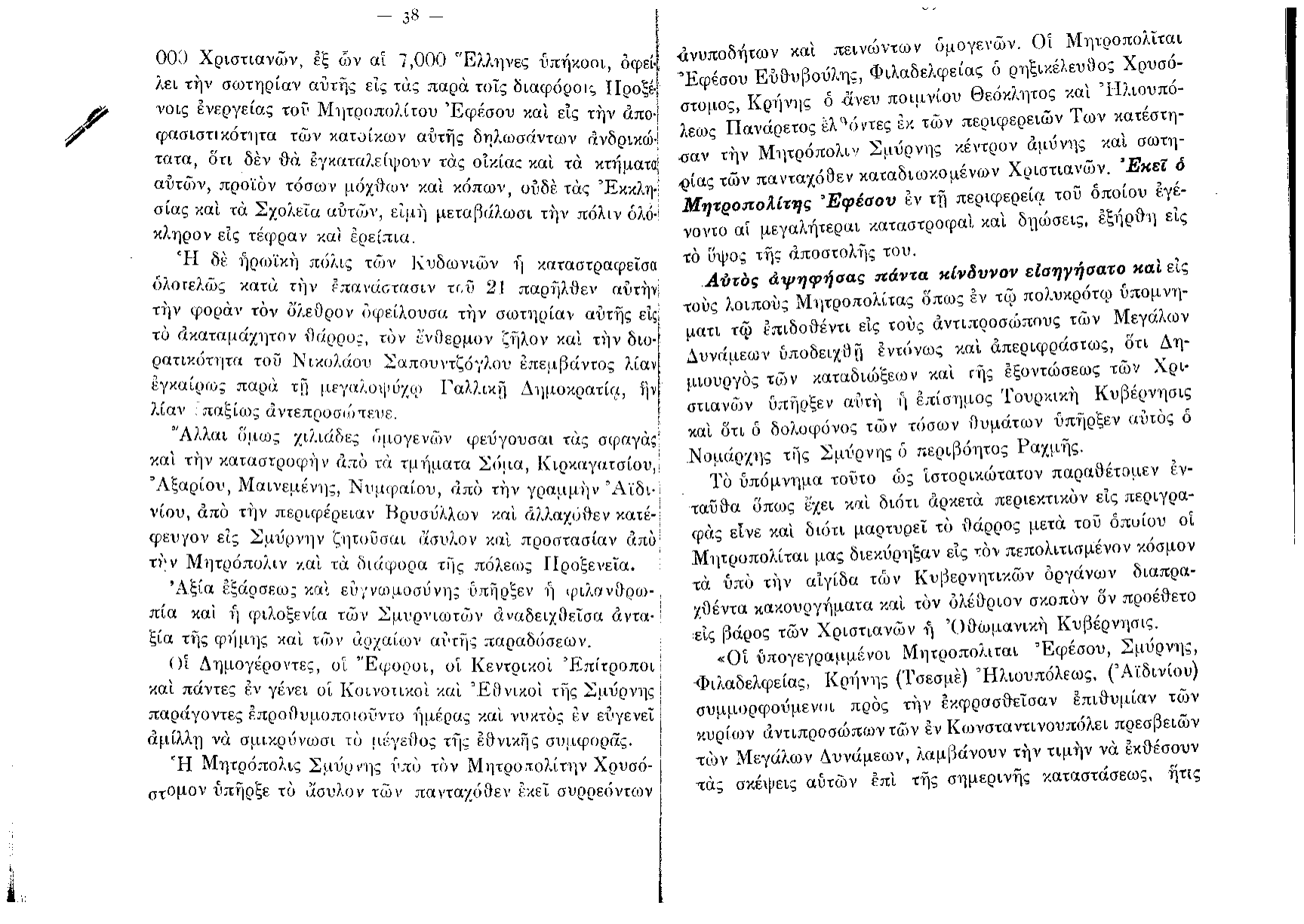
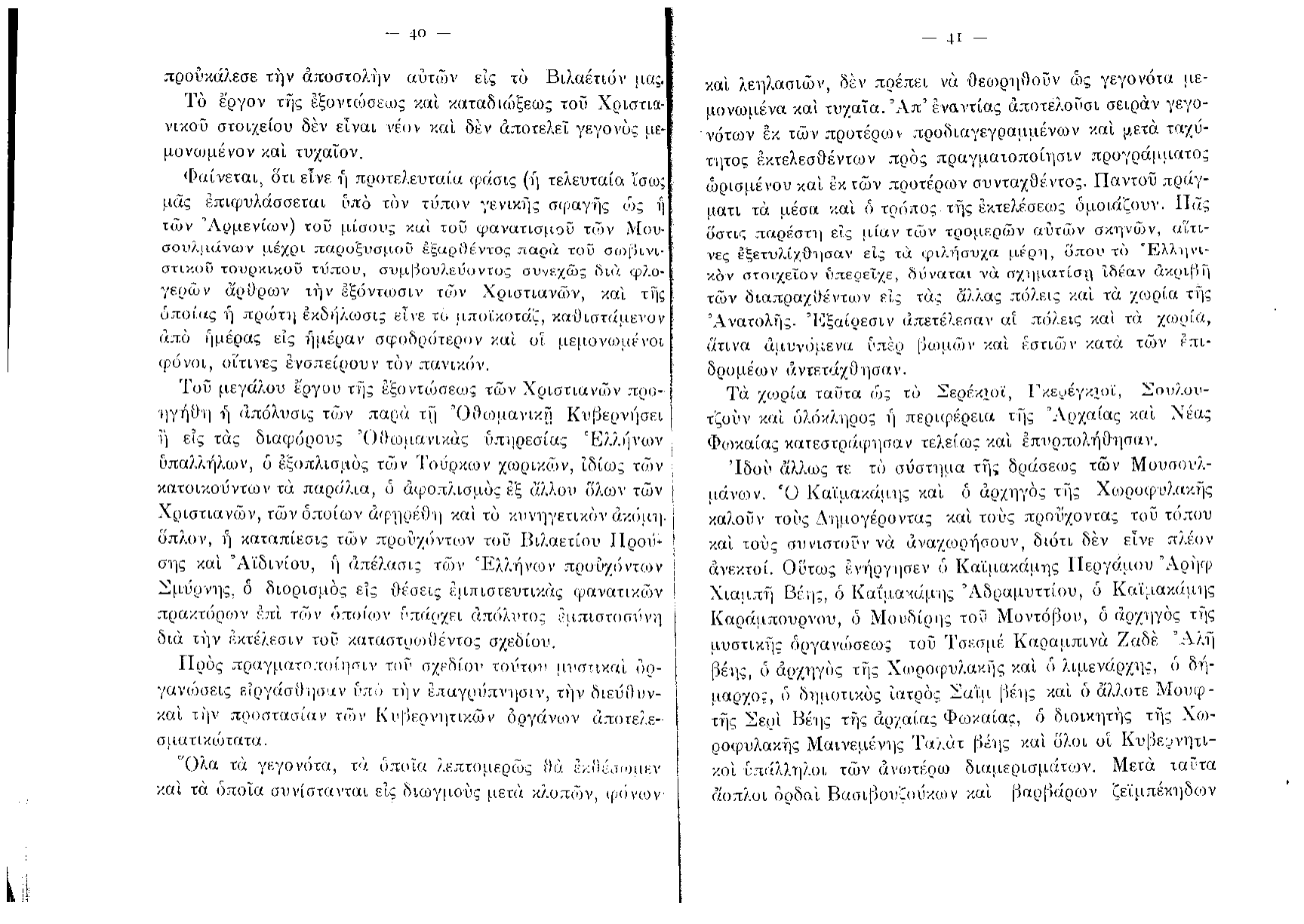
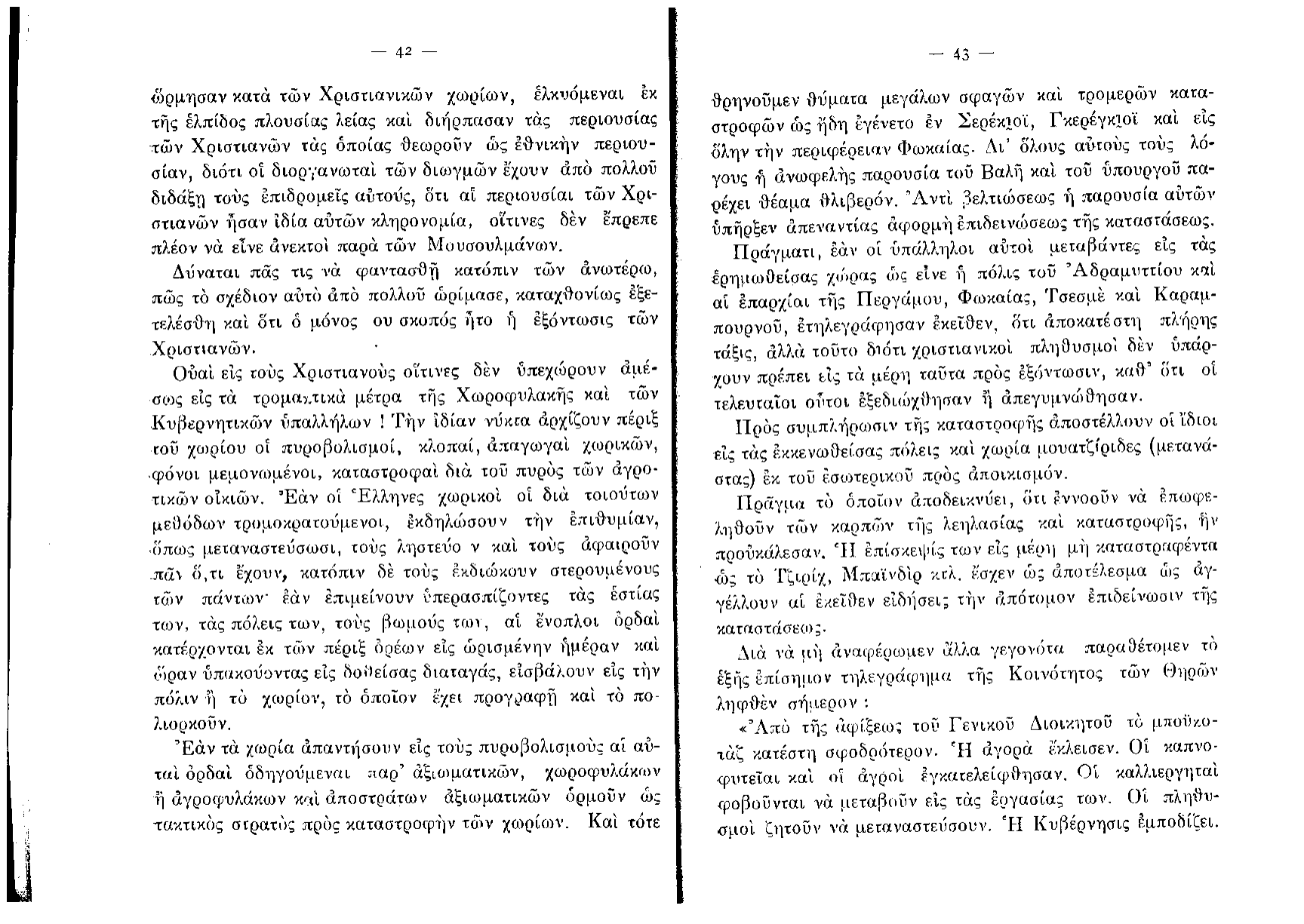
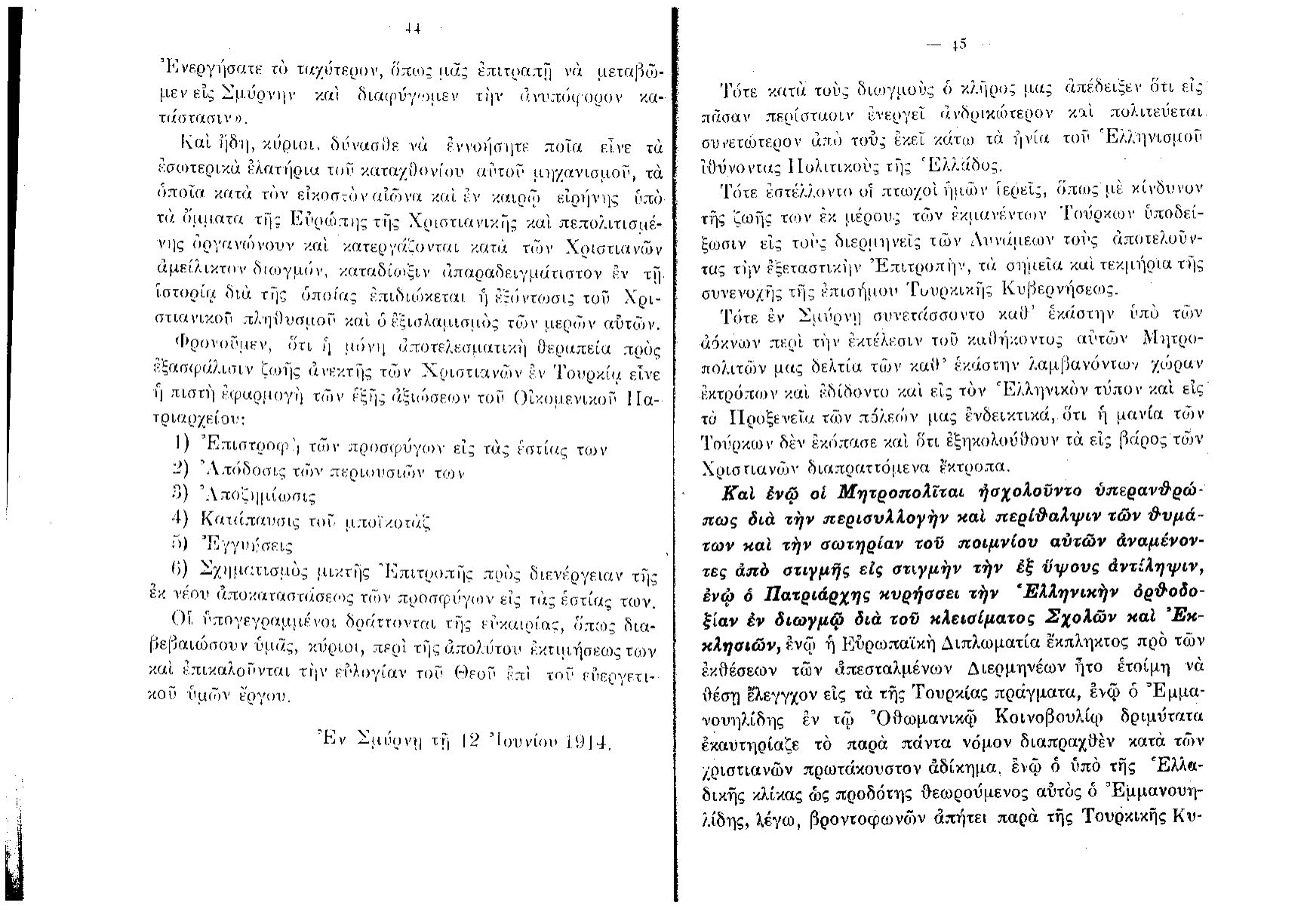
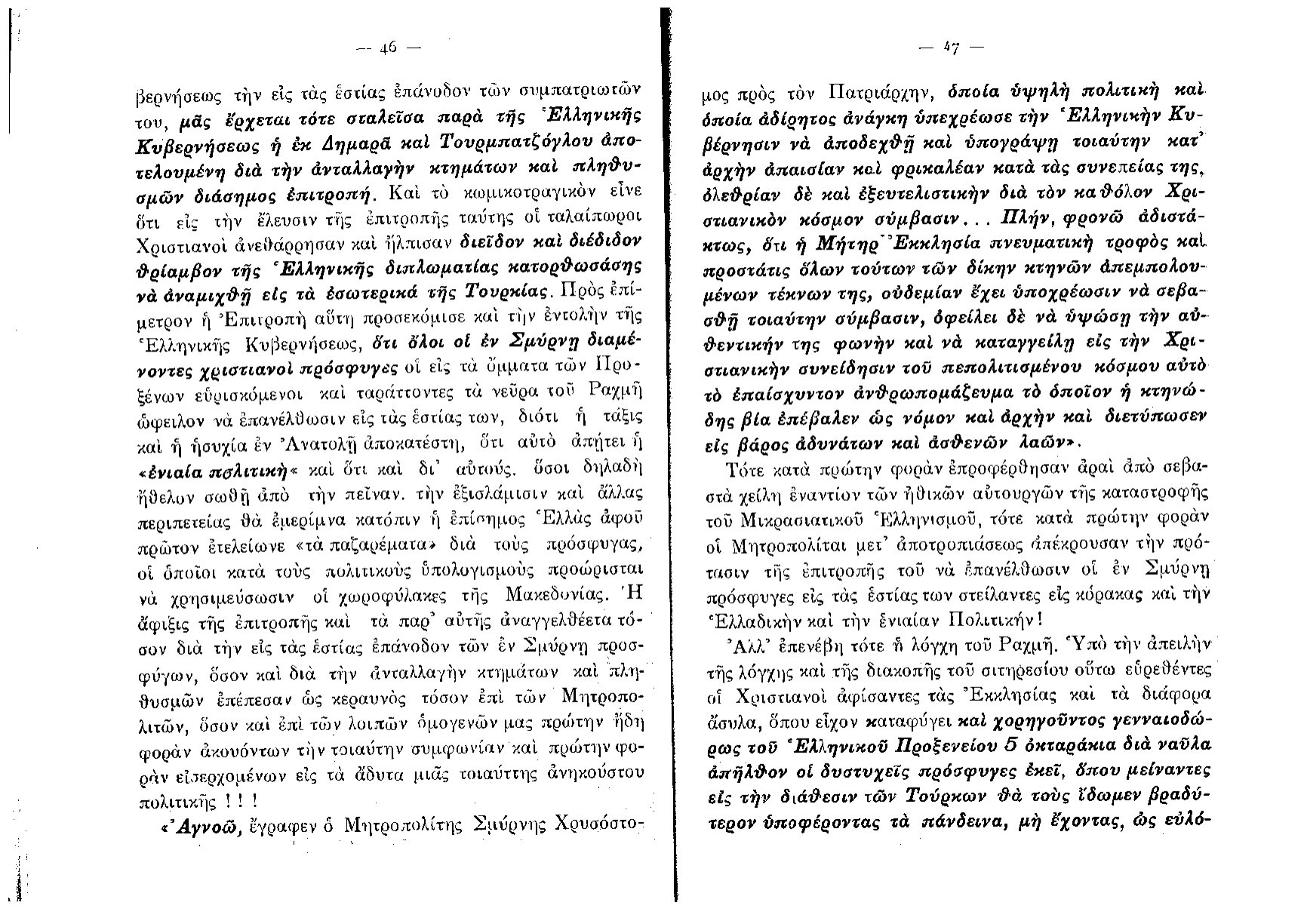
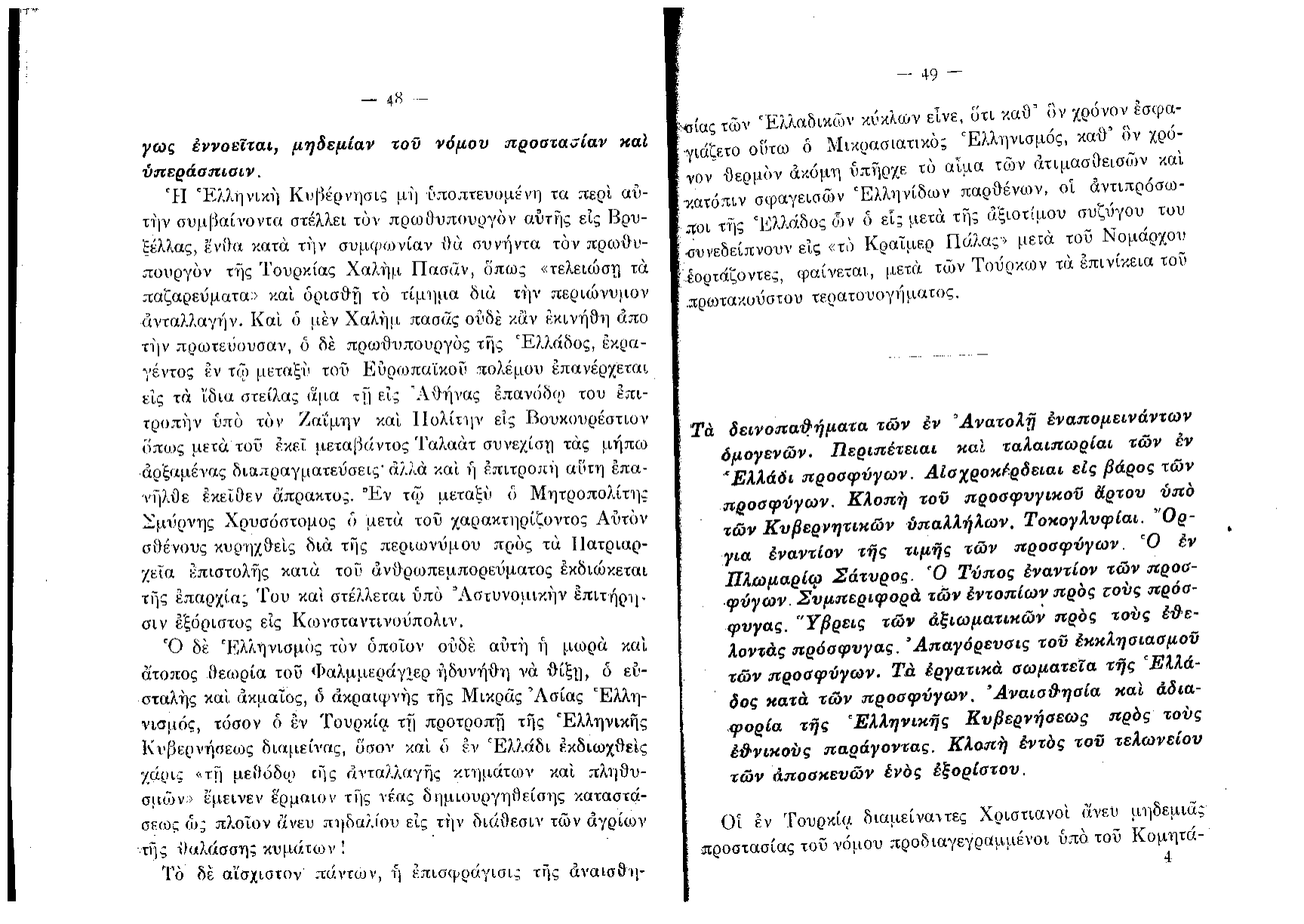
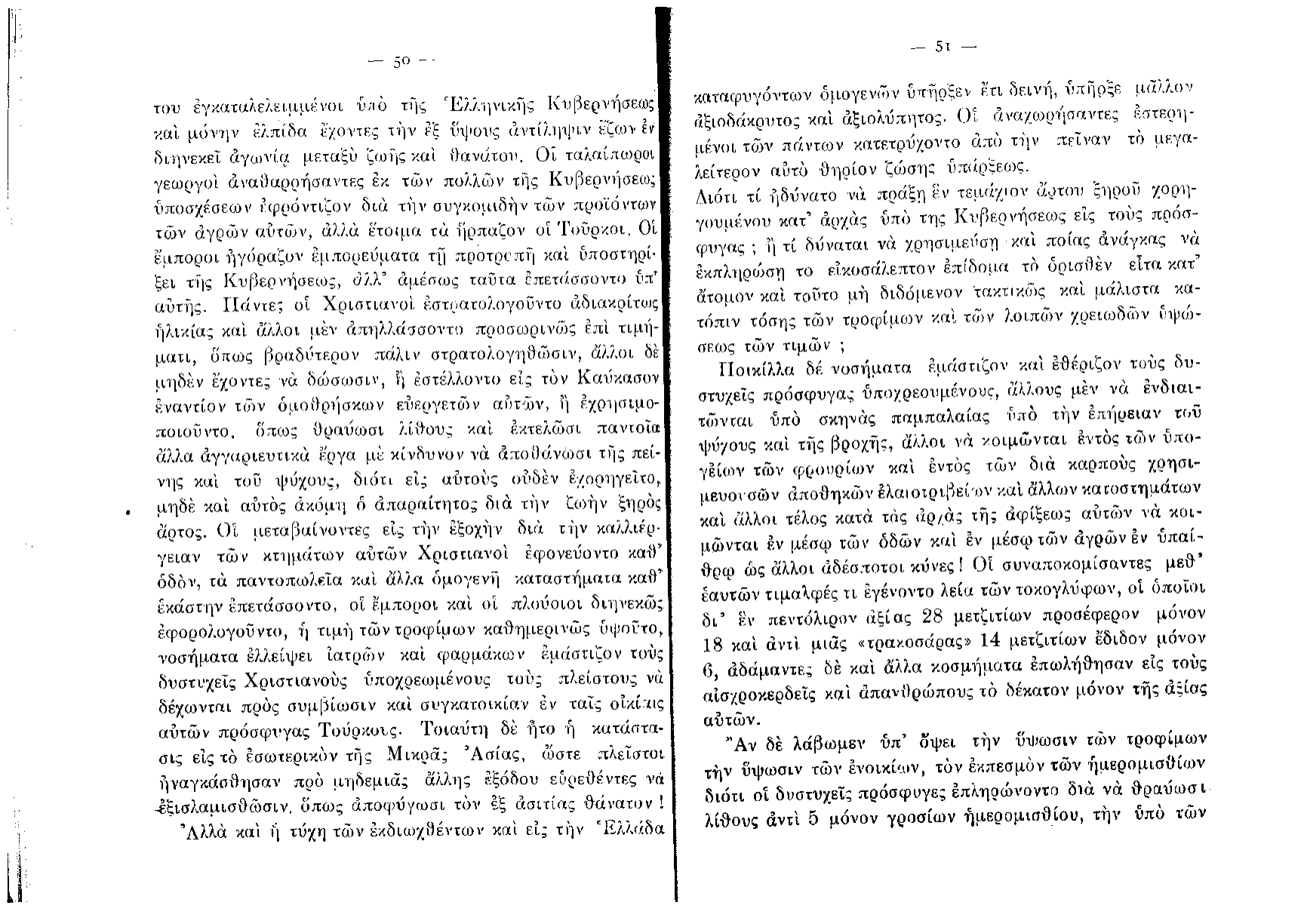
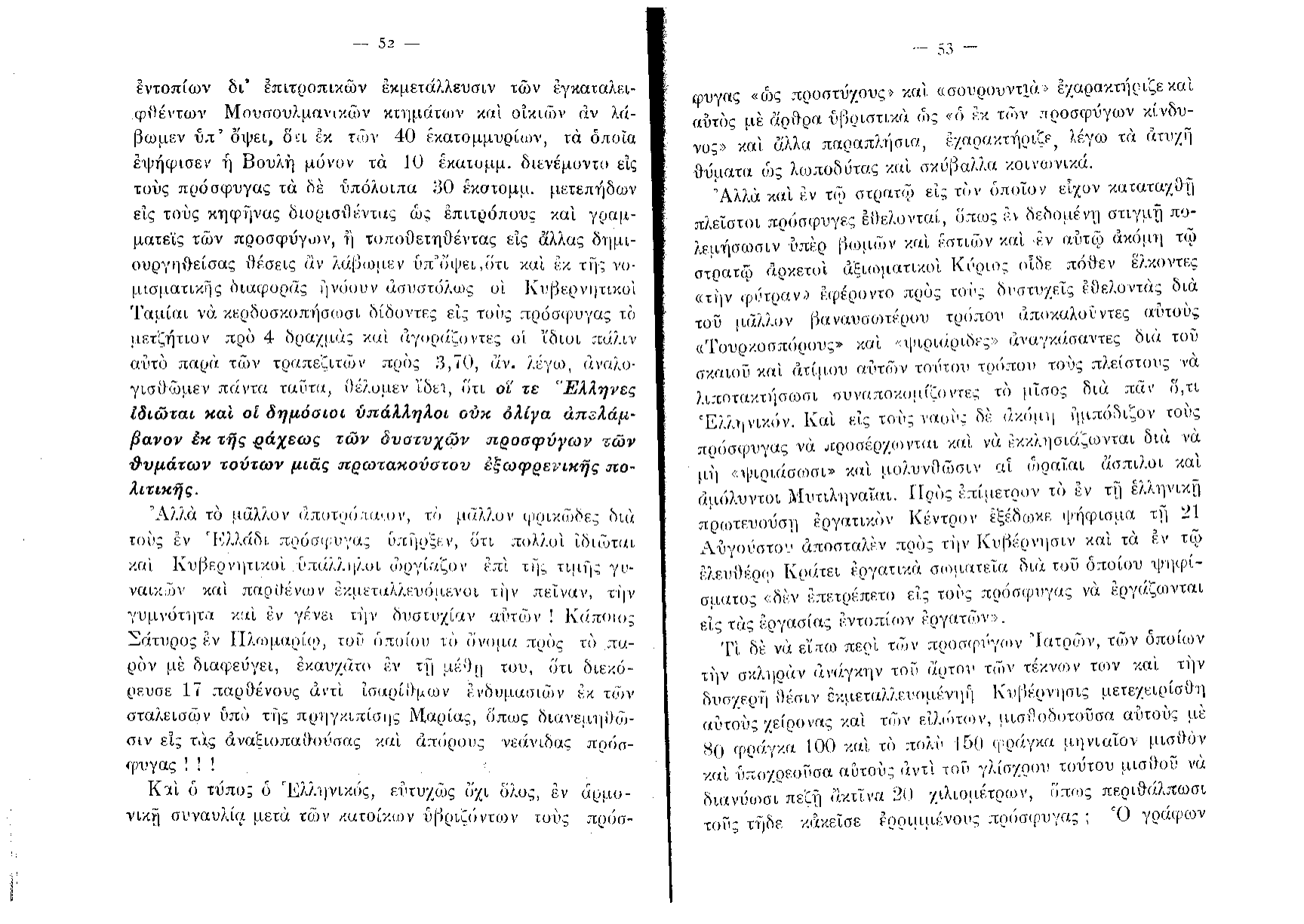
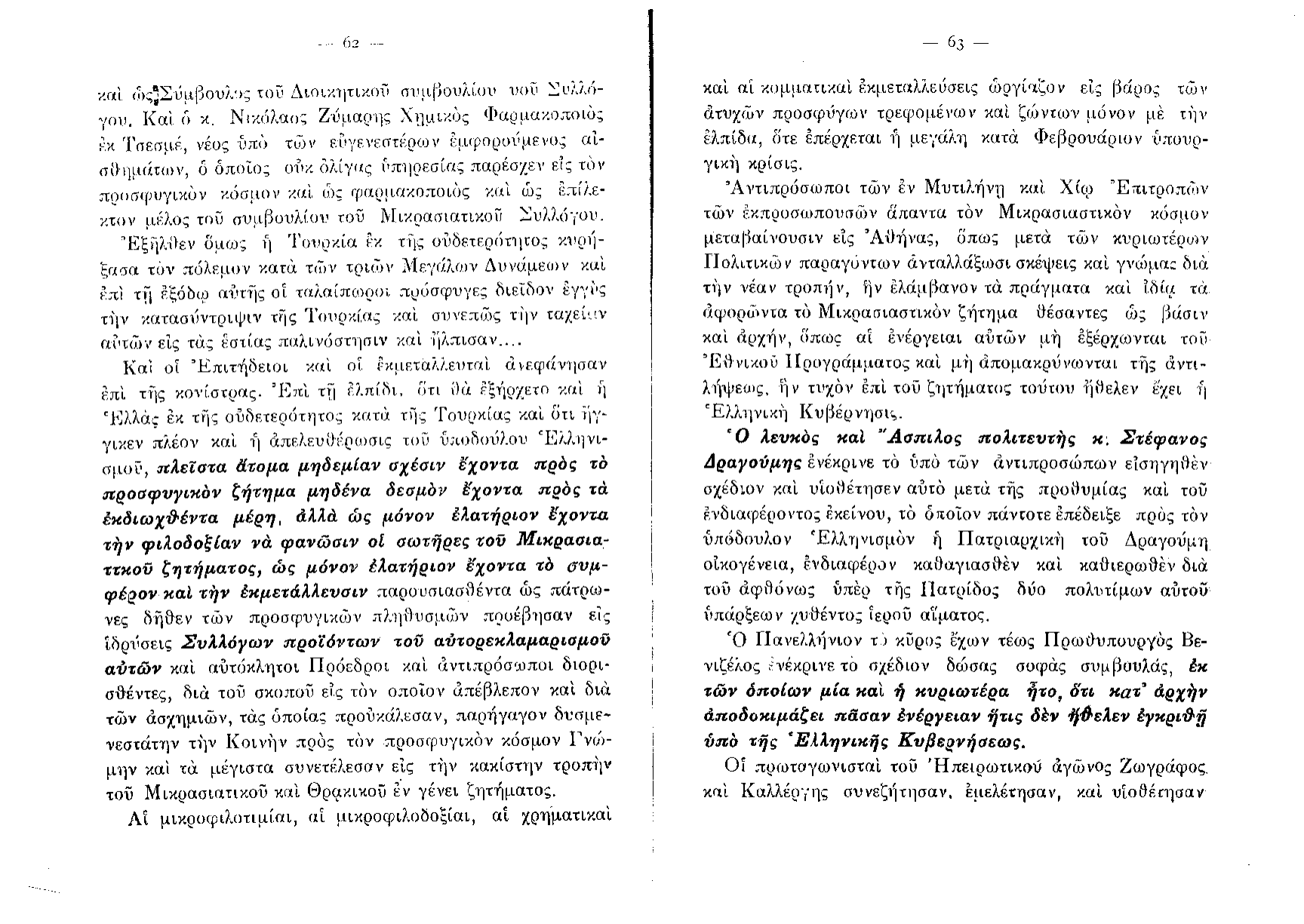
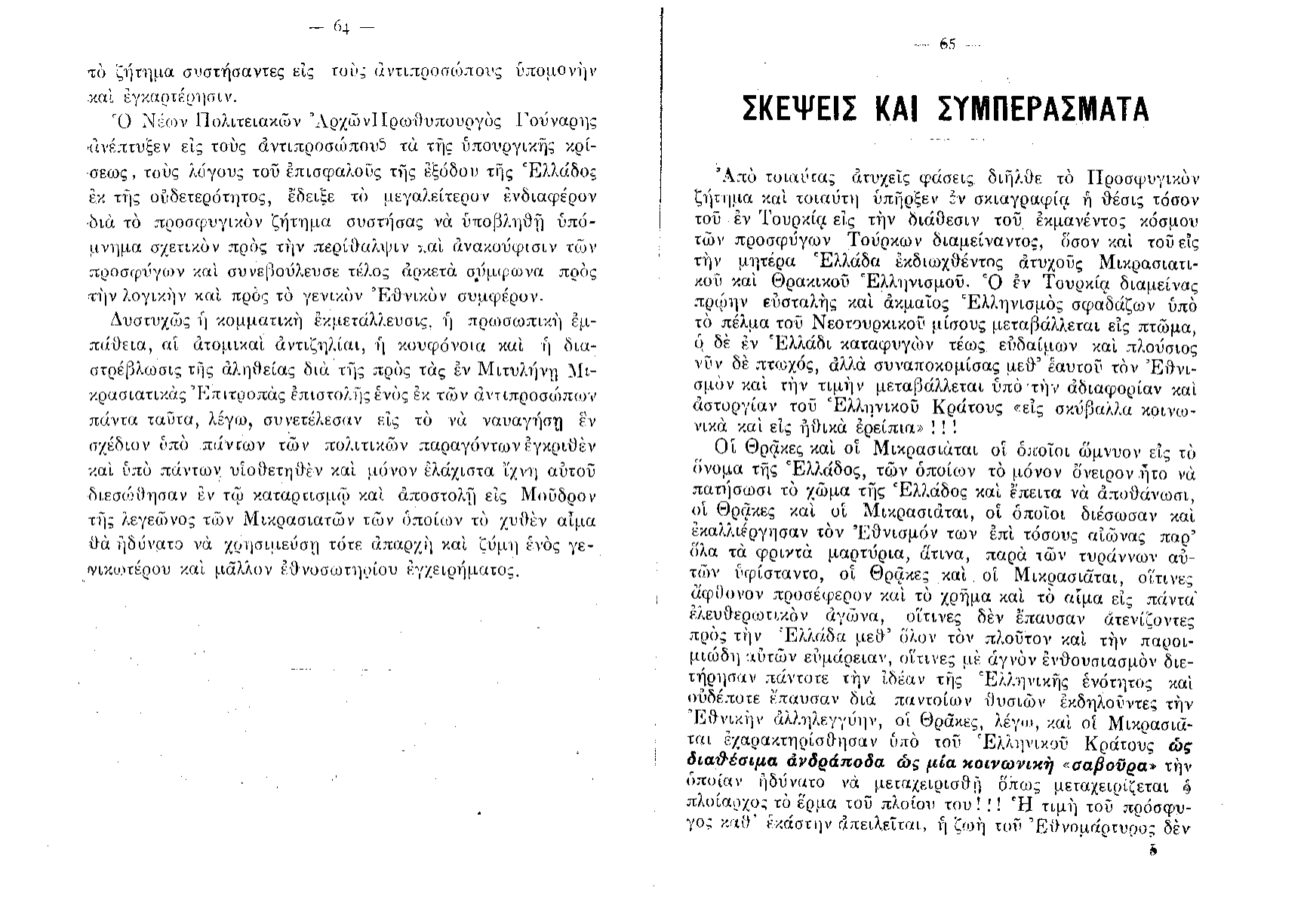
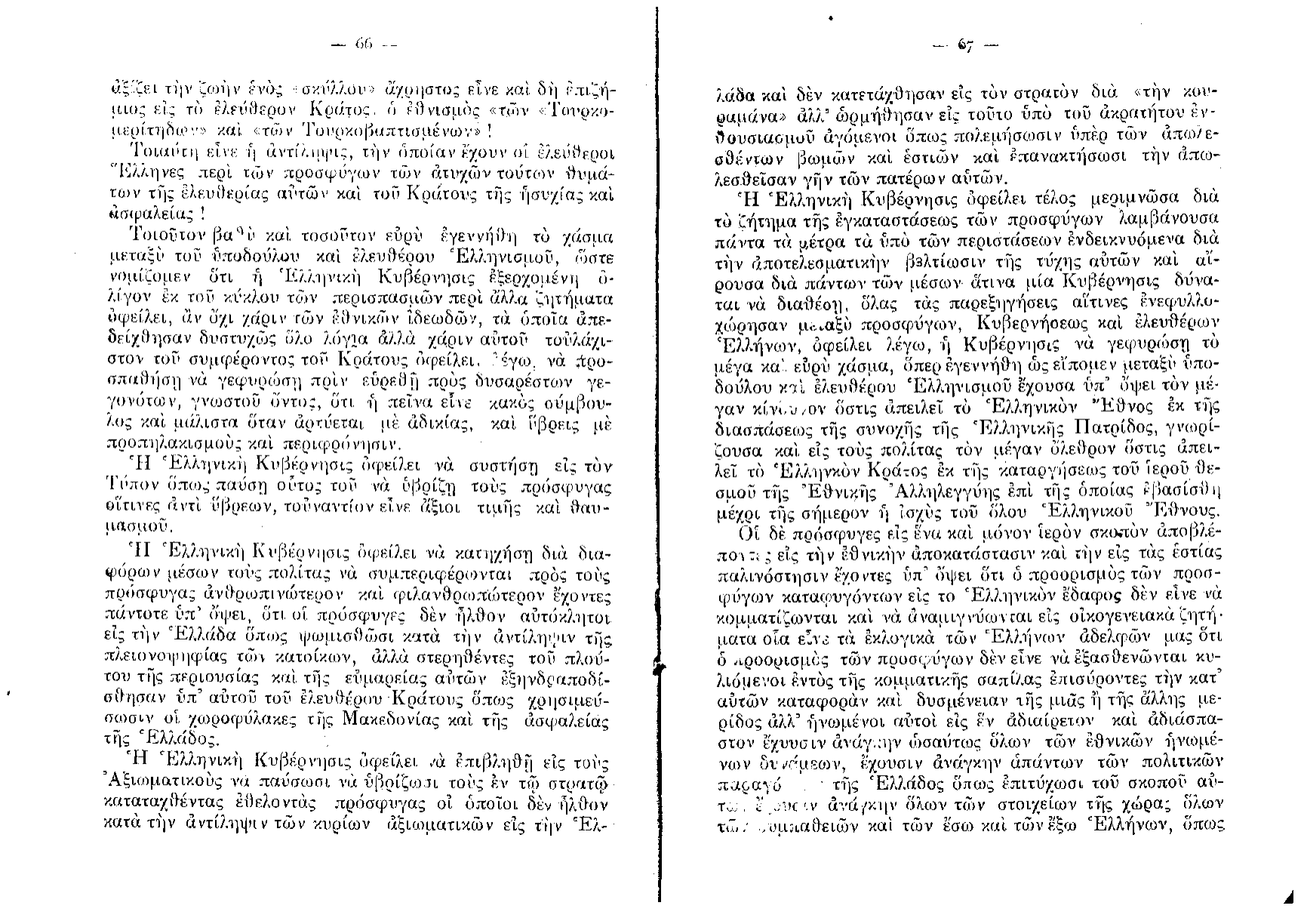
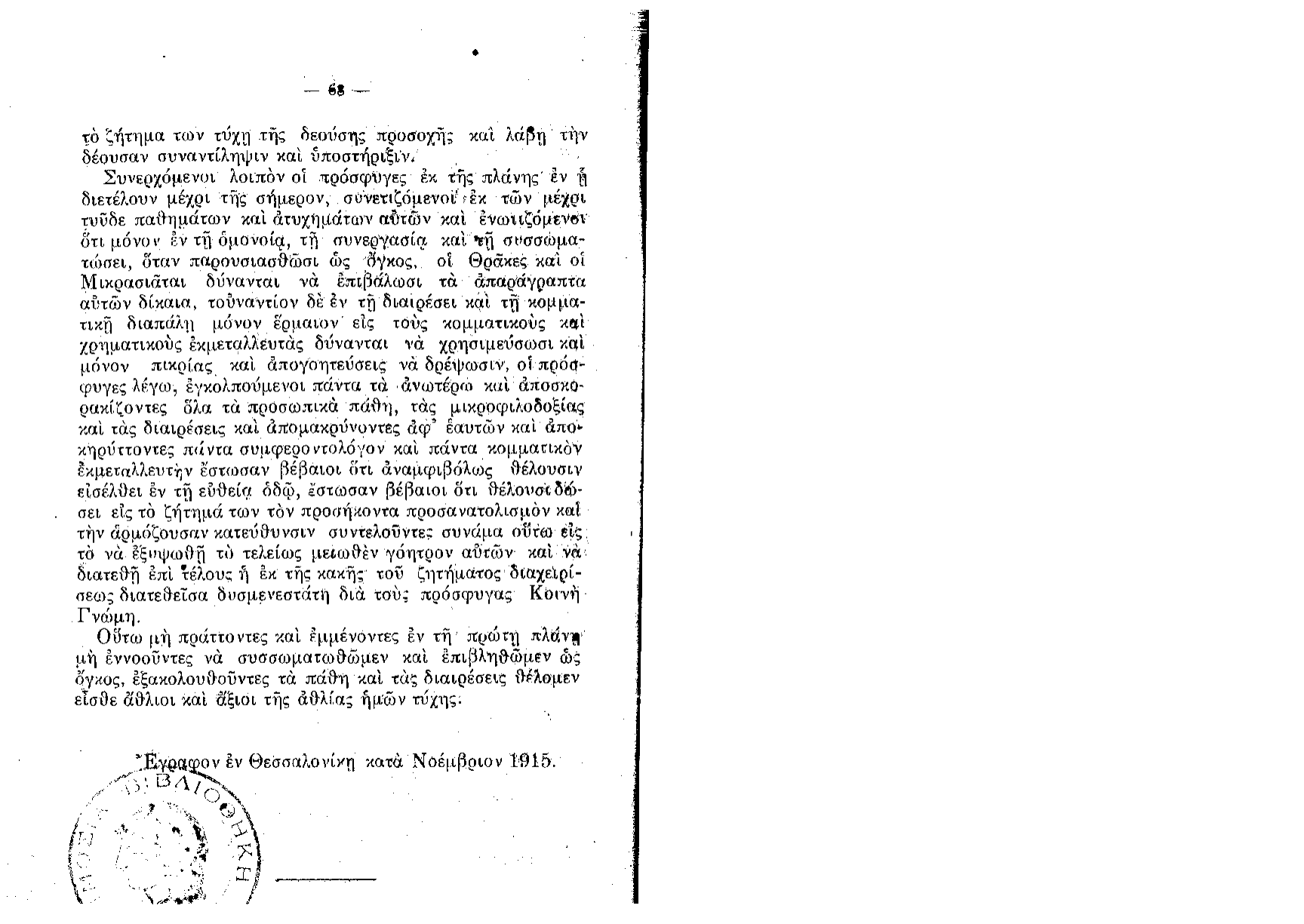
A 35-page Greek polemic written by Lazaros himself and printed in Athens in 1915 by the Blazoudakis Brothers press (Τύποις Αδελφών Μπλαζουδάκη). It is the single most important primary-source artifact in the Jeannopoulos family record — a published book in his own voice from twenty-four years before his death, written when the 1922 catastrophe everyone now associates with the family was still seven years in the future. He had already lived a smaller version of it.
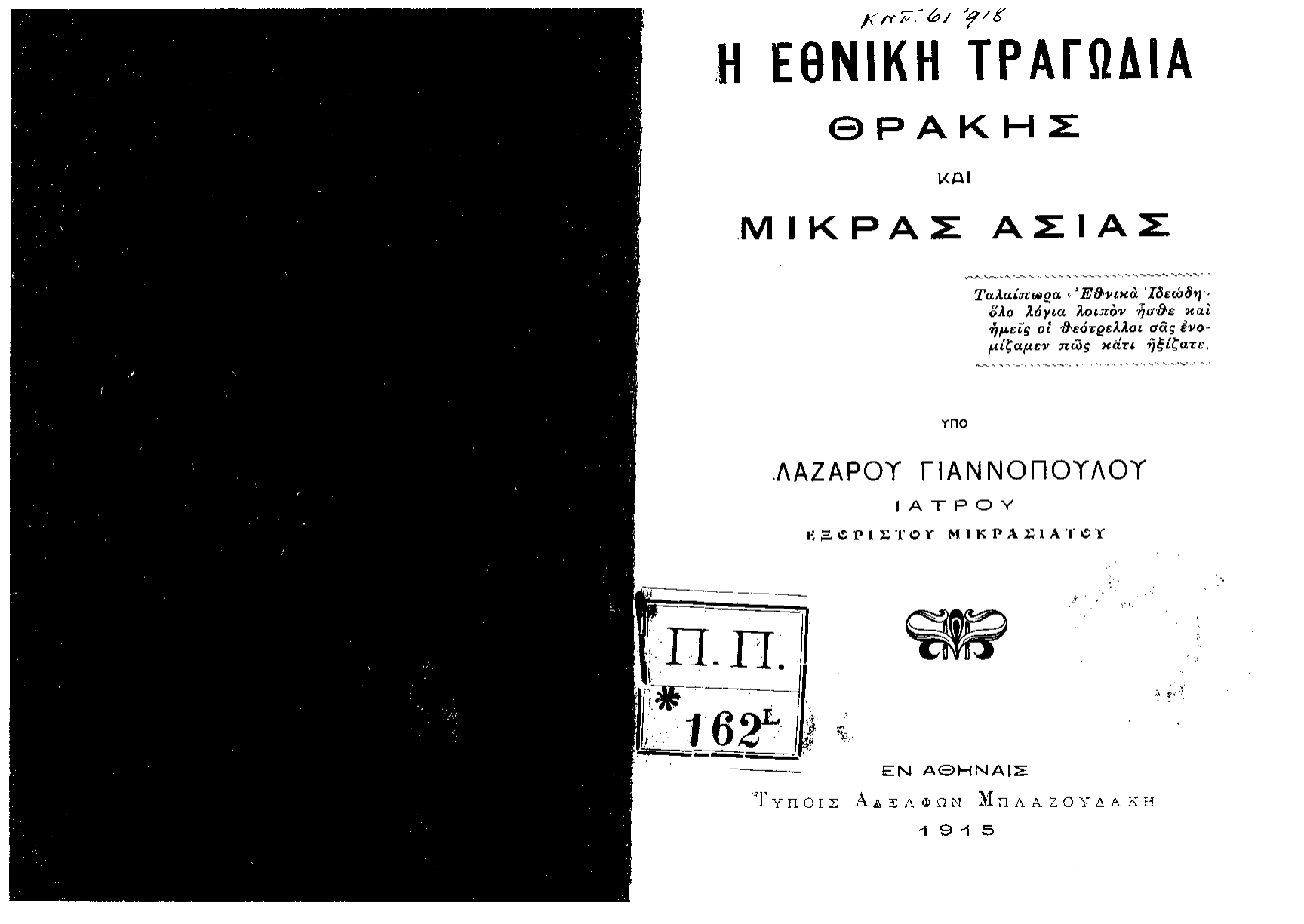
Title page
Η ΕΘΝΙΚΗ ΤΡΑΓΩΔΙΑ ΘΡΑΚΗΣ ΚΑΙ ΜΙΚΡΑΣ ΑΣΙΑΣ
(Epigraph: “Ω άθλιες εθνικές πατρίδες — λόγια μόνον είσθε, και ημείς που τους θεοκινήτους ενομίζομεν ότι κάτι αξίζατε…”) “Wretched national ideals — words are all you’ve been, and we who were god-mad thought you were worth something”
ΥΠΟ ΛΑΖΑΡΟΥ ΓΙΑΝΝΟΠΟΥΛΟΥ ΙΑΤΡΟΥ ΕΞΟΡΙΣΤΟΥ ΜΙΚΡΑΣΙΑΤΟΥ
ΕΝ ΑΘΗΝΑΙΣ ΤΥΠΟΙΣ ΑΔΕΛΦΩΝ ΜΠΛΑΖΟΥΔΑΚΗ 1915
In translation:
THE NATIONAL TRAGEDY OF THRACE AND ASIA MINOR
By Lazaros Yannopoulos, Doctor, Exiled Asia-Minor-Greek
In Athens, Press of the Blazoudakis Brothers, 1915.
Four facts the title page establishes
-
Surname Γιαννόπουλος (Yannopoulos) — Lazaros’s own Demotic-Greek spelling. The Latin-script Jeannopoulos and the older Katharevousa Ιωαννόπουλος both transliterate the same underlying surname, but on this published title page Lazaros chose the modern Demotic form Γιαννόπουλος himself.
-
“Ιατρού” — Doctor. Lazaros was already practicing as a physician in 1915, nine years before he ever sat the New York State medical exam. His 1923 University of Paris medical diploma duplicate is the credential he formally documented for US naturalization; this 1915 title page is the earliest preserved use of his medical title.
-
“Εξορίστου Μικρασιάτου” — Exiled Asia-Minor-Greek. The single most important phrase in the family record. By 1915 Lazaros was already self-identifying as an exile. The family migration timeline previously held that the 1922 Asia Minor Catastrophe was the family’s break with Anatolia. The 1915 book proves that Lazaros was personally exiled from Asia Minor to Athens by 1915 at the latest, seven years before the final catastrophe. He had publicly declared himself a refugee from his own homeland in print, with the Blazoudakis Brothers Athens press, with his own name and credentials beneath the declaration.
-
A published author. Lazaros was not just a country doctor and family patriarch — he was a political intellectual who wrote and published a polemic on Greek state policy toward the Asia Minor Greeks during the height of WWI, in the Athens of Eleftherios Venizelos. The book gives his great-grandson Alex and great-great-granddaughter Mia an ancestor who not only practiced medicine and survived the catastrophe, but who wrote and published political criticism in Athens of 1915.
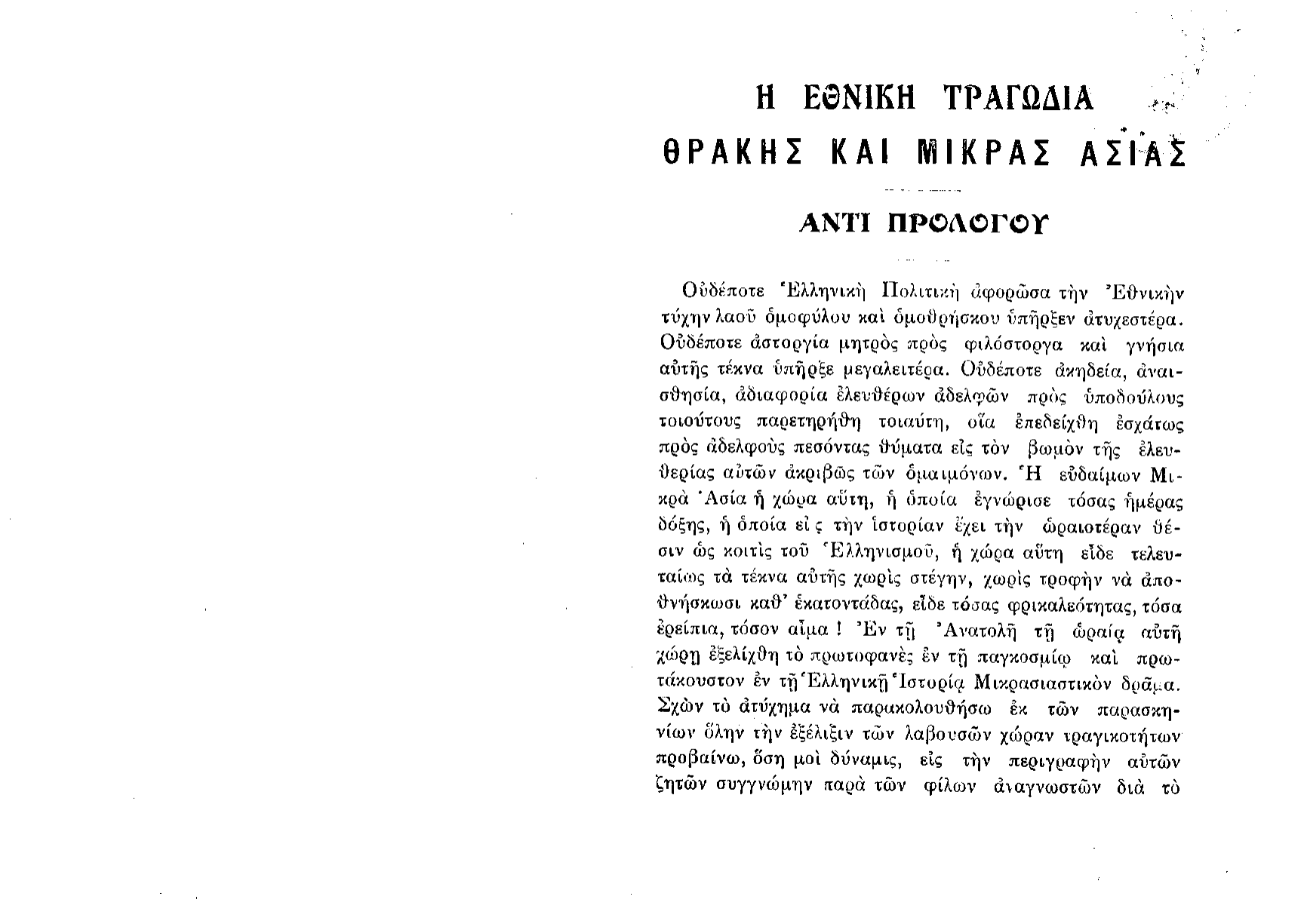
Opening passage — “ΑΝΤΙ ΠΡΟΛΟΓΟΥ” (“Instead of a Foreword”)
“Never has Greek policy regarding the national fortunes of a kinsfolk and co-religionist people been more unfortunate. Never has mother’s heartlessness toward her loving and genuine children been greater. Never have apathy, indifference and disregard of free brothers toward their unfree kin been displayed as severely as has lately been shown toward brothers fallen as sacrificial victims on the altar of the very freedom they themselves desired…”
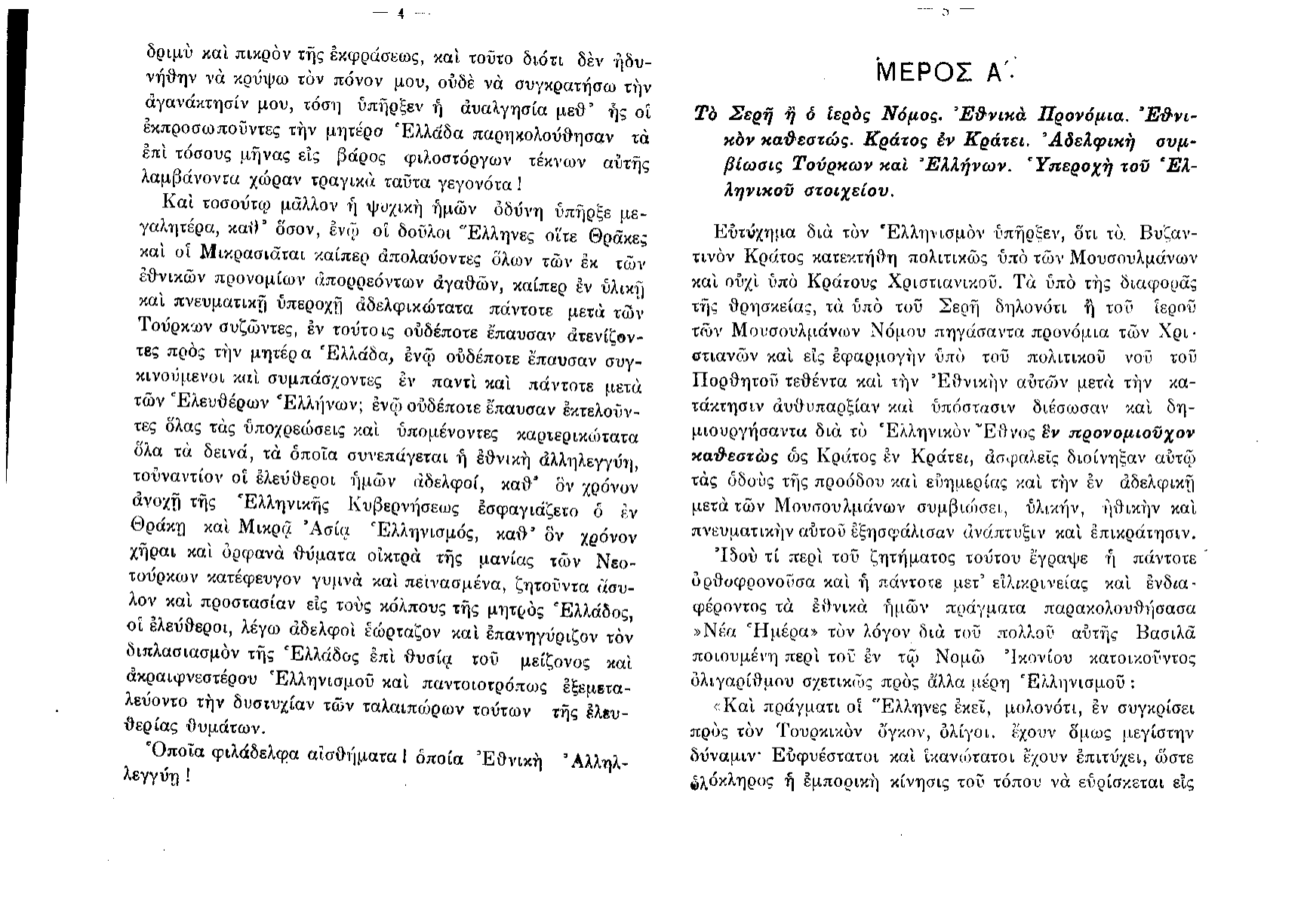
The polemic — addressed simultaneously to the Greek state, the Patriarchate, and the Greek diaspora press — denounces what Lazaros saw as the abandonment of the Asia Minor and Thracian Greeks by official Athens. The body of the book covers Ottoman administration of Asia Minor Greeks, the 1908 Young Turk Revolution, electoral politics in the Ottoman millets, the Patriarchate’s response, and the gradual breakdown of Greek-Ottoman relations that drove waves of Greek refugees to Greece before the 1922 catastrophe — including, evidently, the Yannopoulos household itself.
What the full English translation reveals
For years this book could only be summarized from its title page and opening lines. A complete English translation is now available in full, and it turns the book from an abstract polemic into something far more immediate: a first-person eyewitness account by a community leader who was himself arrested. It names names, dates, and places — and at its center Lazaros tells, in his own voice, the story of his own imprisonment.
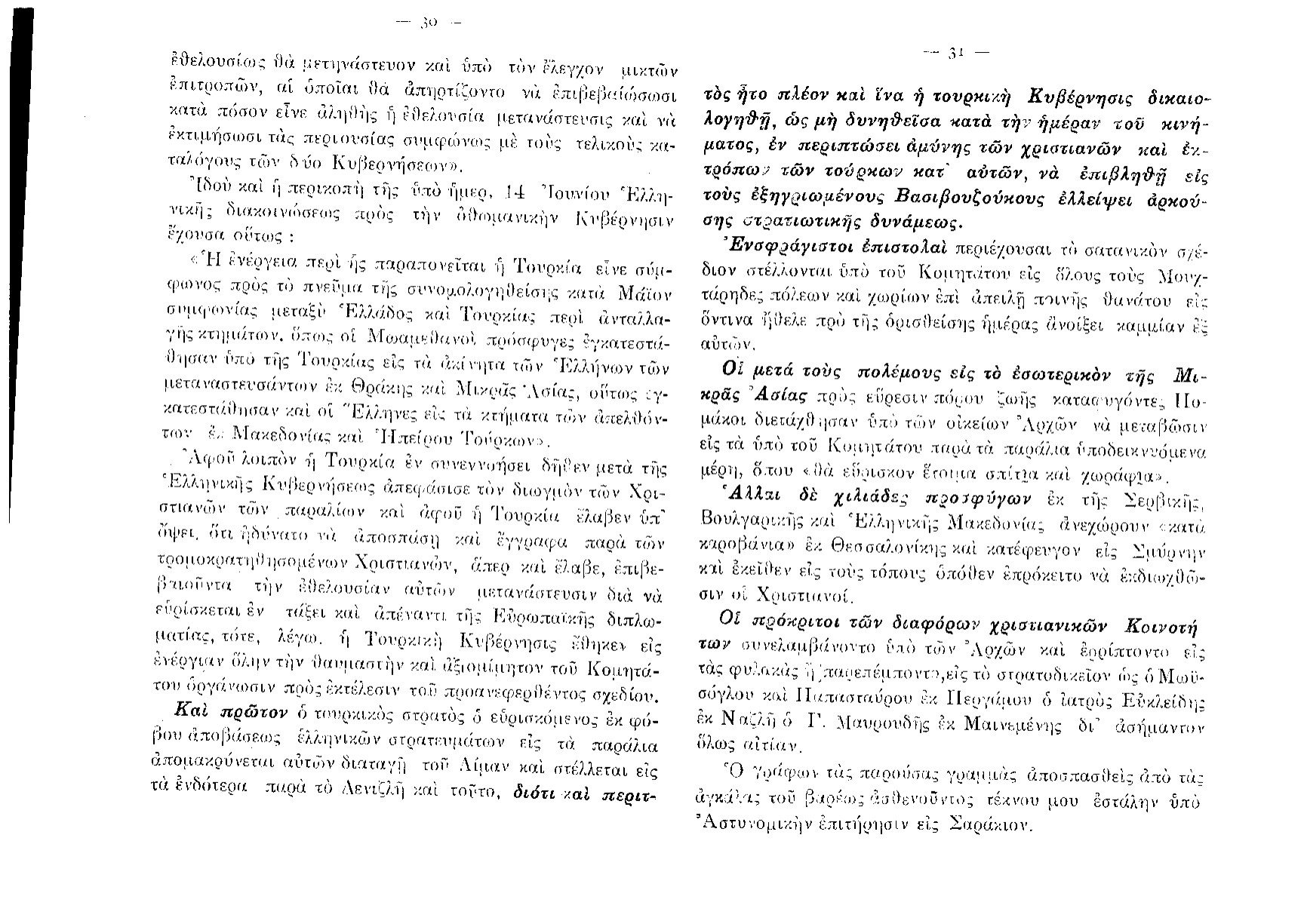
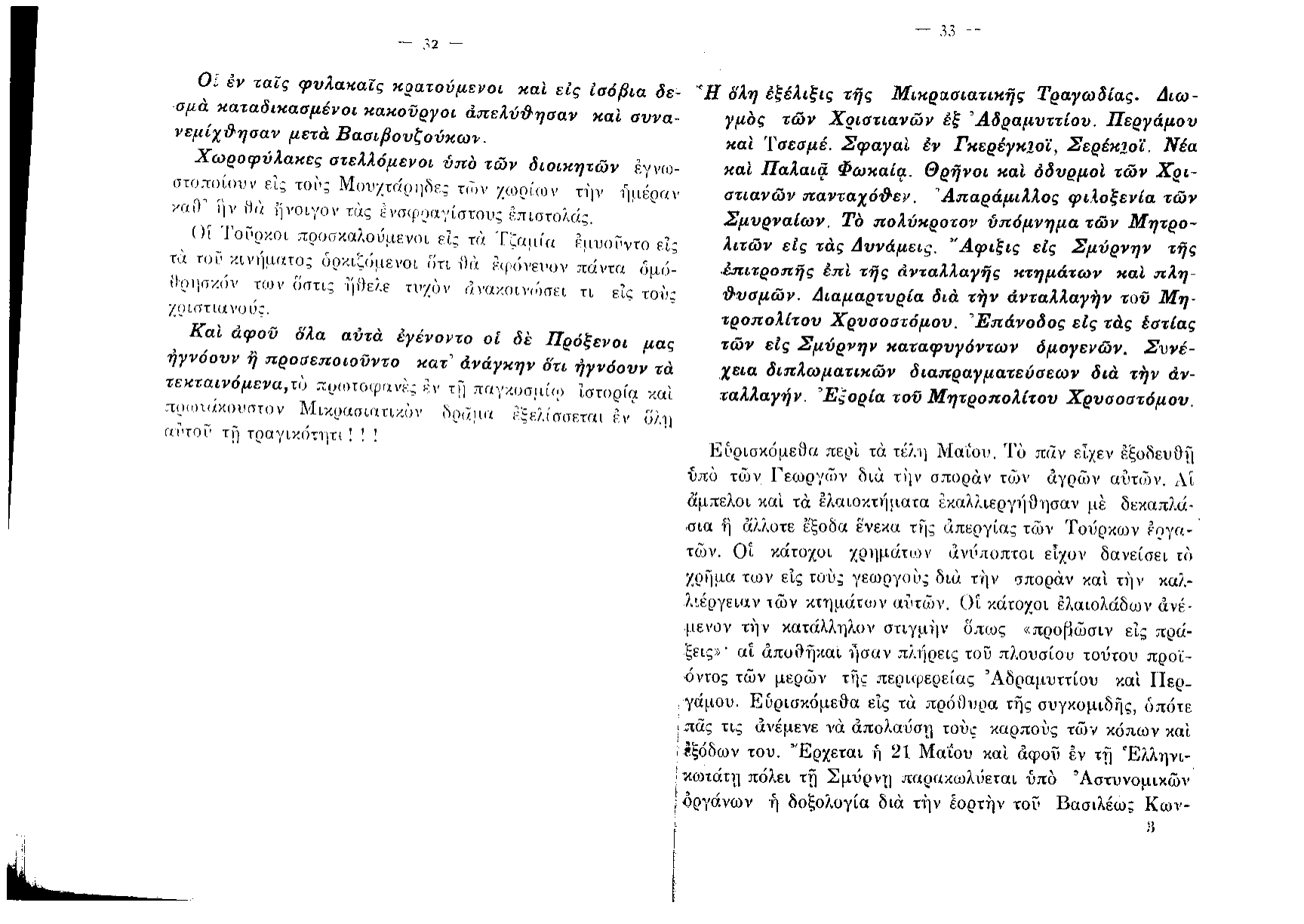
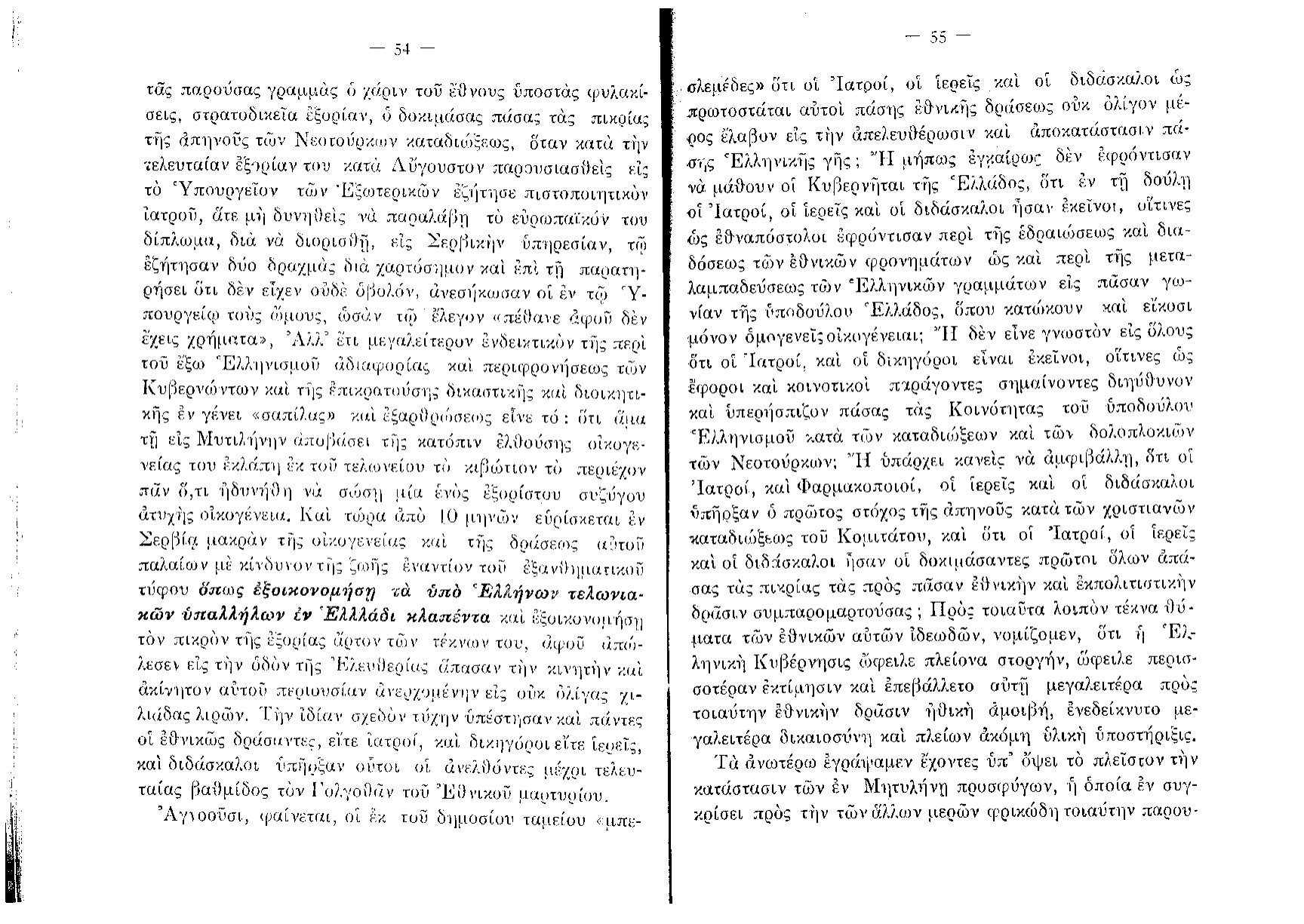
His arrest. Turkish authorities surrounded his house with “over 20 gendarmes with the spear gun,” isolated him from his family, and dug up his yard and cellar hunting for hidden weapons, hauling away four boxes of his scientific books and all his correspondence. Finding nothing, they fabricated telegrams to other cities claiming they had discovered “10,000 weapons, 60,000 cartridges and a box of bombs” in his home — a deliberate frame-up, he explains, meant to turn the public against a man whose standing they resented. He was marched under police escort to a military jail on the Soma–Izmir road and held about a month before the military court released him for lack of any evidence — “despite the fiery articles of the obscene newspaper ‘Koiullou’ asking for my hanging.”
Named in the press, marked for expulsion. He quotes the Turkish paper Koiullou verbatim, dated February 24, 1914: “Doctor Lazaros Giannopoulos, this man, who is the only hero of the famous National Assembly of the Patriarchates, well known to the authorities and inhabitants of Akhisar, Soma, Pergamon, Kırkağaç and Magnesia, as well as Izmir… must leave these places, and if he does not do it alone he must be removed… by the government.” It is a public, named demand for his exile — and it maps his sphere of influence across the whole Akhisar–Soma–Pergamon–Kırkağaç–Manisa–Smyrna region.
A second arrest, and a gravely ill child. Later in the account he records being taken again: “The writer of these lines was violently separated from my heavily ill child, and sent under police surveillance to Sarakio.”
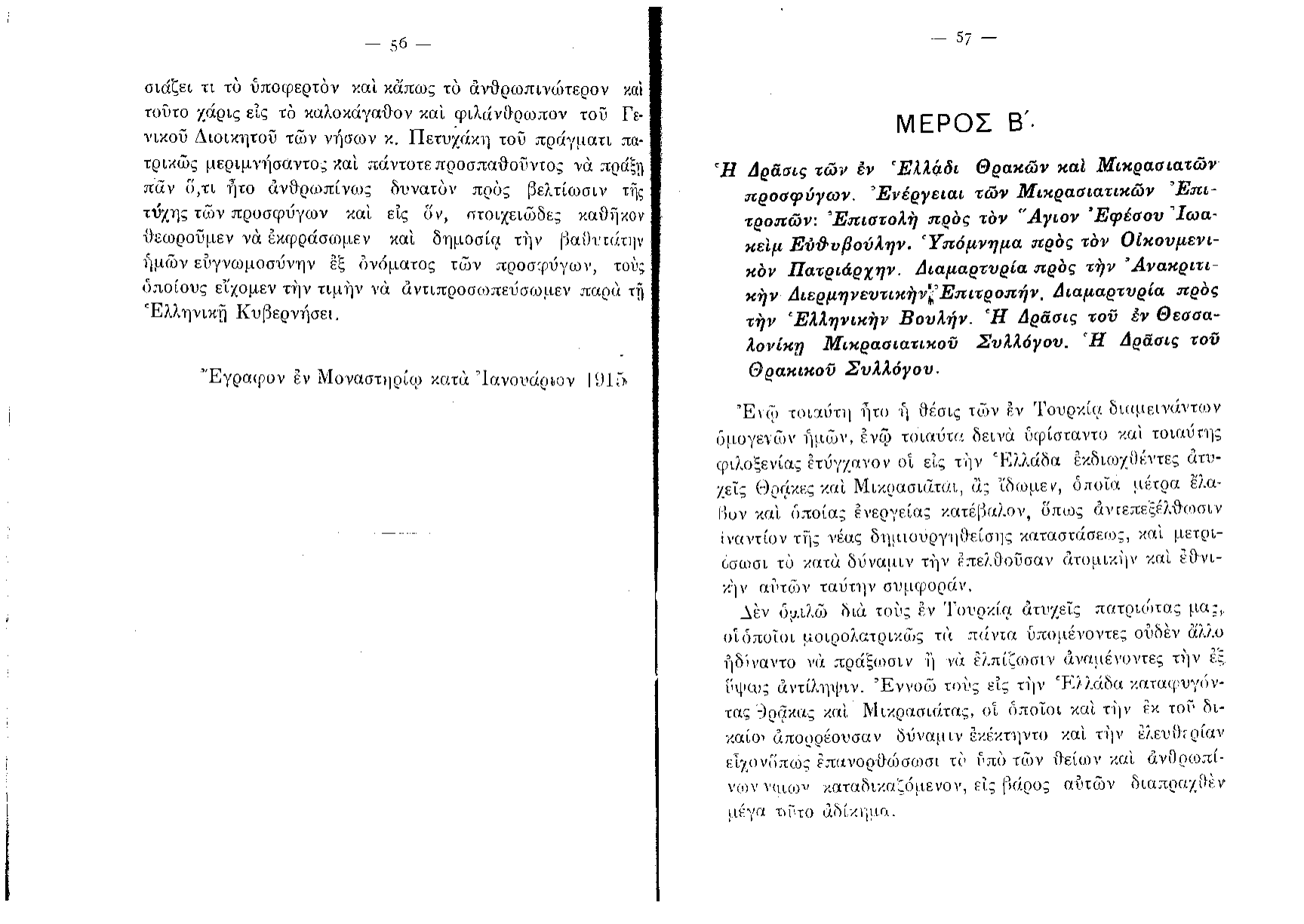
Then, exile and war. After his own flight to Greece — his family’s luggage stolen at the Mytilene customs by Greek officials, he notes bitterly — the penniless doctor took a military-medical posting: “now for 10 months I have been in Serbia away from the family, fighting at the risk of my life.” The book itself was written in pieces from exile, its closing pages datelined “the Monastery, January 1915” and “Thessaloniki, November 1915.”
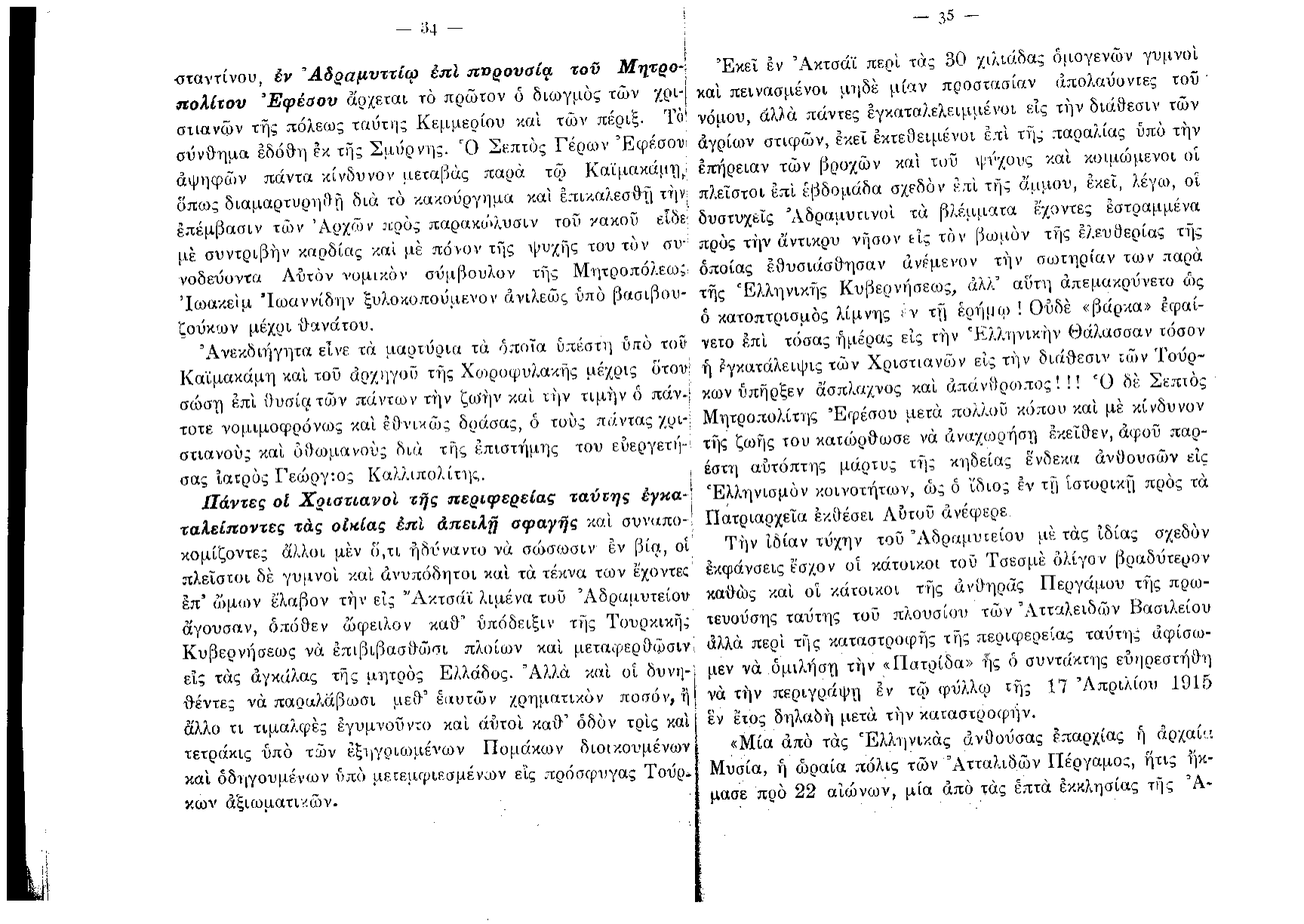
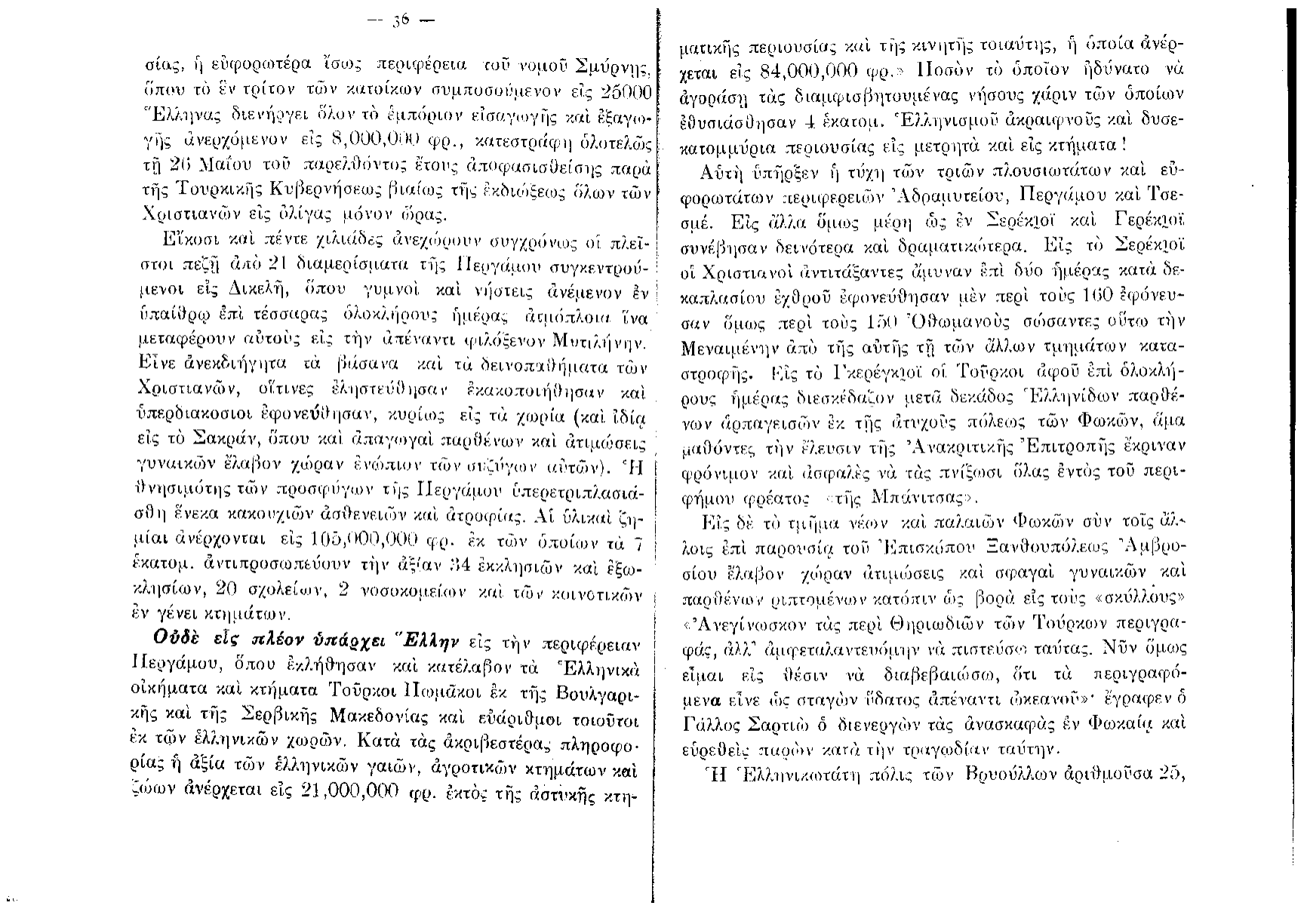
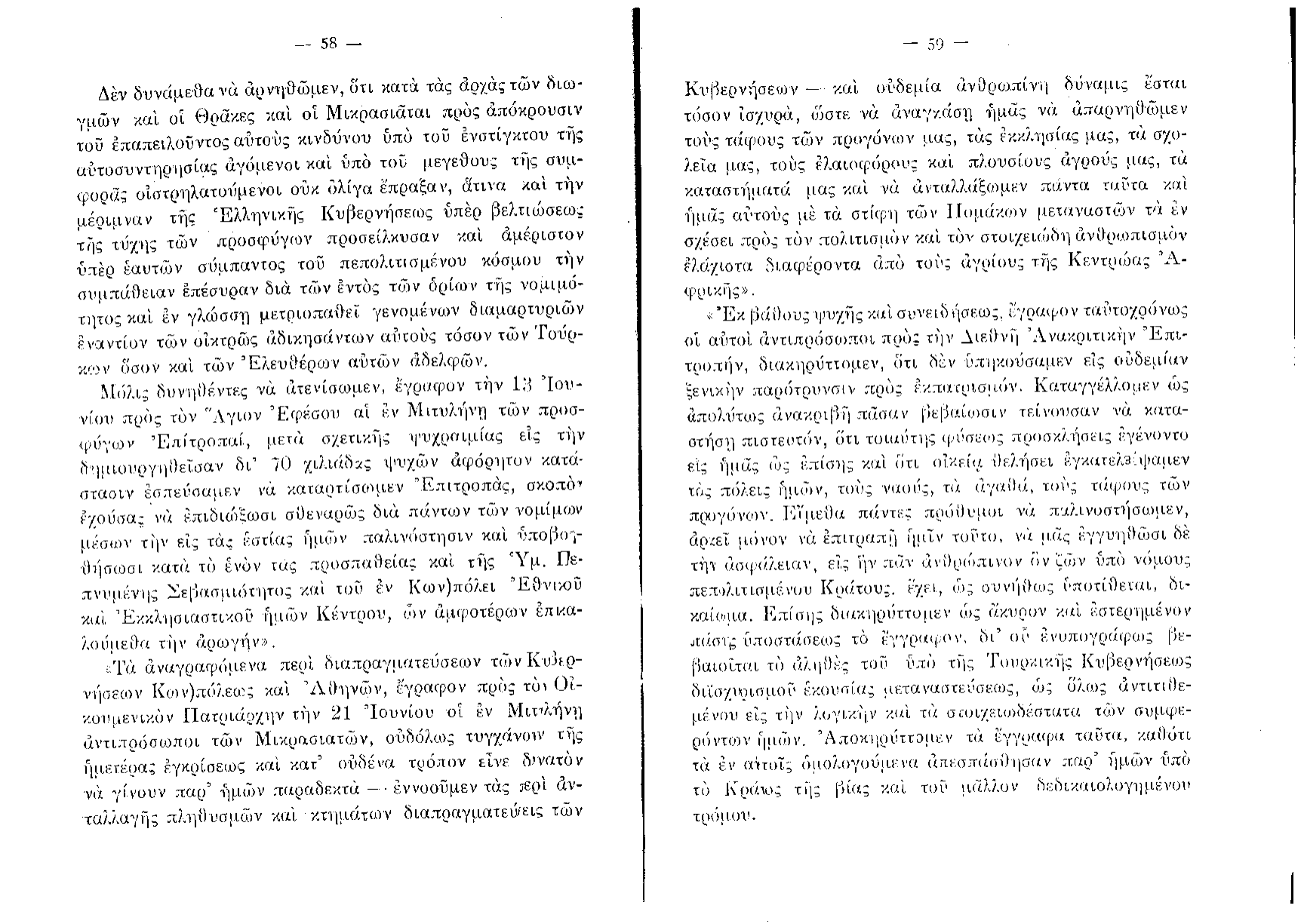
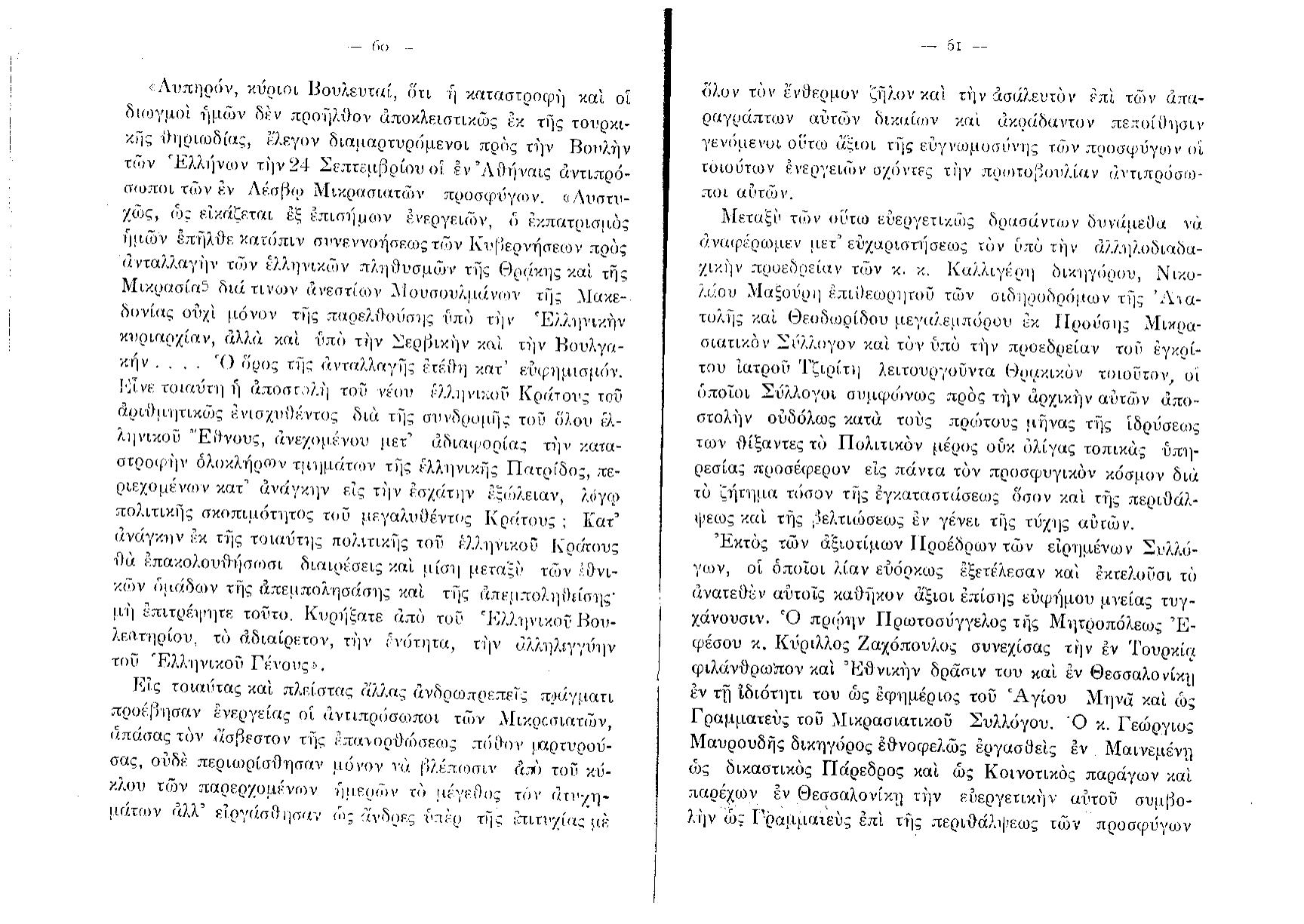
The book also preserves a detailed, place-by-place record of the 1913–1914 destruction that preceded the great catastrophe — the expulsion of Pergamon (25,000 Greeks driven out within hours on May 26, 1914, gathered naked at Dikeli to wait for ships to Mytilene), the massacres at Phocaea and Serekoi/Gerekoi, and the Metropolitans’ June 1914 memorandum to the Great Powers naming the Smyrna prefect Rachmi as the author of the killings. Read alongside the family tradition that Lazaros had once been under an Ottoman death sentence commuted through a pasha’s wife’s difficult labor, the 1915 book is the primary-source spine of that story: the “Εξορίστου Μικρασιάτου” — “Exiled Asia-Minor-Greek” — on its title page was a literal judicial fact, not a literary pose.
Implications for the family migration timeline
The previous family-record timeline had:
Family in Soma → 1922 catastrophe → Mytilene 1923 → SS Themistocles 1924 → New York April 1924.
The 1915 book demands revision. The new evidence-based timeline is:
| Year | Event |
|---|---|
| ~1906-1911 | Lazaros practicing medicine in Soma; sons Takis (b. 1911) and John Lazare (b. 1913) born there |
| ~1914-1915 | First wave of Asia Minor Greek persecution (WWI era); Lazaros exiled to Athens — publishes this book |
| 1916 | Constantine born — his Mytilene baptismal certificate lists Mytilene; the family may have moved between Soma, Smyrna, and Mytilene during this period |
| 1920 | Achilles born in Smyrna |
| 1922 | Asia Minor Catastrophe — the final displacement |
| 1923-24 | Mytilene δημοτολόγιο re-registration |
| 1924 March 18 | SS Themistocles → New York |
The 1922 catastrophe was the last act of an eight-year process, not the first. Lazaros had been navigating earlier waves of Asia Minor Greek persecution for years; he was self-identified as εξόριστος (exiled) in print in 1915.
Tier-1 evidence for the Greek-citizenship case
For the Greek-citizenship claim, this book is Tier-1 evidence of Lazaros’s Greek-citizen status at the time of publication:
- Published in Athens by an Athens press, in the Greek language, under his Greek name
- Self-identifies as Greek refugee / Asia-Minor-Greek exile living in Athens
- Engages in Greek public political debate as a member of the Greek polity
- Predates by seven years the Lausanne Treaty of 1923 that formalized refugee citizenship for Asia Minor Greeks
- Establishes a documented continuous Greek-citizen status from 1915 through the 1923 Mytilene δημοτολόγιο registration and the 1923 family passport No. 2555
In combination with the family passport, the Mytilene baptismal certificates, the Mytilene Mitroon Arrenon records, and the post-1924 American naturalization documents, this book completes the picture of an unbroken Greek-national identity for Lazaros from 1915 onward — which is the foundation on which Constantine’s Greek nationality (jus sanguinis through his father), Peter’s, Alex’s, and Mia’s claims rest.
What Greece was claiming when Lazaros wrote this
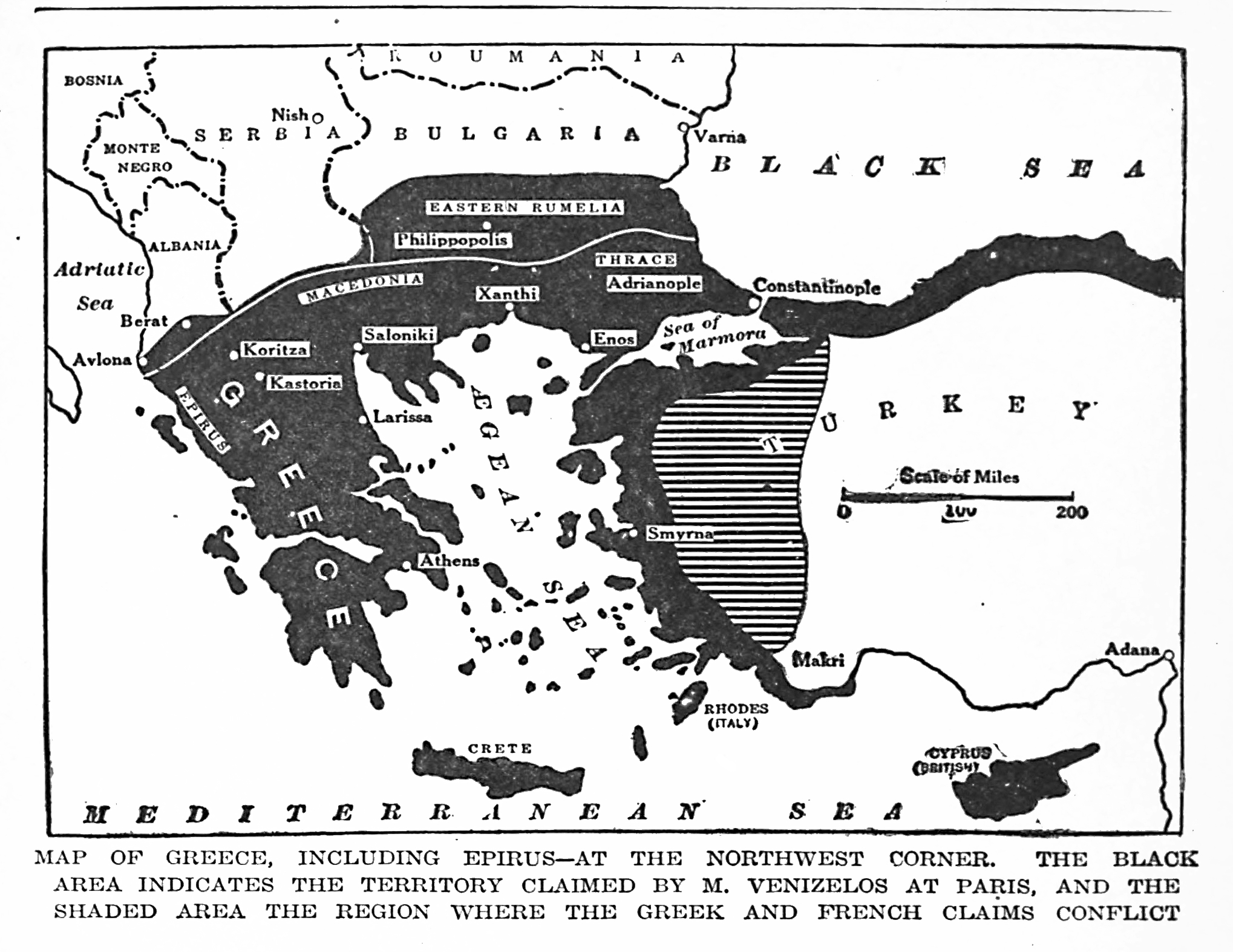
The “Megali Idea” map: Greek territorial claims presented by Eleftherios Venizelos at the 1919 Paris Peace Conference. The black-shaded zone covers Western Anatolia along the Aegean. Soma sits inside that zone — about 80 km north of Smyrna, in the region Greece was seeking to annex. Lazaros wrote his polemic four years earlier, in 1915 Athens, in exile from precisely the same region the map asks the world to award to Greece.
About the publisher
The Blazoudakis Brothers press (Τυπογραφείον Αδελφών Μπλαζουδάκη) was an Athens publishing house active in the WWI period. Politically-engaged Athens publishing houses of 1915 were generally aligned with the National Schism factions — either pro-Venizelist (interventionist, pro-Entente, pro-Asia-Minor) or pro-Royalist (neutralist, anti-Entente). The publication of a pro-Asia-Minor-refugee polemic in 1915 Athens places Lazaros and the Blazoudakis press squarely in the Venizelist intellectual orbit — the same political stream that would, after 1917, attempt to recover Smyrna and Eastern Thrace and that would suffer the 1922 catastrophe Lazaros lived through.
Provenance
Surfaced 2026-05-21 from Peter Jeannopoulos’s personal document trove — Constantine’s son, Alex’s father, who preserved the family papers and produced the 2010 archive scan from which this book has been re-circulated. The PDF here is the 2010 scan of the original 1915 Athens-printed book; the physical original remains in Peter’s possession. Pages 1-35 are reproduced above in their entirety.
The 1926 sequel
Eleven years later, in 1926, Lazaros published a second full-length book from his US exile — Η Κρυμμένη Αλήθεια ή Τα Παρασκήνια του Μεγάλου Μικρασιατικού Δράματος (The Hidden Truth, or The Backstage of the Great Asia-Minor Drama), New York 1926, American-Greek Publishing Co. The two books bracket the catastrophe — this 1915 National Tragedy is the prelude, and the 1926 Hidden Truth is the postmortem. They are best read together. The 1926 book is also available in a 2025 modern Greek reissue (Ελληνική Πρωτοπορία, ISBN 978-618-5383-63-3).
Future research lines
- Other Lazaros publications beyond the two books. The 1925-05-07 Ethnikos Keryx newspaper profile of him refers to “wise and original treatises — purely medical, medico-philosophical, medico-sociological” in addition to his polemical books. Search Greek- and French-medical journals 1900-1924, plus Greek-American periodicals 1924-1935, for additional Γιαννόπουλος / Lazaros Yannopoulos publications. The National Library of Greece (Εθνική Βιβλιοθήκη της Ελλάδος) is the primary archive.
- The specific cause of his pre-1915 exile. What forced Lazaros out of Soma to Athens during the WWI period? Targeted by Ottoman wartime authorities? Member of a banned Greek-diaspora political organization?
- The Athens exile community. Lazaros was part of an identifiable community of Asia Minor exiles in pre-catastrophe Athens (1914-1922) — figures who would become the leadership cadre of the post-1922 refugee movement.
- Did Lazaros physically return to Asia Minor between 1915 and 1922? Constantine was born in 1916 in Mytilene/Smyrna; Achilles in 1920 in Smyrna. Eftyhia clearly was in Asia Minor for those births. Whether the family split (Lazaros in Athens, Eftyhia in Soma) or whether Lazaros’s “exile” allowed periodic returns remains unresolved.
- His ~1915 Serbian military-medical service. The book records ten months “in Serbia… fighting at the risk of my life” as a doctor. Greek and Serbian WWI archives may hold a service record.
- “Sarakio,” the site of his second detention, and which of his several arrests led to the exile named on the title page, remain to be pinned to specific dates and Ottoman provincial seats.