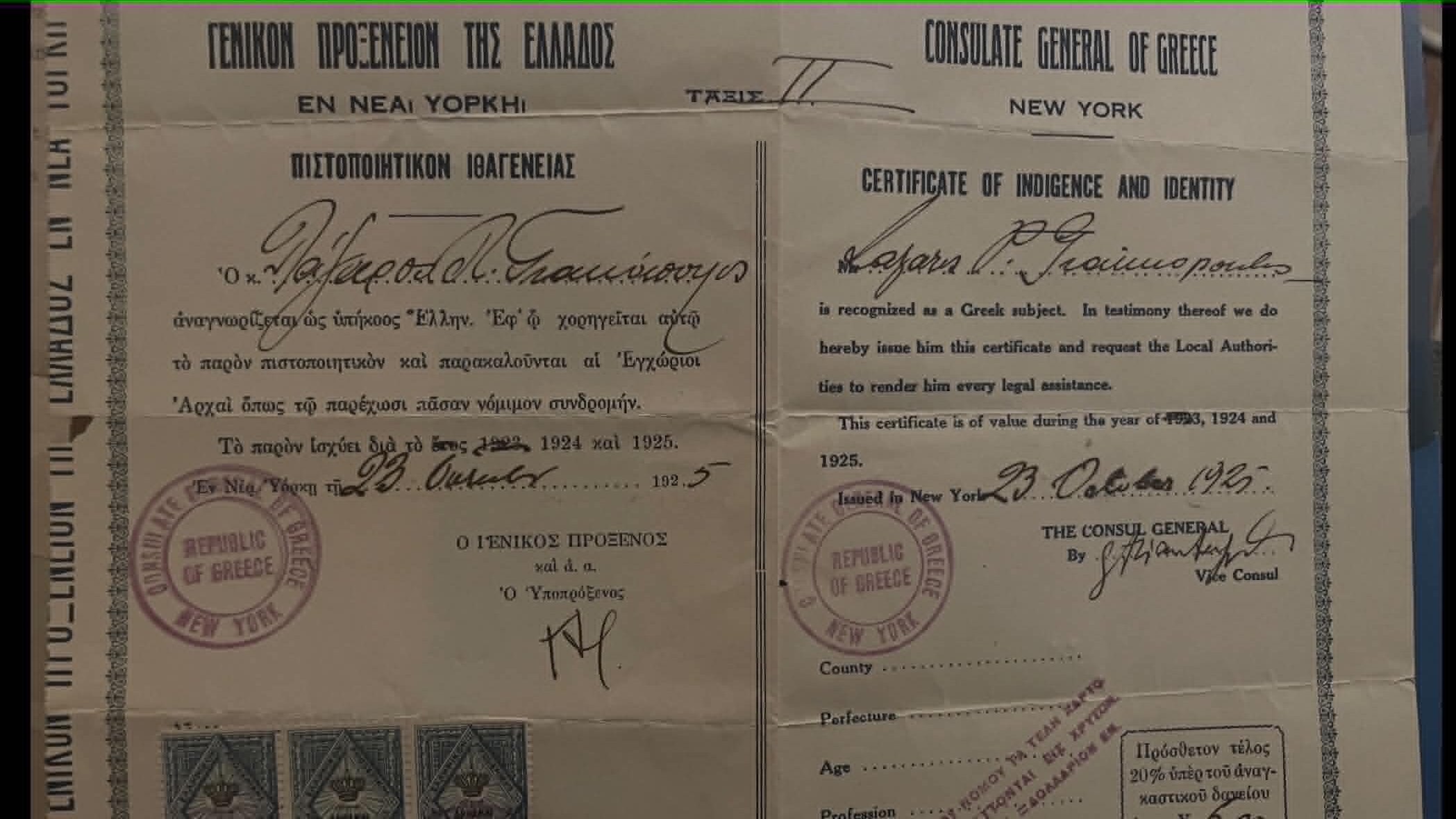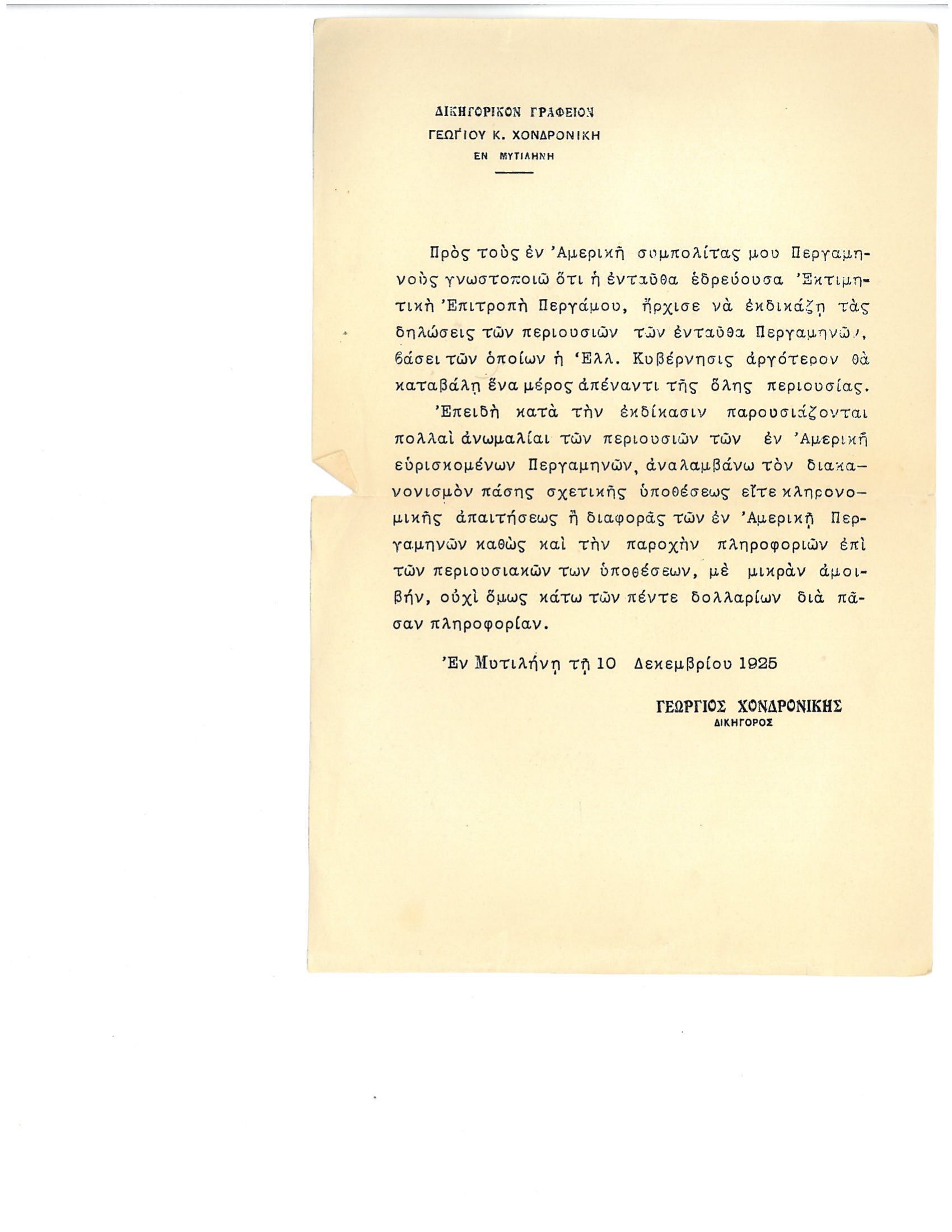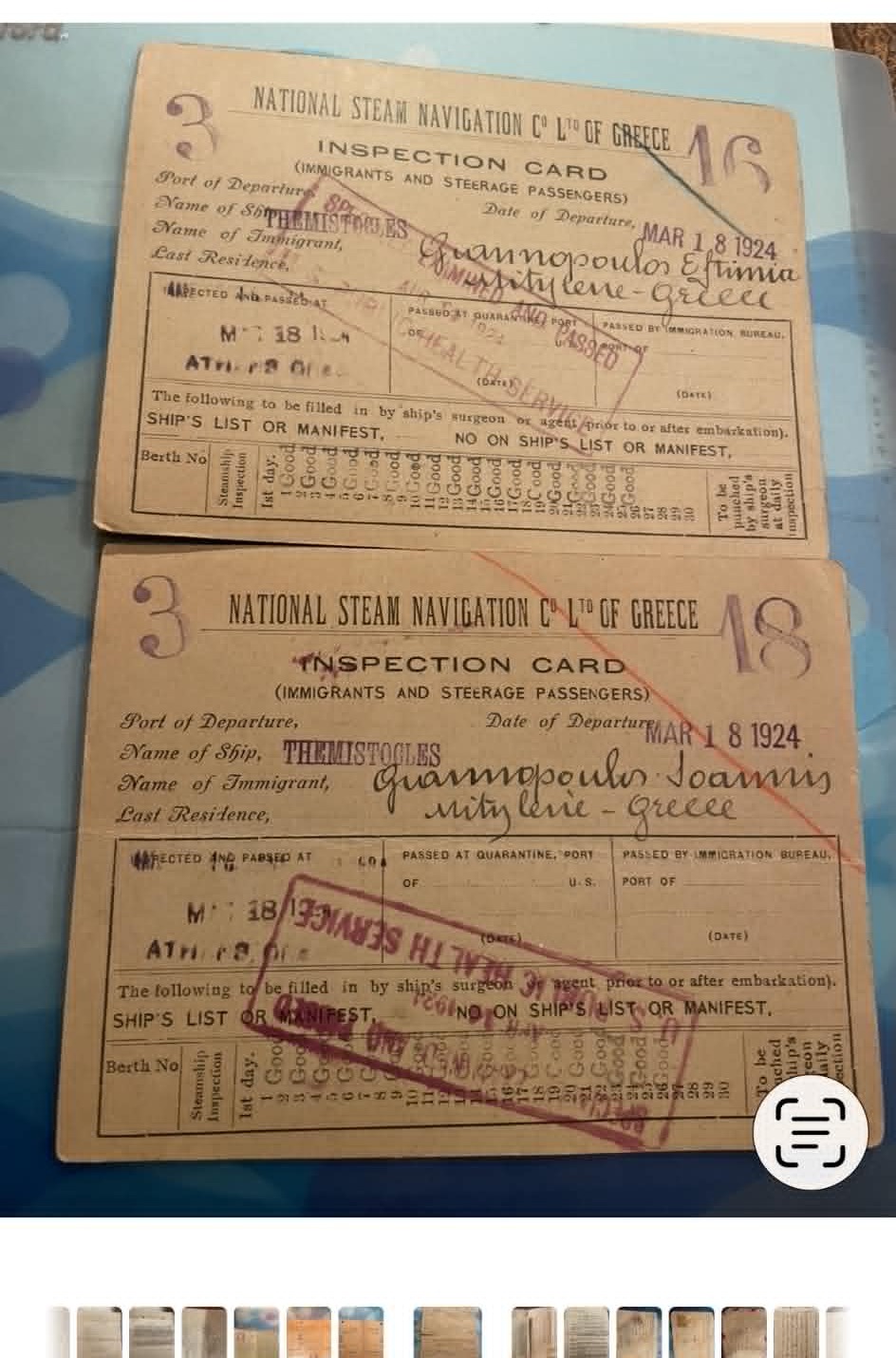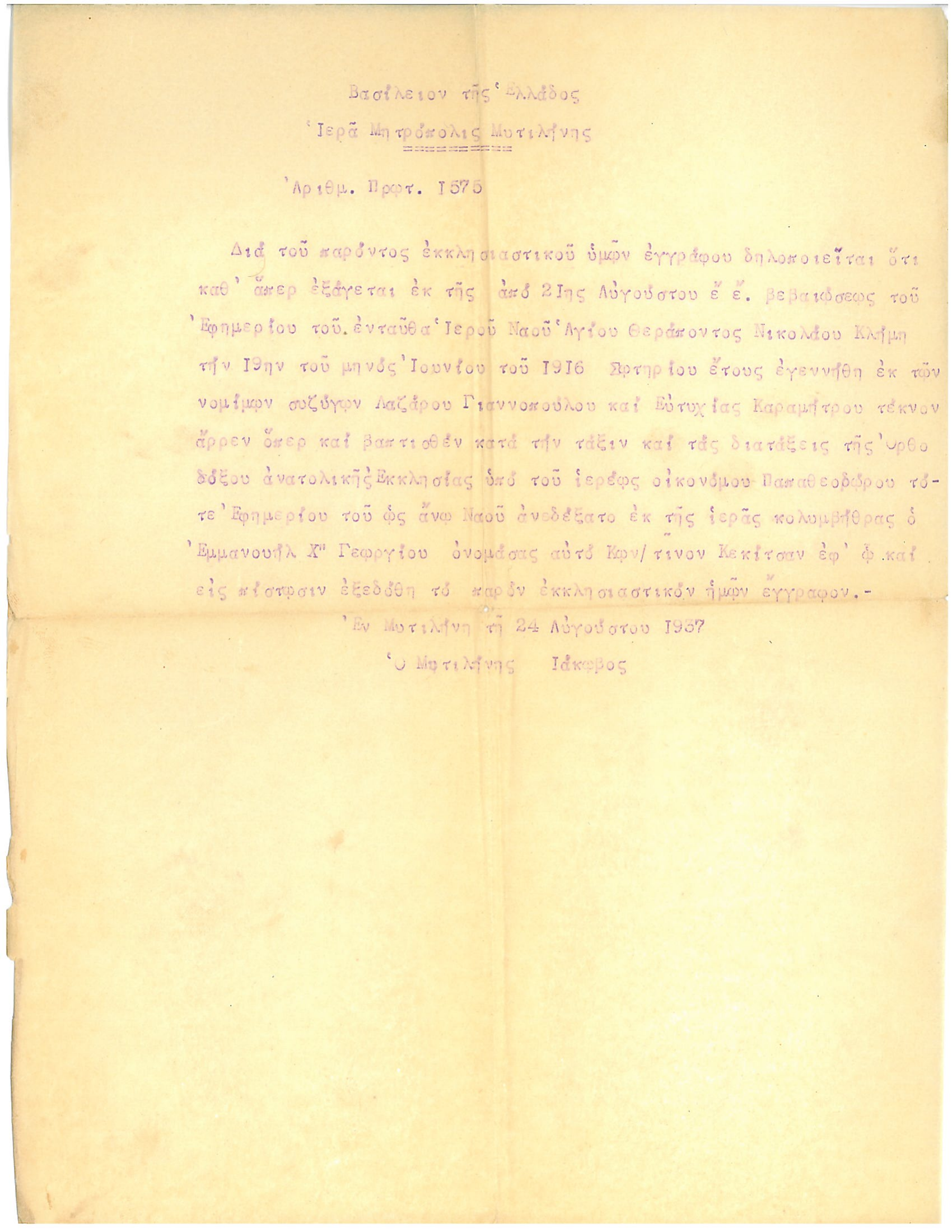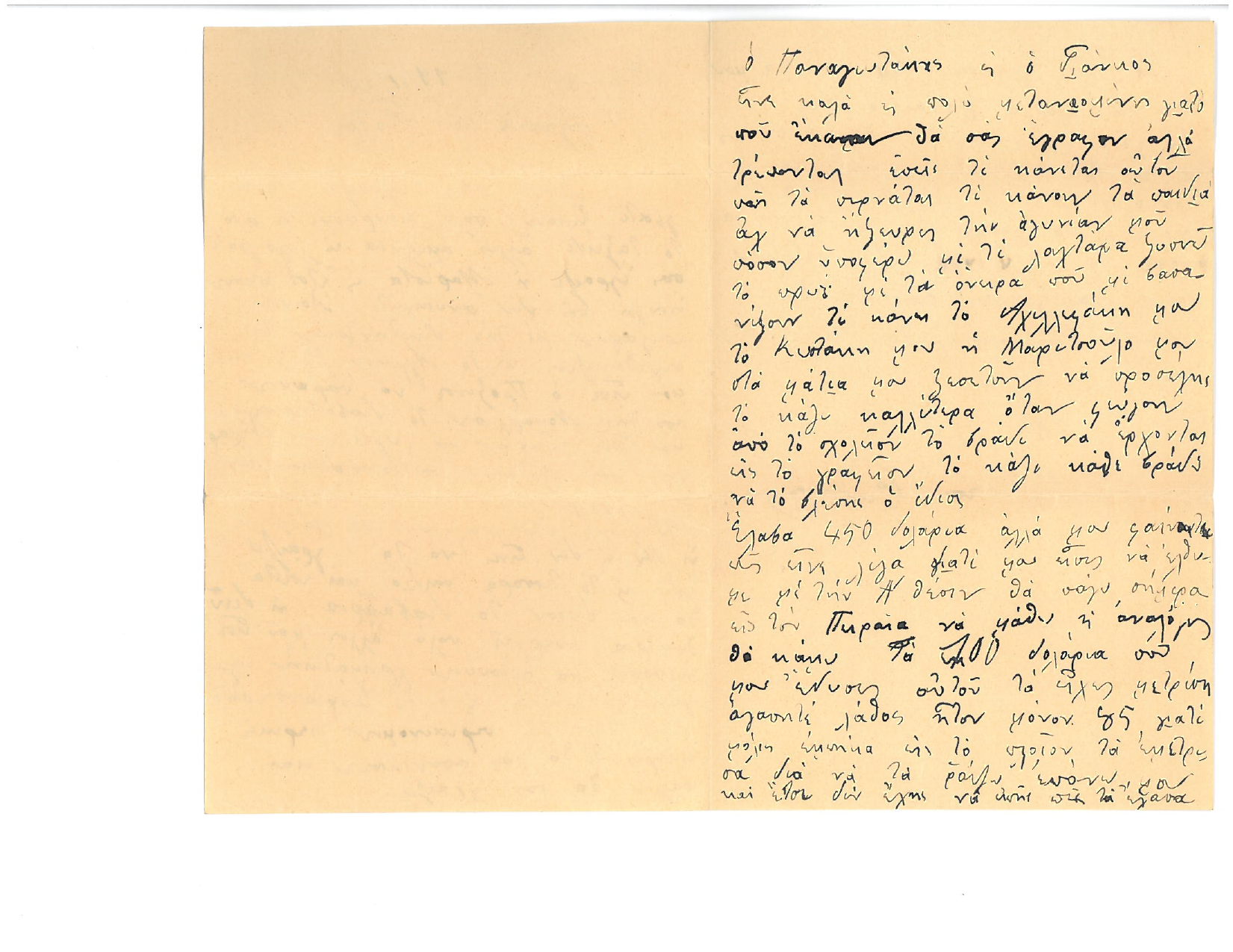
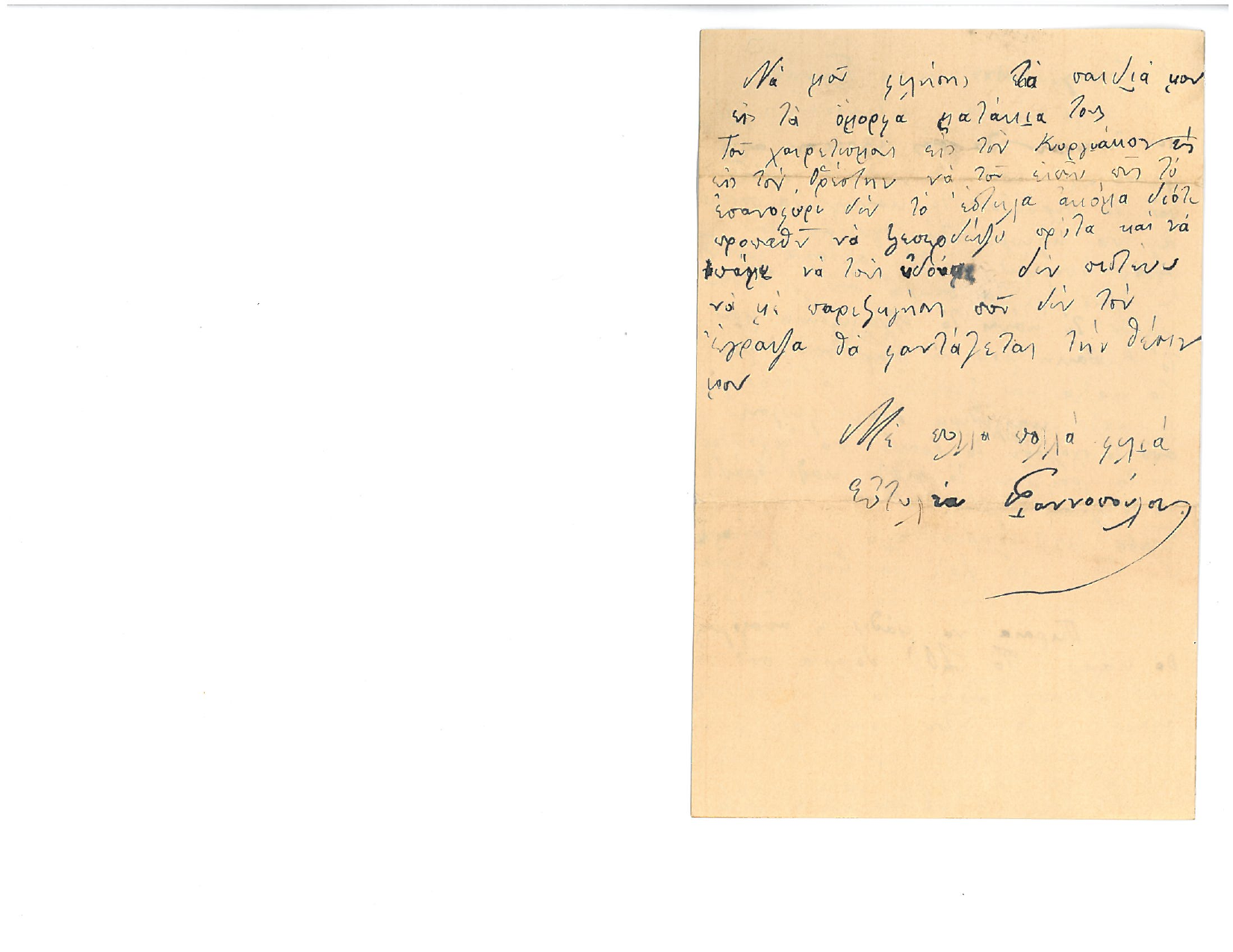
Eftyhia almost never gets to speak for herself in this archive. The records that survive about her — passport entries, refugee registration forms, her children’s birth certificates, US immigration cards, the Mytilene gendarmerie stamps — were almost all written by someone else’s hand. This document is the exception: a two-page handwritten Greek letter in her own hand, signed at the bottom of page two “Ευτυχία Γιαννοπούλου” (Eftychia Yannopoulou). It is the only known authenticated specimen of her own signature in the family archive.
The letter discusses her five children by name — Παναγιώτης (Panagiotis / Takis), Γιάννος (John Lazare), Μαρία (Mary), Κώστας (Constantine), Αχιλλέας (Achilles) — and includes references to dollar amounts ($450 and $500), indicating it concerns family finances or remittance arrangements during the immigration / settlement period.
Why this letter is exceptional
Almost everything else in the family archive that names Eftyhia is in someone else’s hand — Lazaros’s affidavit, the children’s birth records, the refugee registration forms, the Mytilene gendarmerie stamps. This letter is the single most concentrated artifact of Eftyhia’s own voice preserved in the family record. The signature “Ευτυχία Γιαννοπούλου” — her own married surname in Demotic Greek — is the only known authenticated specimen of her own signature in the archive.
For Eftyhia — born ~1874 in Pergamon (Bergama), Asia Minor, married to Lazaros, mother of five — the surviving handwriting fragments are sparse and largely confined to administrative document signatures. This letter is the only place where she writes at length about her own children and her own concerns.
What the letter records (preliminary reading)
The handwriting is Greek cursive of the early-20th-century Asia Minor school — fluent, well-formed, and unmistakably the hand of a literate Greek woman who had received a proper education in Anatolia. Eftyhia was at minimum literate enough to compose a long personal letter touching on family financial matters and naming all five of her children. Visible details from the manuscript:
- All five children named — Παναγιώτης (Takis, b. 1911), Γιάννος (John Lazare, b. 1913), Μαρία (Mary), Κώστας (Constantine, b. 1916), Αχιλλέας (Achilles, b. 1920)
- Dollar amounts: $450 and $500 — substantial sums for the 1920s, consistent with the financial-remittance discussions that pervade the Lazaros archive after the 1924 New York arrival (compare the Sofianos Piraeus financial letters of 1928 and September 1928)
- Signature: Ευτυχία Γιαννοπούλου — her own Demotic Greek surname form at the bottom of page 2
Dating the letter
The letter does not carry an explicit date. The combination of features — five-children naming, dollar-amount references, Demotic Greek signature — places it in the post-1924 period when Lazaros and the family were established in New York and managing financial arrangements with relatives and creditors still in Greece. The dollar amounts in the hundreds align with the 1924-1928 remittance window, when Lazaros and Eftyhia were actively transferring funds back to Mytilene-area family and to Piraeus intermediaries like Sofianos.
A full Greek-to-English translation of both pages is a future research line; the handwriting will likely yield specific names, places, and dates that anchor the letter more precisely.
Eftyhia’s voice in the family record
The family archive preserves Eftyhia’s existence largely through documents written about her:
- The 1923 baptismal certificate for Constantine names her as “Ευτυχία Α. Καραμητρού” — Eftychia A. Karamitrou
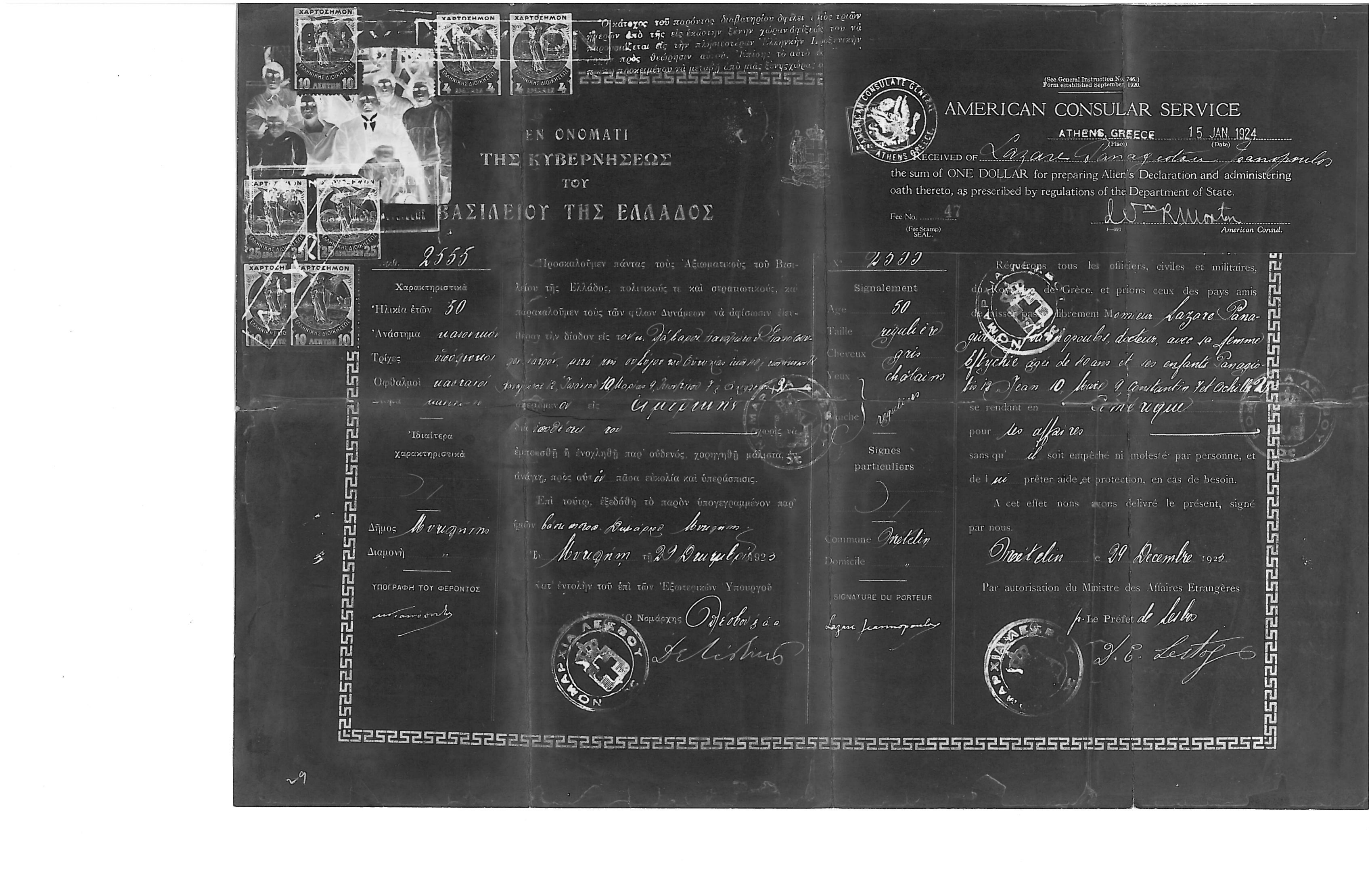
- The 1923 family passport No. 2555 records her as “sa femme Eftychie âgée de 40 ans” (his wife Eftychie aged 40)
- The 1924 refugee compensation file entered her name as Lazaros’s wife
- A 1937 Mytilene letter from “Uncle Alekos” and “Uncle Dimitrakis” references her by name
This letter — in her own handwriting, signed in her own married name — is the closest the archive comes to allowing Eftyhia to speak for herself. Without it the family record holds her image entirely through the documents others made about her. With it, she becomes a person who composed a letter about her own children, who managed money, who wrote in a fluent Greek hand.
Provenance
Preserved in Lazaros’s personal papers (2010 Peter-Jeannopoulos scan, catalog items 092 + 093). The two-page letter was kept with Lazaros’s correspondence — suggesting either that Lazaros was the original recipient, or that Eftyhia’s drafts/copies of letters were filed together with the family-business papers. The physical original is a single folded sheet (recto + verso), preserved with the rest of the Lazaros archive material that came down through Peter to the present day.
Future research
- Full Greek-to-English translation of both pages — would surface specific events, names, recipients, and dates
- Recipient identification — to whom did Eftyhia address the letter? (Probable candidates: a Mytilene or Athens cousin; a Piraeus intermediary; or one of the elder children traveling separately)
- Currency context — were the $450 and $500 sums the family’s remittance to Greece, or expected receipts from a US-based source?
- Additional Eftyhia-handwriting specimens — any other letters in her hand may yet surface from the broader archive