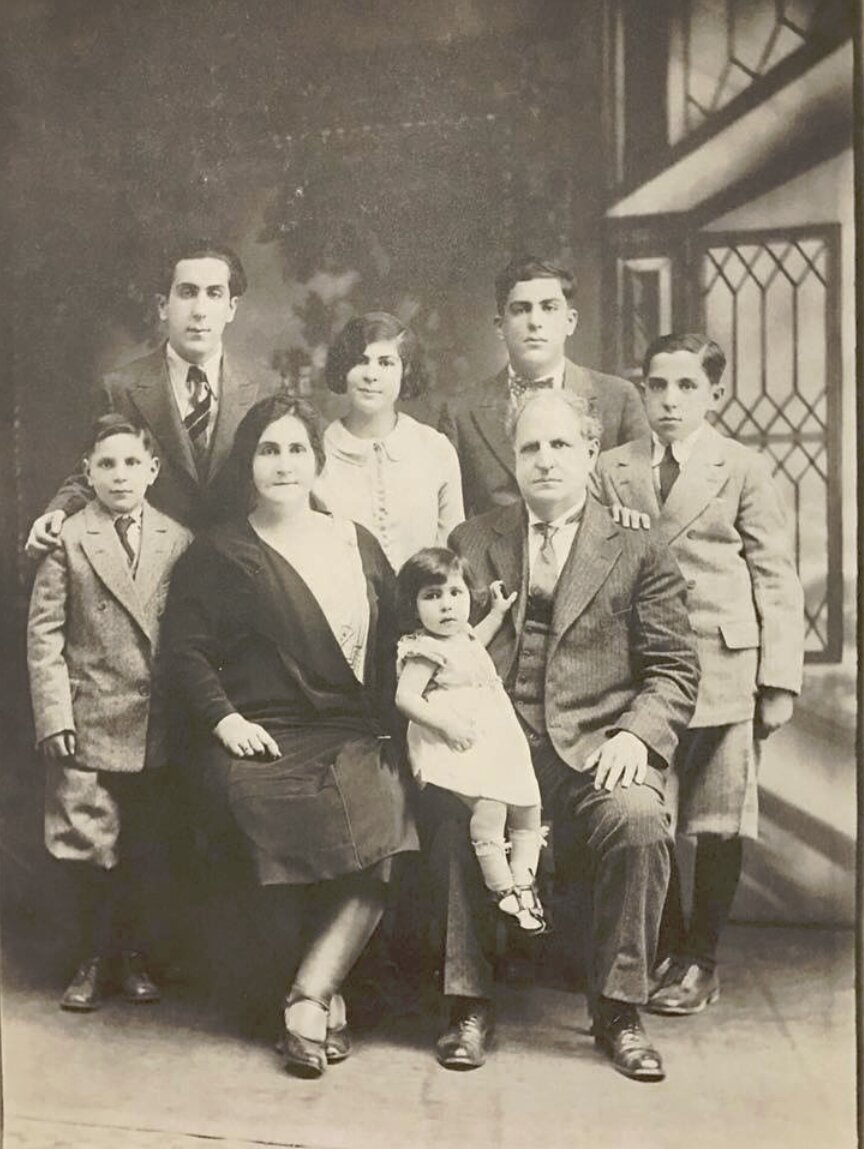
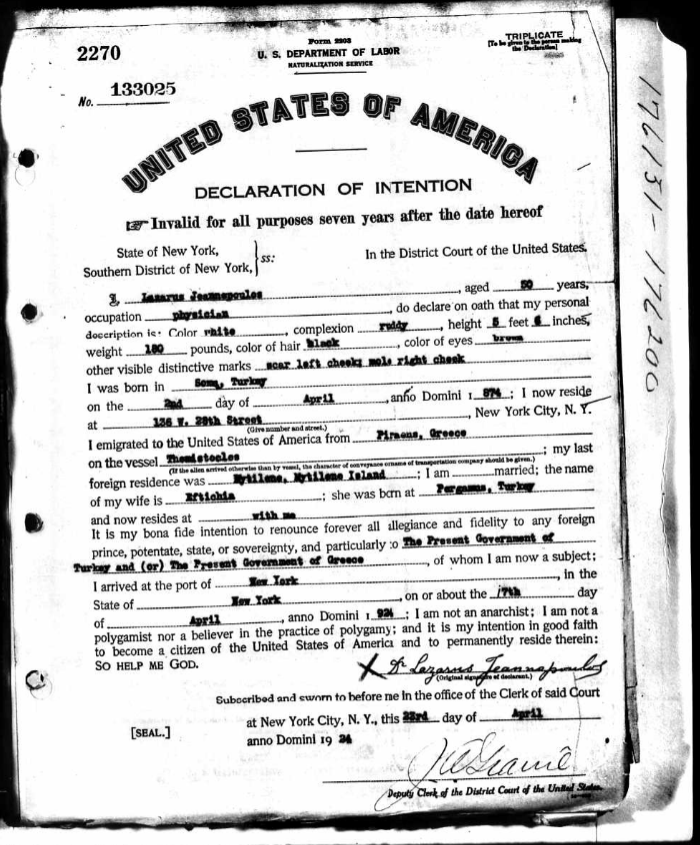
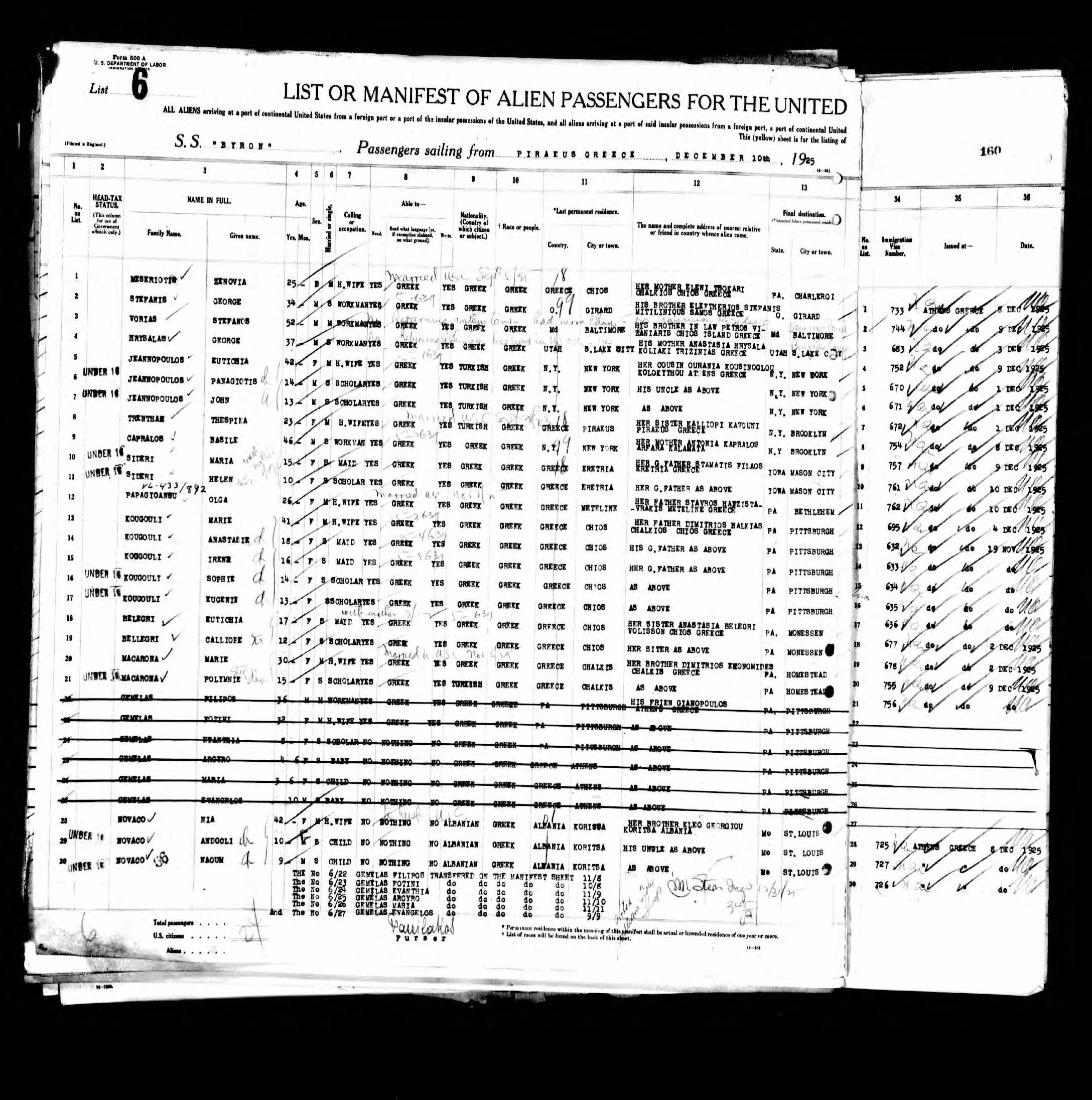
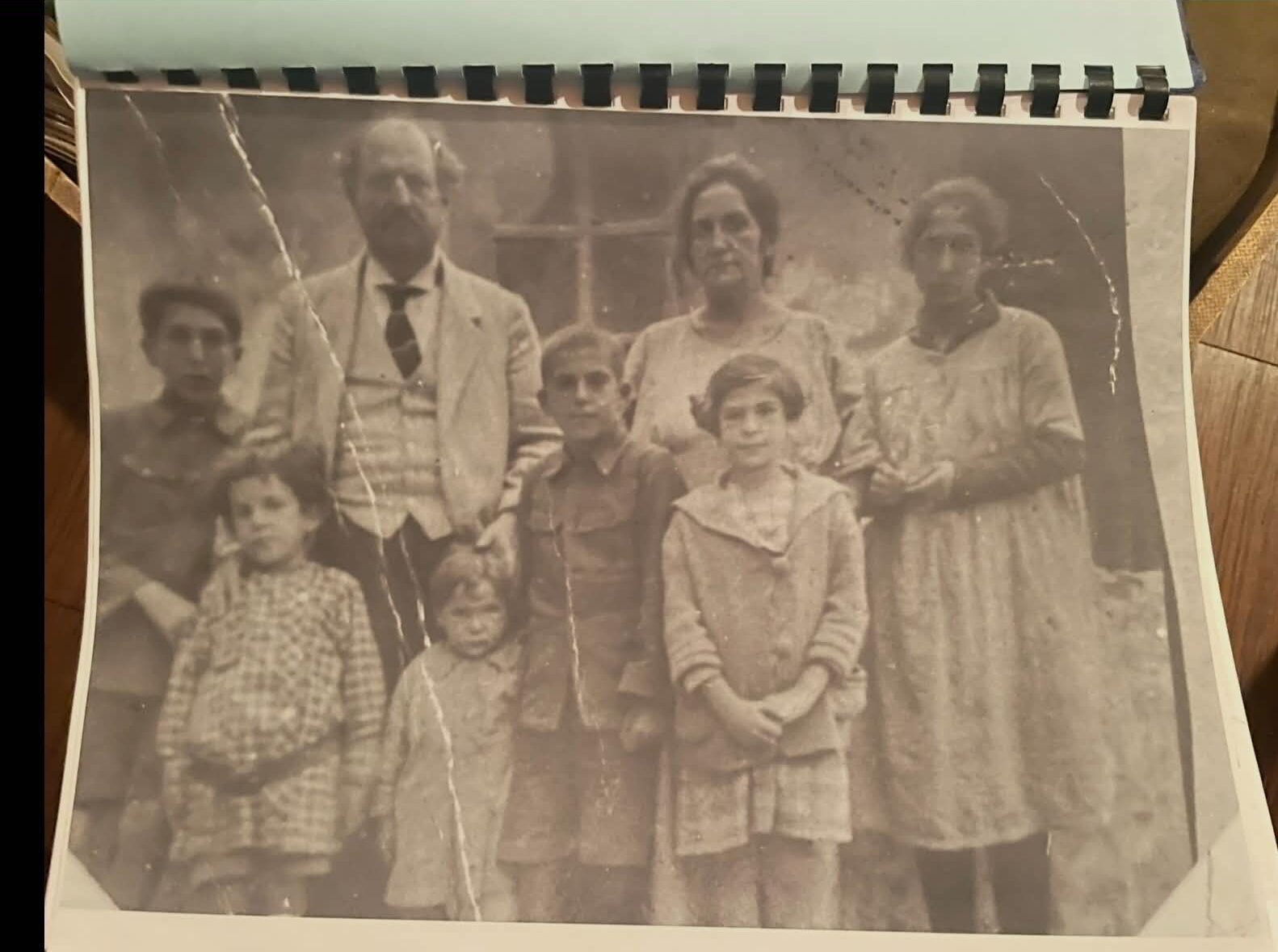
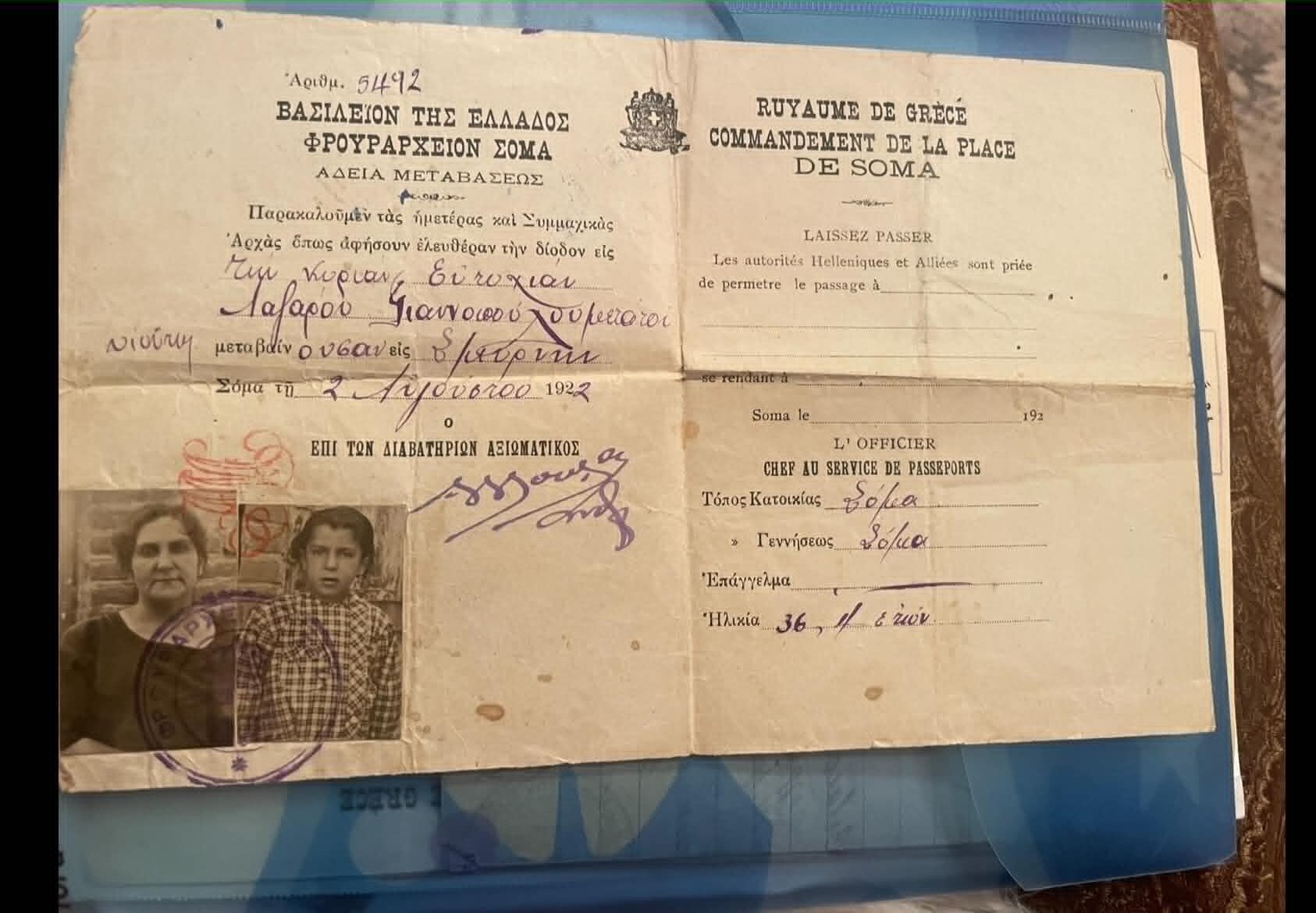
Eftyhia (Ευτυχία, “good fortune”) — the name was either prescient or ironic, depending on which decade you asked her about. She was born around 1874 in Pergamos (Bergama) in western Anatolia, daughter of a Pergamene landowner named Sofianos Karamitrou. By the time she buried her husband Lazaros in Manhattan in 1939 — she was about sixty-five — she had also raised seven children across two continents, lost one of them as an infant in the Mytilene refugee camps, falsified the birth records of her firstborn to keep him out of military conscription, posted newspaper appeals in New York when two of her teenage sons ran away to Greece, and held the household together during a period when Lazaros — by family tradition — was in an Ottoman jail under a death sentence. She had not had good fortune. She had survived it.
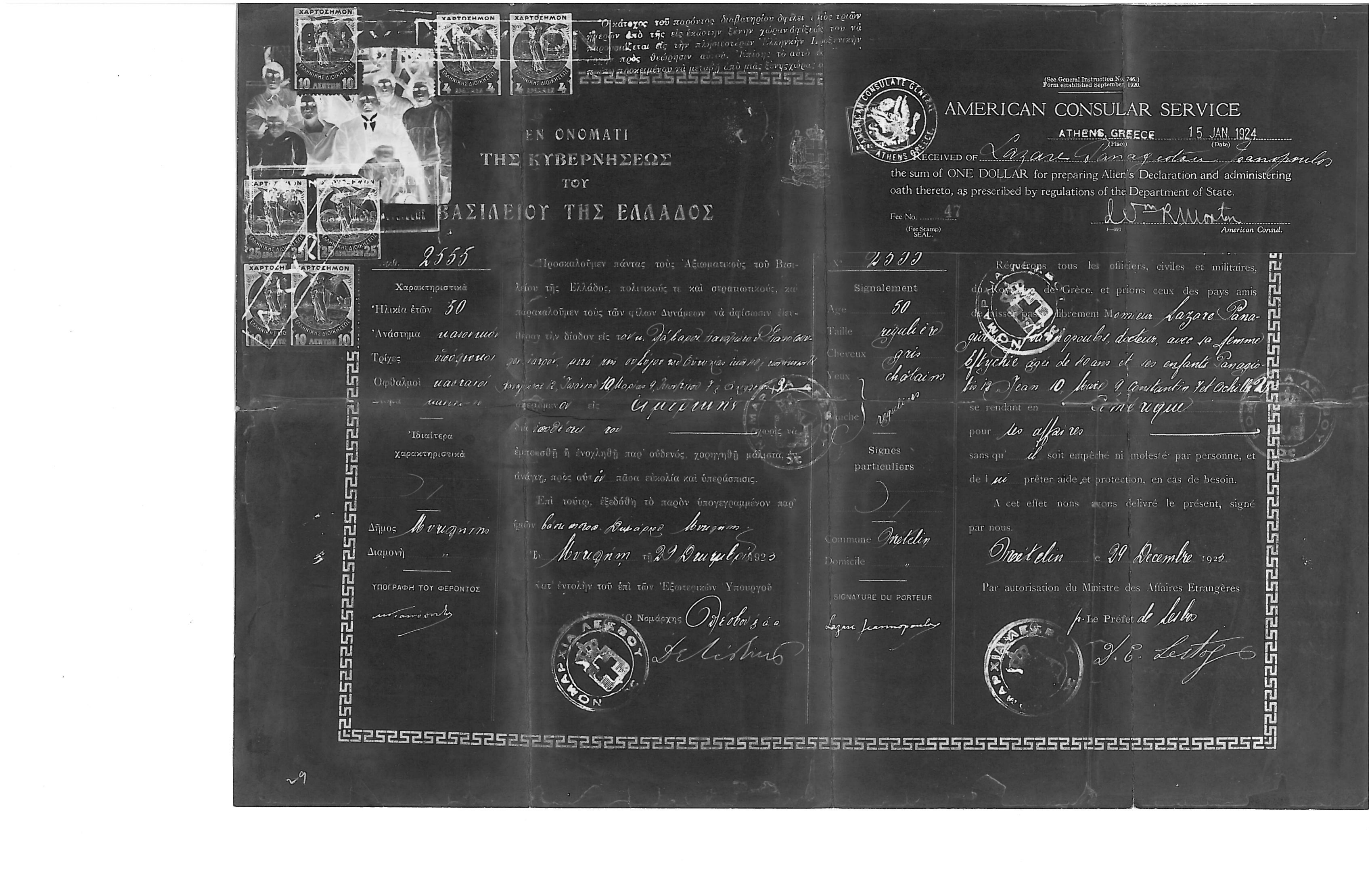
Two of her sons — John Lazare (b. March 17, 1911 actual; falsified to 1913 by Eftyhia herself to shield him from military conscription) and Takis (b. November 18, 1911) — were born in Soma, Turkey, where the family was rooted before the 1922 Asia Minor catastrophe drove them via Mytilene — the port capital of the Greek island of Lesbos — to the United States.
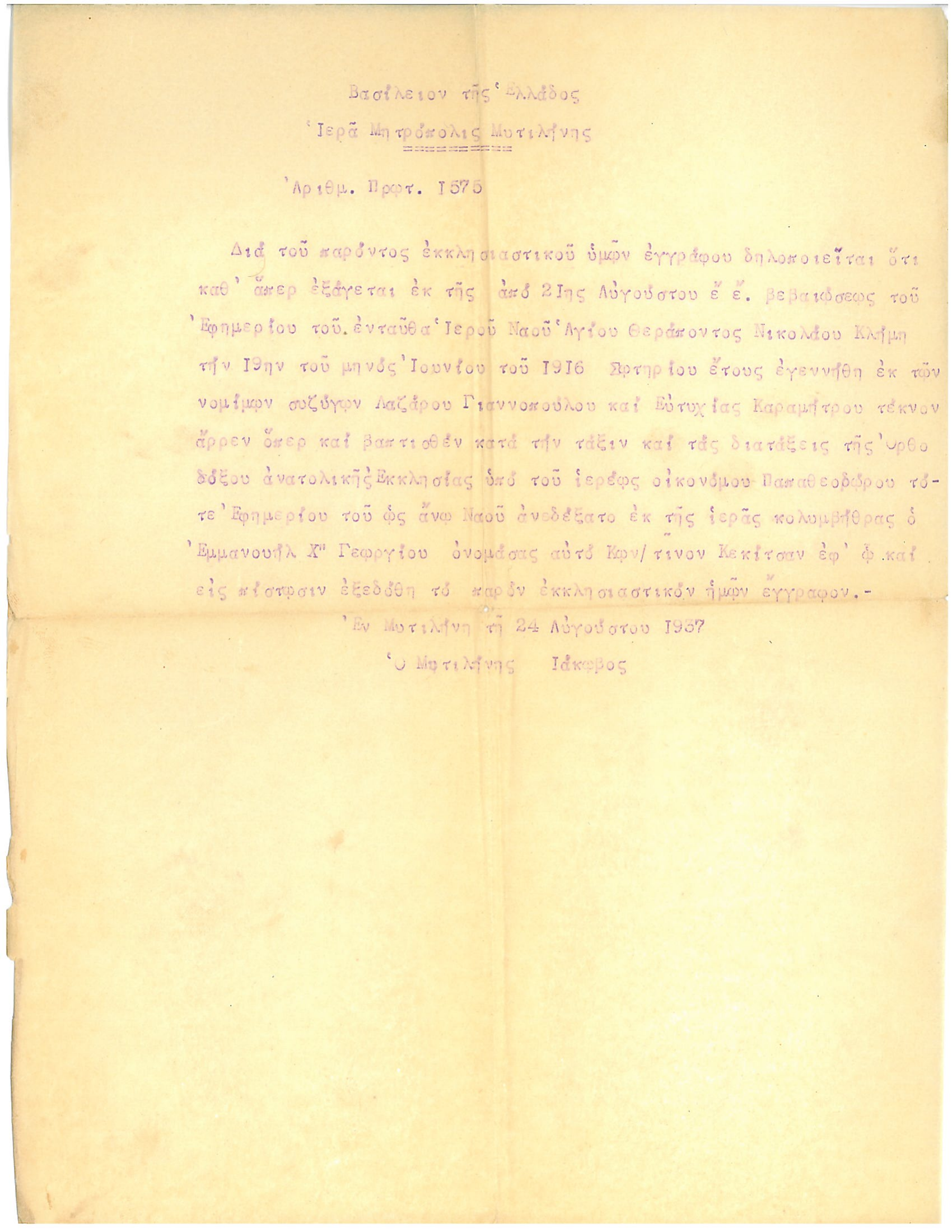
Her maiden name Karamitrou (Καραμήτρου) surfaced in May 2026 from an online Social Security Death Index archive entry for her son Achilles, which lists “Eftihia Karamitrou (mother).” The base surname is Karamitros — an Asia Minor Greek name (the “Kara-” prefix is Turkish-origin “black,” a common Anatolian-Greek pattern). This is the entry point to her parents’ generation.
Recorded across documents under several transliterations — Eftyhia (family memory), Eftimia (SS Themistocles 1924 inspection card), Eftihia (the Karamitrou archive entry) — all the same Greek name Ευτυχία.
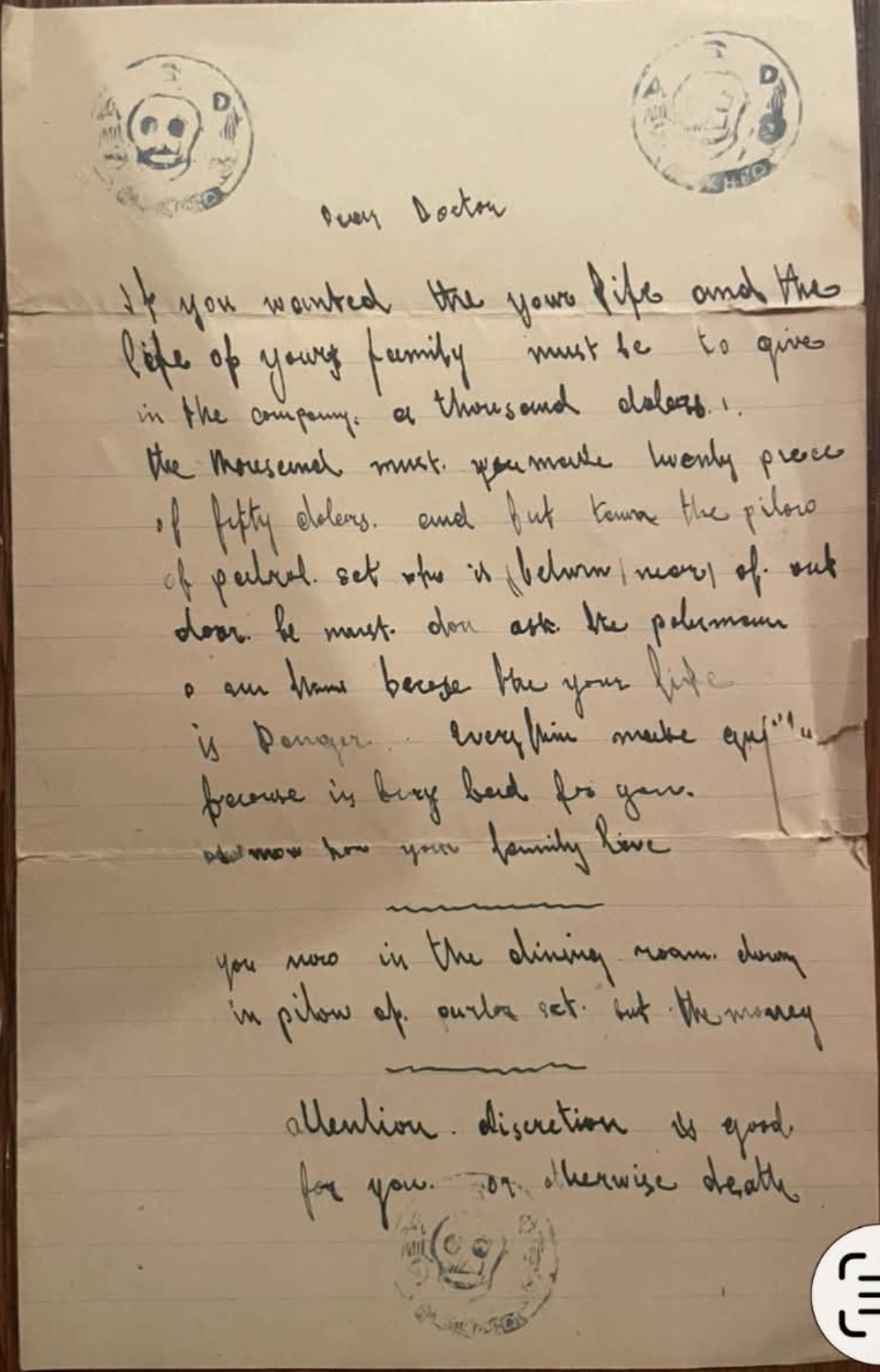
Per her granddaughter Aline (May 2026), Eftyhia was an actively protective matriarch who falsified her firstborn son John Lazare’s birth year from 1911 to 1913 to shield him from military conscription, sustaining the lie across decades and into the US records chain. She was at the center of the 1924–25 family crisis when John and Takis ran away to Greece — posting newspaper notices in NYC and dealing with a fake ransom note before the boys were brought back. And, by family tradition (Aline 2026), she was the wife back home when her husband sat in an Ottoman jail under a death sentence, waiting to learn whether a provincial pasha’s labor-room emergency would commute his sentence to exile. The story has come down to us through her grandchildren; her own perspective on it has not. She must have been in her late thirties at the time, with at least four children at home, and her husband three weeks’ ride away in a cell.
The baby sister
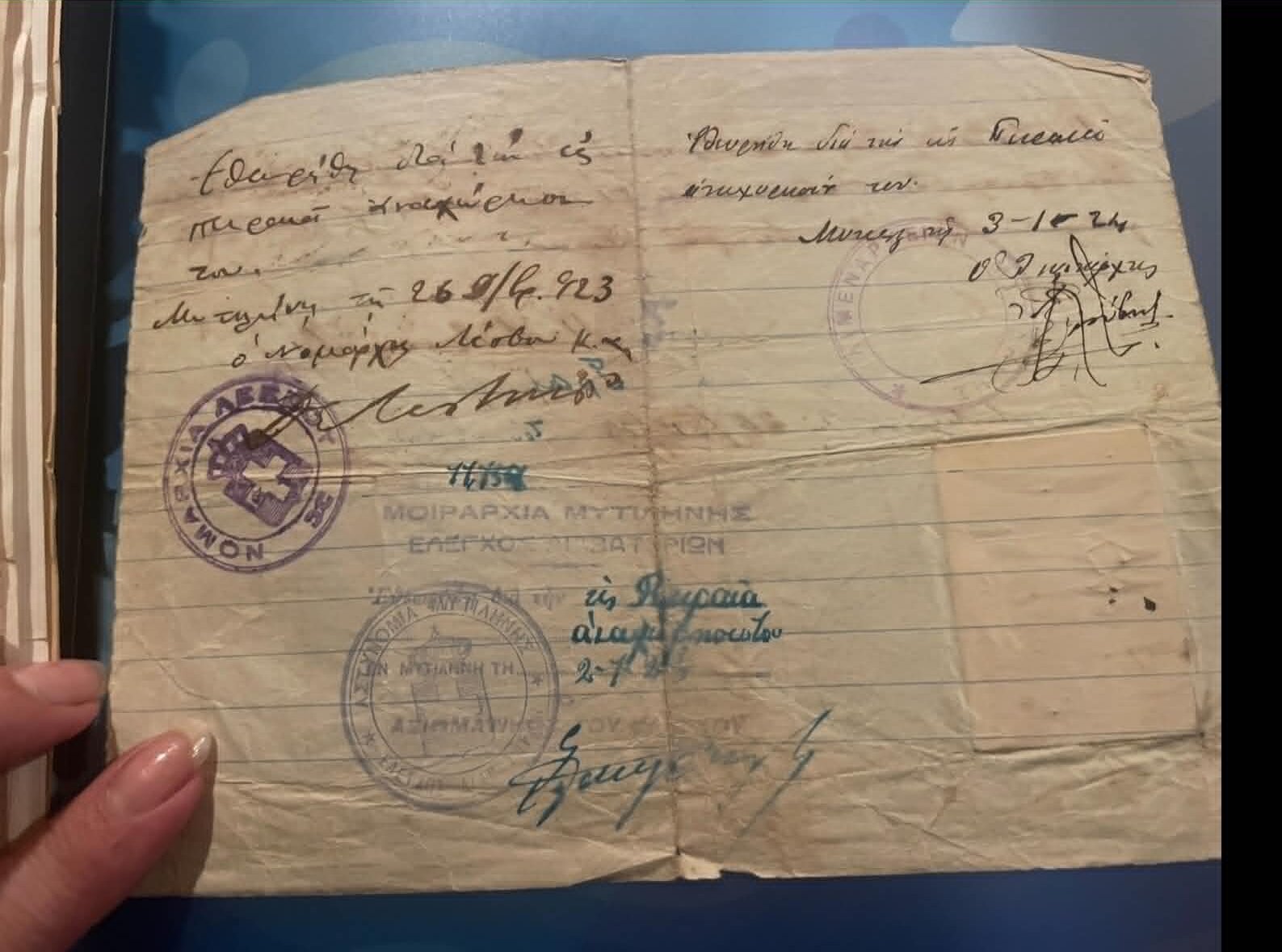
Family tradition (Aline Pepe via her father John Lazare, May 2026) records that one of Eftyhia’s children — an infant daughter — died in the Mytilene refugee camp during the family’s 1922–1924 refuge on Lesvos. The public story given out by the family was pneumonia; Aline’s father later told her the actual cause was malnutrition. They didn’t want to admit, the saying goes, how bad it had gotten. The baby’s name has not survived. Eftyhia would have been the one closest to her — a daughter lost in the worst year of a worst decade, between a son she had hidden from conscription and a daughter (Rhea) she would not have for another four years.
Her own voice
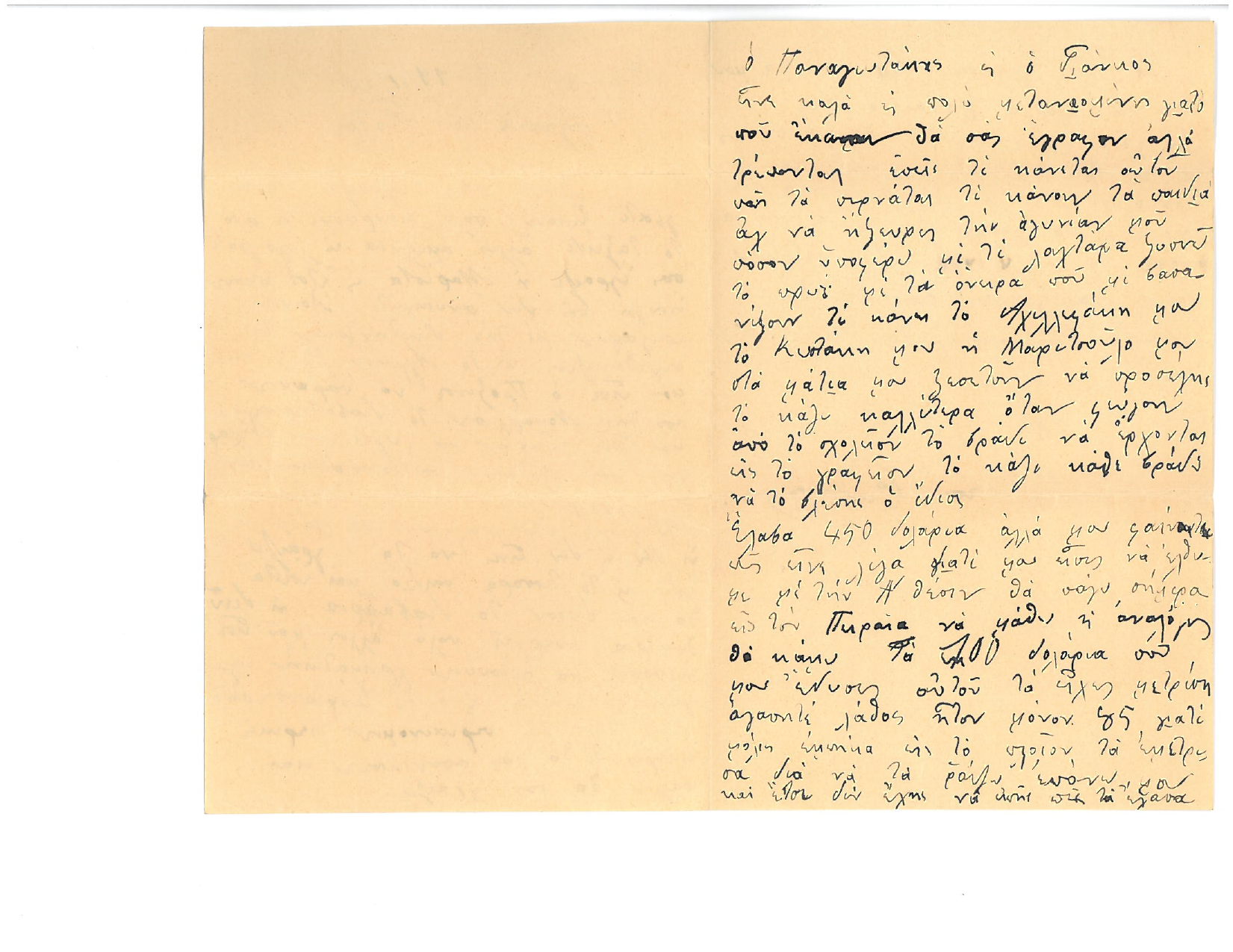
A two-page letter in Eftyhia’s own hand survives in the family archive, signed “Με πολλά αγία / Ευτυχία Γιαννοπούλου” (With much love, Eftychia Yannopoulou). She writes about her children, naming all five in maternal diminutives — Παναγιωτάκης (Takis), Γιάννος (John), Κωσταμή μου (“my little Kostas” = Constantine), Αχιλλάκη (little Achilles), and Μαριτσούλα μου (“my little Maria”). The letter discusses their daily care (warming milk, evening routines), dollar transactions sent to Greece, and ends with the line “Write to me about my children, my beautiful own ones…”
It is the first primary-source document we have written by Eftyhia herself.
Her Pergamene family — and the warning that wasn’t heeded
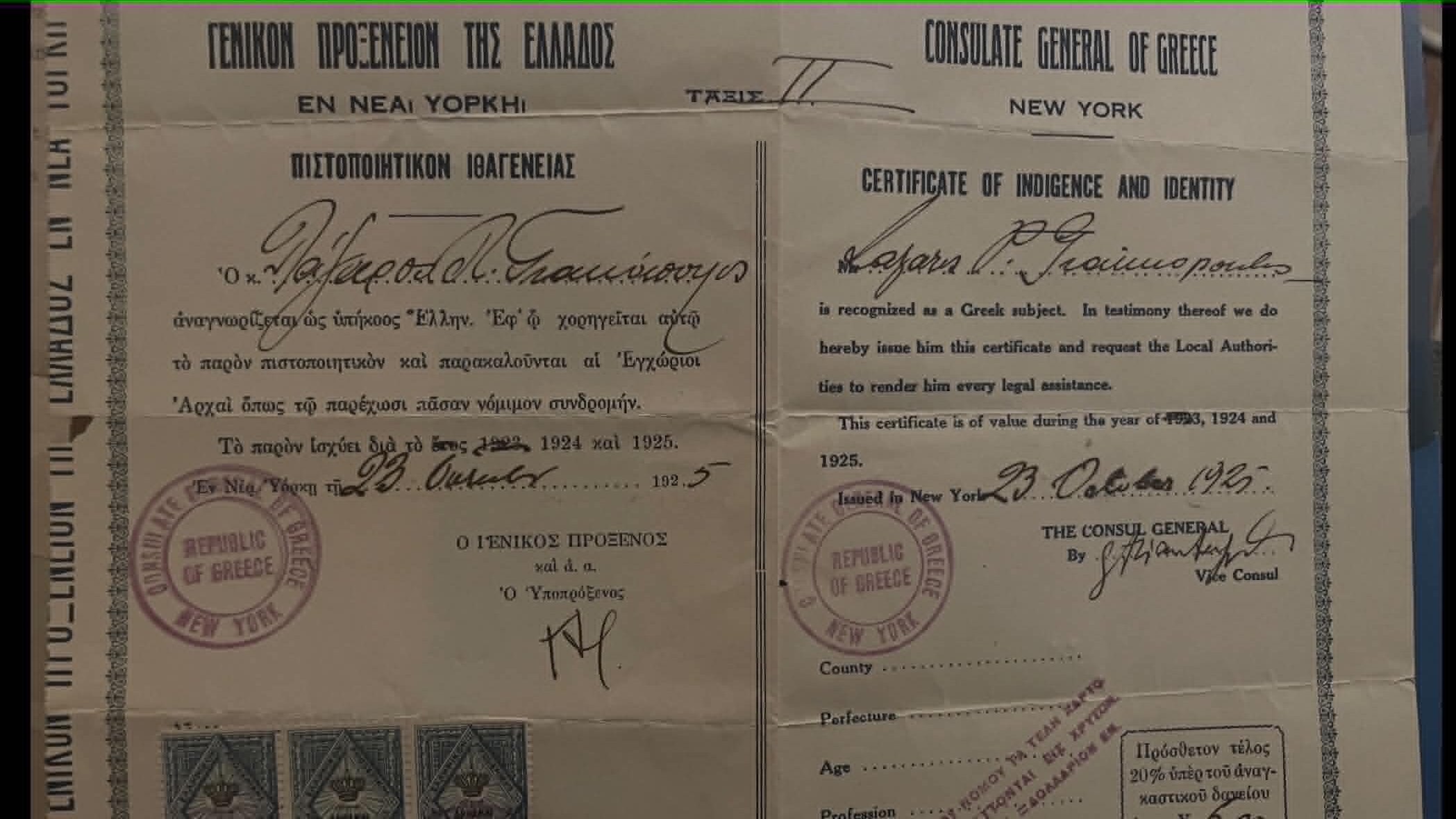
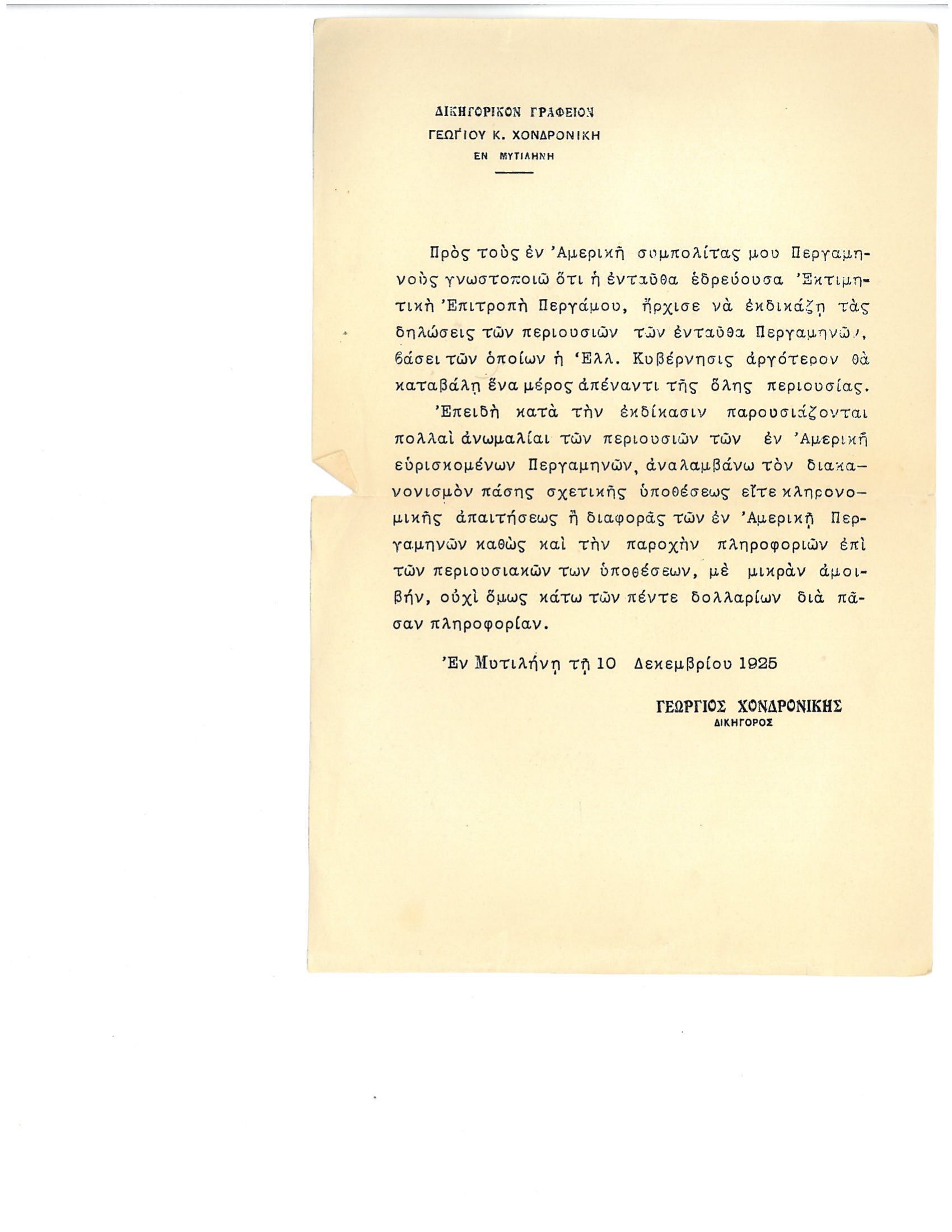
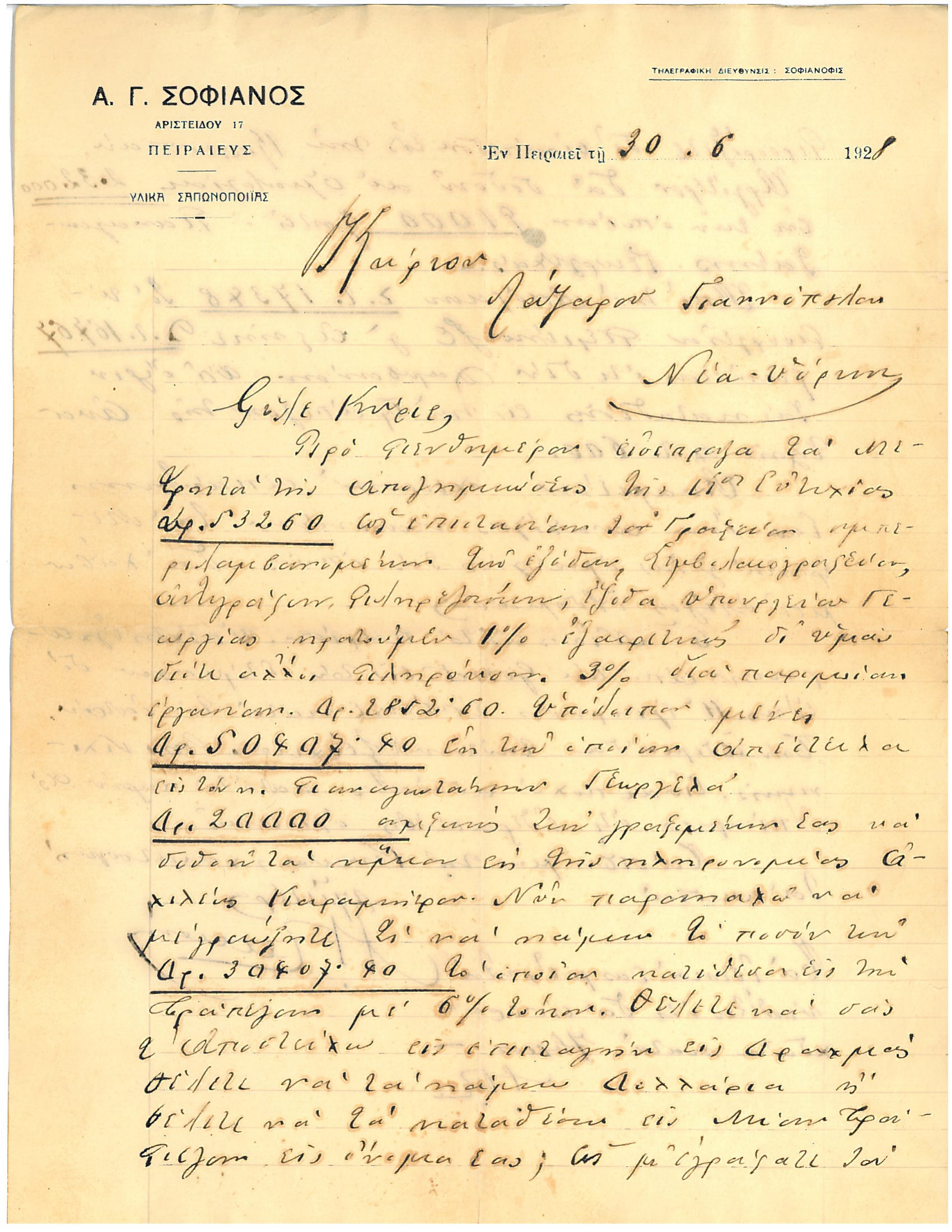
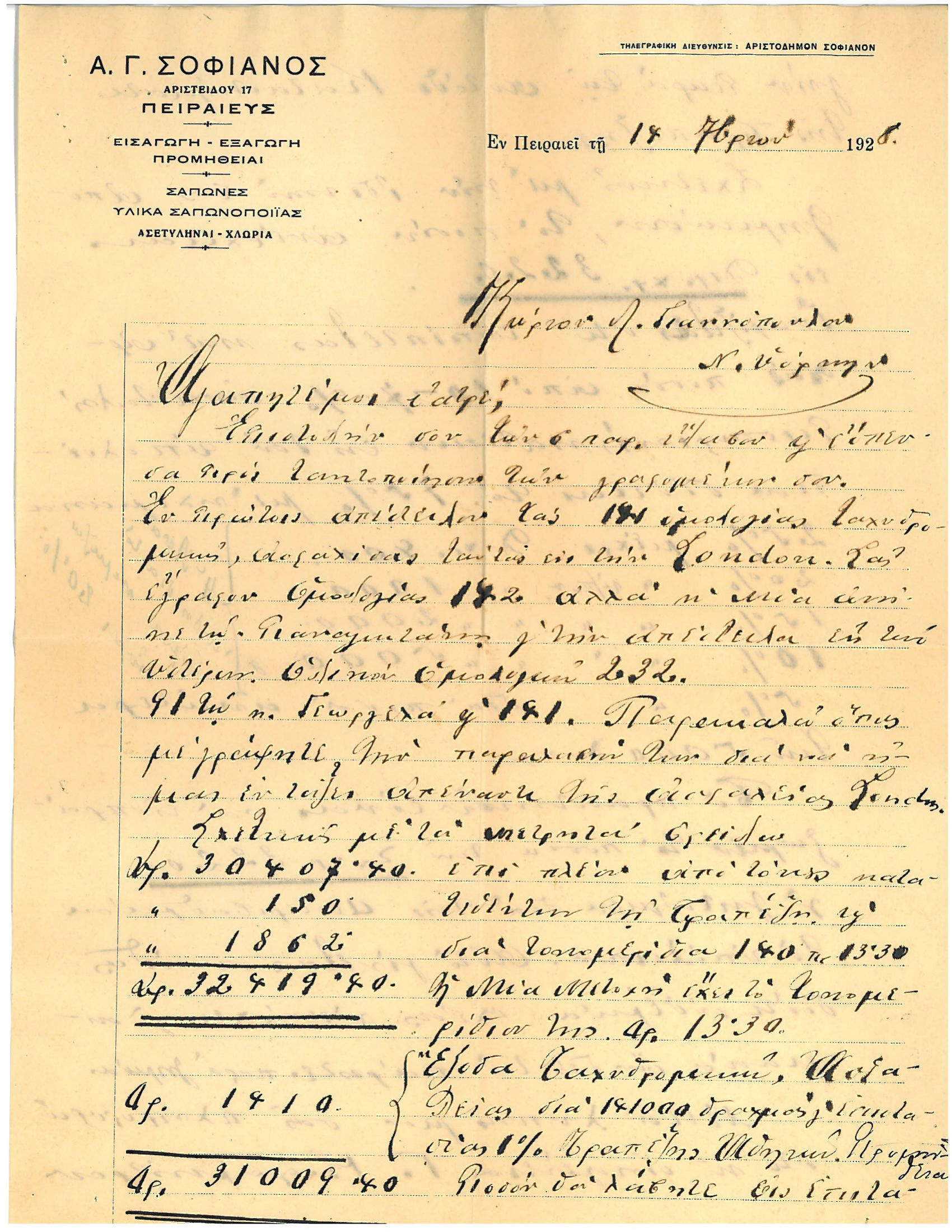
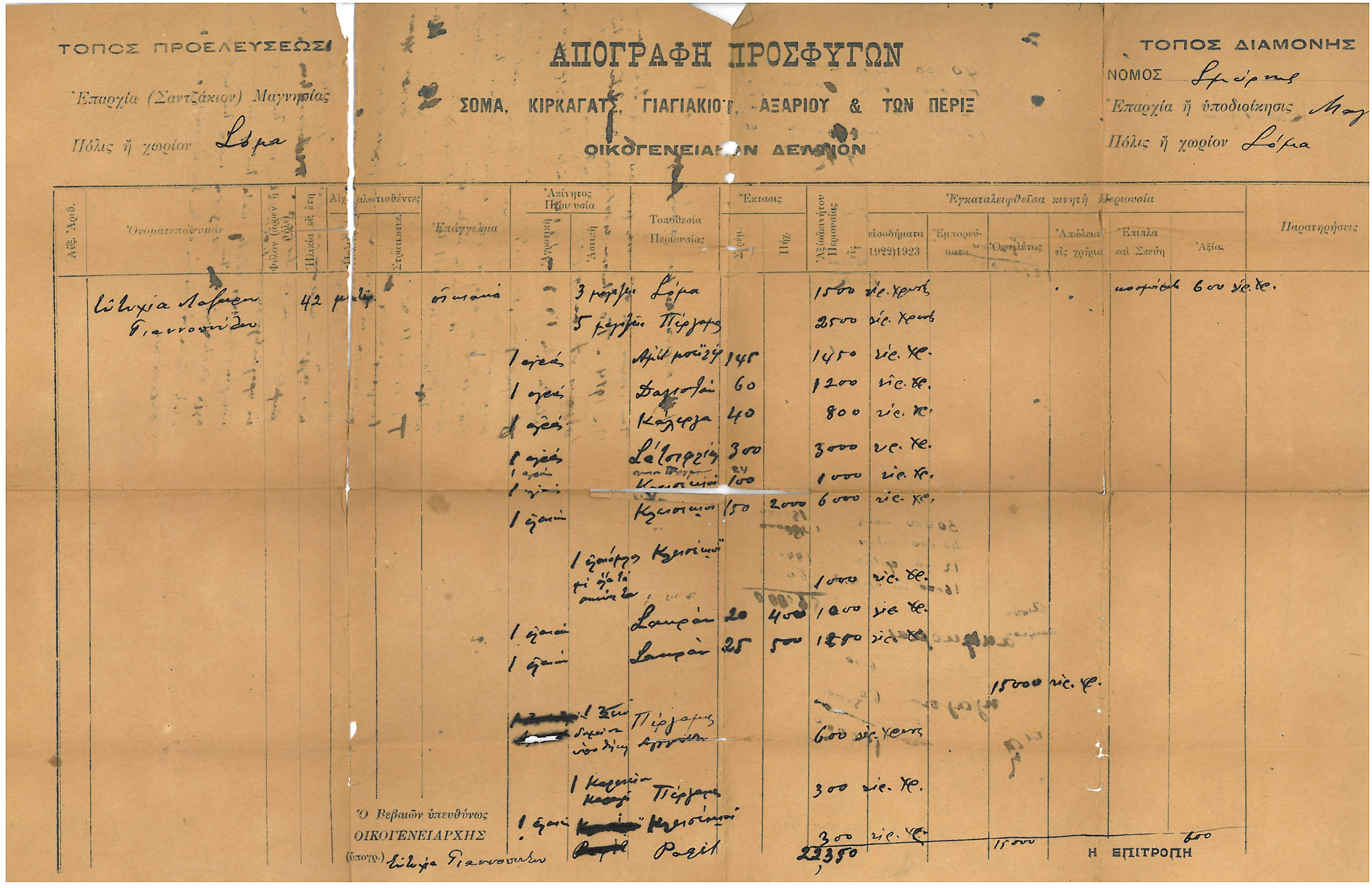
Eftyhia was born in Pergamos / Bergama. Her family — the Karamitrou line — were Pergamene Greeks. Her father, Sofianos Karamitrou, was a Pergamon-area landowner. From New York, Lazaros pursued formal Greek-state compensation claims for the lost Bergama property in parallel with his own Soma estate, working through correspondents in Mytilene and Piraeus through the late 1920s.
In May 2026, her granddaughter Aline Pepe added a piece of family memory that recasts the 1922 catastrophe within the family: Lazaros warned the people of Pergamon — including Eftyhia’s own family — to leave before the catastrophe came. They did not. A massacre followed. Aline’s father John Lazare, going through old photos with her, would name relatives in the pictures and say “killed by the Turks.” His favorite grandmother — Eftyhia’s mother — was among those lost. Aline’s aunt added another loss: twin young girls in the family were killed (or, per a second informant, taken) by Turkish forces in the same period.
Eftyhia therefore survived a catastrophe — she was about forty-eight in 1922 — in which she lost her mother, her sister, nieces and nephews who were only children, and likely the twin girls — losses she carried for the next forty-six years. Of her seven children, one infant daughter died of malnutrition in the Mytilene refugee camp while she was still nursing her other five children through the same camp. Forty years later, in NYC, she would also grieve her grandson Peter “Didi” Econom — Rhea’s only son — who died at approximately five years old around 1962. The “good fortune” of her name became a fact she had to grow into.
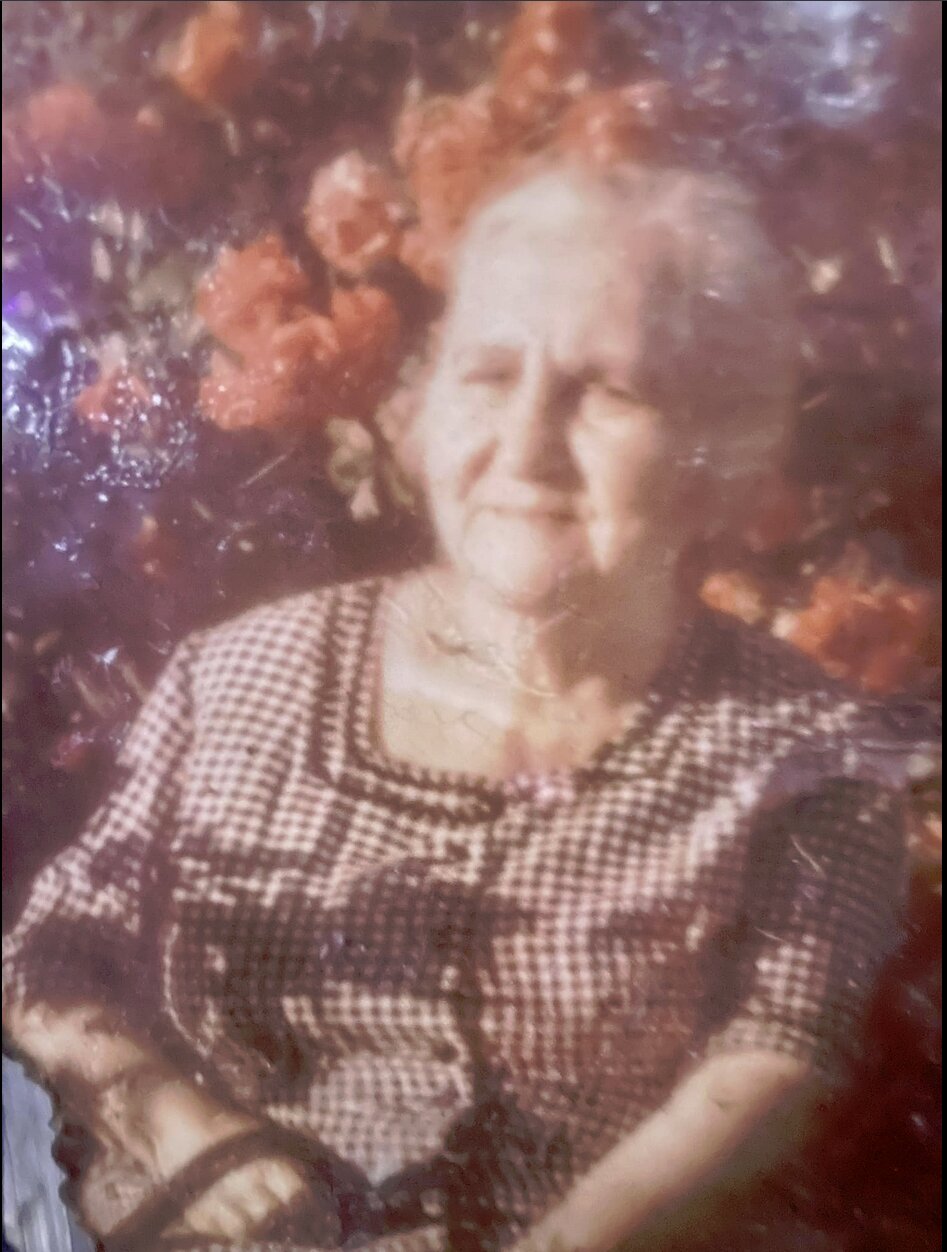 The photograph Aline’s 2026 memoir opens with — Eftyhia “Nene” in the rare white-with-dark-print summer dress (she otherwise wore black), seated in front of the family’s rose bushes. Color portrait, faded to soft reds; mid-1960s. The dress Aline saw her in only once.
”Nene” — through her granddaughter’s eyes
Aline’s May 2026 portrait — written years before, and shared with Alex — is the closest single document to Eftyhia’s day-to-day self. The whole portrait is preserved in OneDrive/Documents/personal/family/ancestry/aline/2026-05-24_aline_pepe_email_eftyhia_lazaros_brothers.txt. The substance:
Her name in the family was Nene — the Asia-Minor / Turkish-inflected diminutive for grandmother, not the Greek-mainland Yia Yia.
By the time Aline was born, Nene had been a widow for decades but still dressed in black — mostly. “At times, when it was really warm, she wore her lighter weight dark grey summer dress.” Only once did Aline see her in a white dress with a tiny dark print, sitting in front of the family’s rose bushes for a photograph that the family still has.
Heavy-set, large-breasted, with a lap made for snuggling grandchildren. Long, almost waist-length hair — bun by day, two braids at night. Aline loved watching her brush it out in the mirror of her cozy little bedroom.
Her hands were never idle. When she wasn’t cooking, she was doing fine embroidery and lace crocheting — and Aline found out only after her death that all those small, careful items had been meant as wedding dowry gifts for her granddaughters.
The Mary Poppins drawstring bag. Nene had a magical bag tucked into the left side of her bra. Inside: colored threads, bandaids, hair ribbons, buttons, charms — “it wouldn’t have surprised me if she pulled out a fishing lure if my Dad had lost one” — and two kinds of candy: peppermint, and butterscotch. The grandchildren rejected the butterscotch, taking the peppermint instead. Aline never knew why Nene kept the butterscotch.
“Years after she had passed, as my Uncle Takis lay dying from cancer, a last ditch effort of Chemo had left him nauseous and unable to eat anything. He had grabbed onto my arm, and begged me to go get him something, which took me hunting store to store as I finally knew who those Butterscotch candies were for.”
She had one fear — lightning. Aline learned both her grandmother’s fear of lightning and the strength of her temper one morning by dragging her cousin out of bed at dawn in a thunderstorm to dance on the bulkhead at the beach house, shouting “Singing in the Rain” over the waves. Nene came out, made the sign of the cross three times, dragged Aline in by her ear, and stripped both children out of their wet pajamas. No peppermint candy that day.
She had survived a radical mastectomy in the 1930s — the brutal, no-thought-of-aesthetics surgery of that era. She kept it secret. Aline once opened the bedroom door too early one night and caught her grandmother undressed, the deep scar of the mastectomy plainly visible. “What strikes me even today, is that this incredibly modest woman, didn’t grab her nightgown to cover her nakedness but to shield me from the sight of it.” Aline never asked, never told anyone, until decades later when she put it on paper.
Aline’s framing — Amazonian. She closes the portrait by writing about the recent archaeological discovery of Bronze-Age women warriors buried with shields, arrows, and horses in the Black Sea region of Anatolia — the proposed historical basis for the Iliad’s Amazons, the legendary single-breasted warrior-women who sacrificed a breast to be better archers, to live on their own terms, to survive. The word Amazon, in ancient Greek, means one-breasted. “I never doubted it. I had all the proof I needed of amazing Amazonian strength and beauty, the night I saw my grandmother in her bedroom.”
She died at the bungalow — the family’s beach house — with her sons Takis and John at her side. Aline writes that she had never seen her father and uncle weep so much before that day. She was buried at Mt Olivet Cemetery in Queens, alongside Lazaros and (later) Takis.
Two photographs
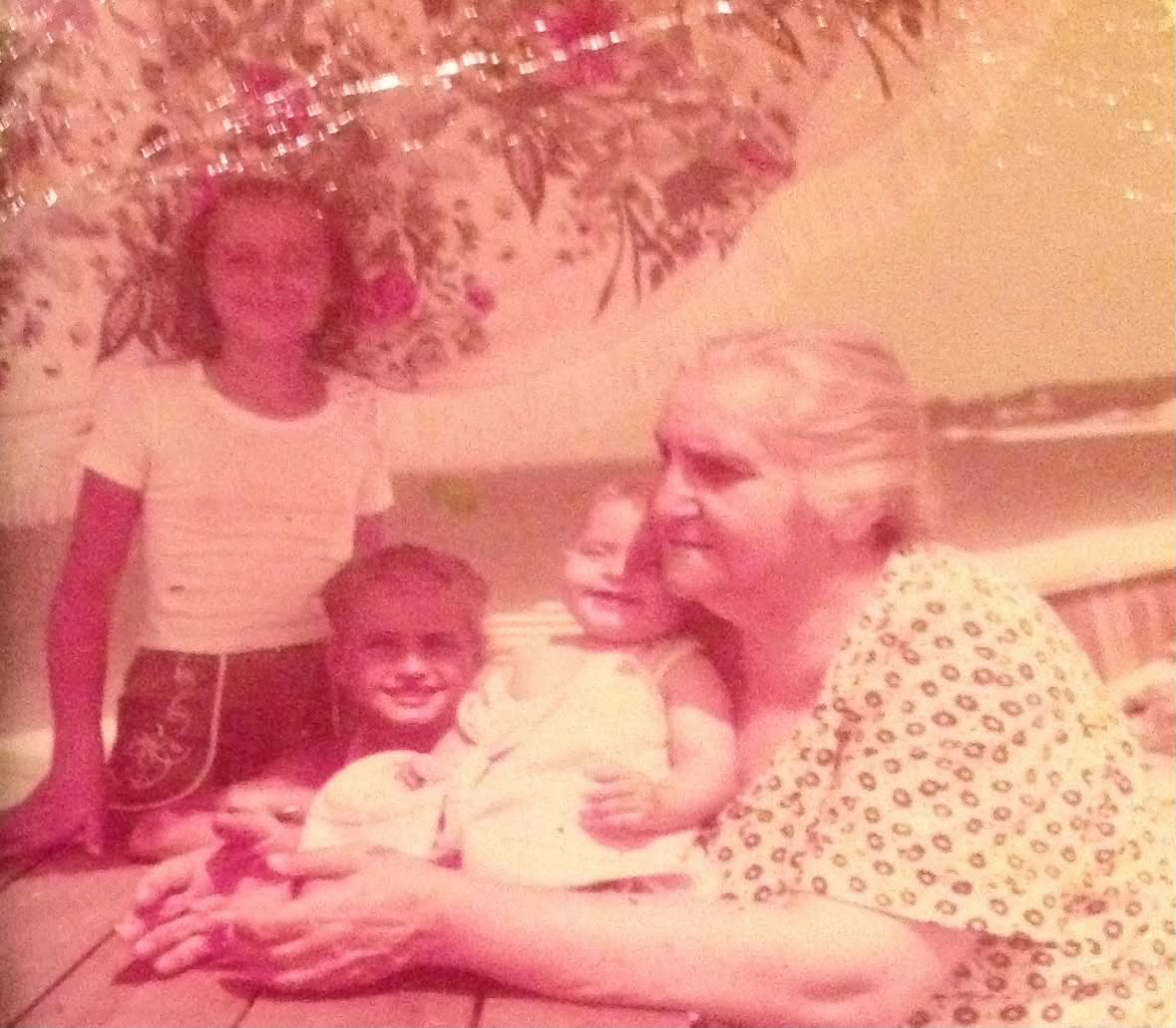 Eftyhia (“Nene”) at the bungalow with three of John Lazare’s daughters — almost certainly Mya, Claudine, and the youngest Aline. The porch is visible at the right edge; her summer dress is the one Aline described in her bungalow memoir. Pink-faded color, undated, mid-1960s.
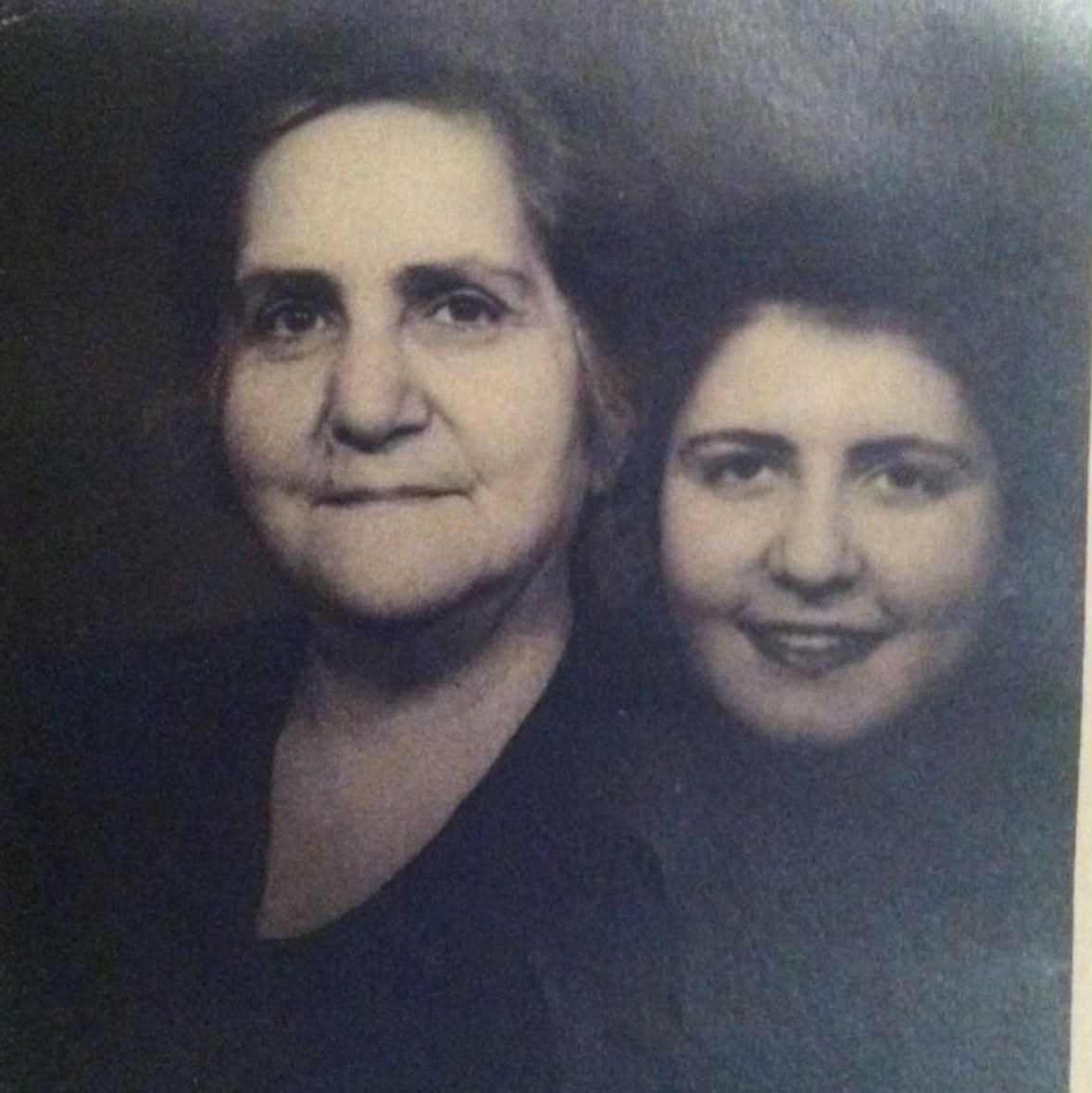 Eftyhia with her youngest daughter Rhea Jeannopoulos Econom (“Lula”) — the only one of her seven children born in America, and the only one to be photographed beside her like this. Rhea looks to be in her late twenties; the portrait dates to the early-to-mid 1950s, in the NYC years before Rhea and Leonidas moved to California in 1964.
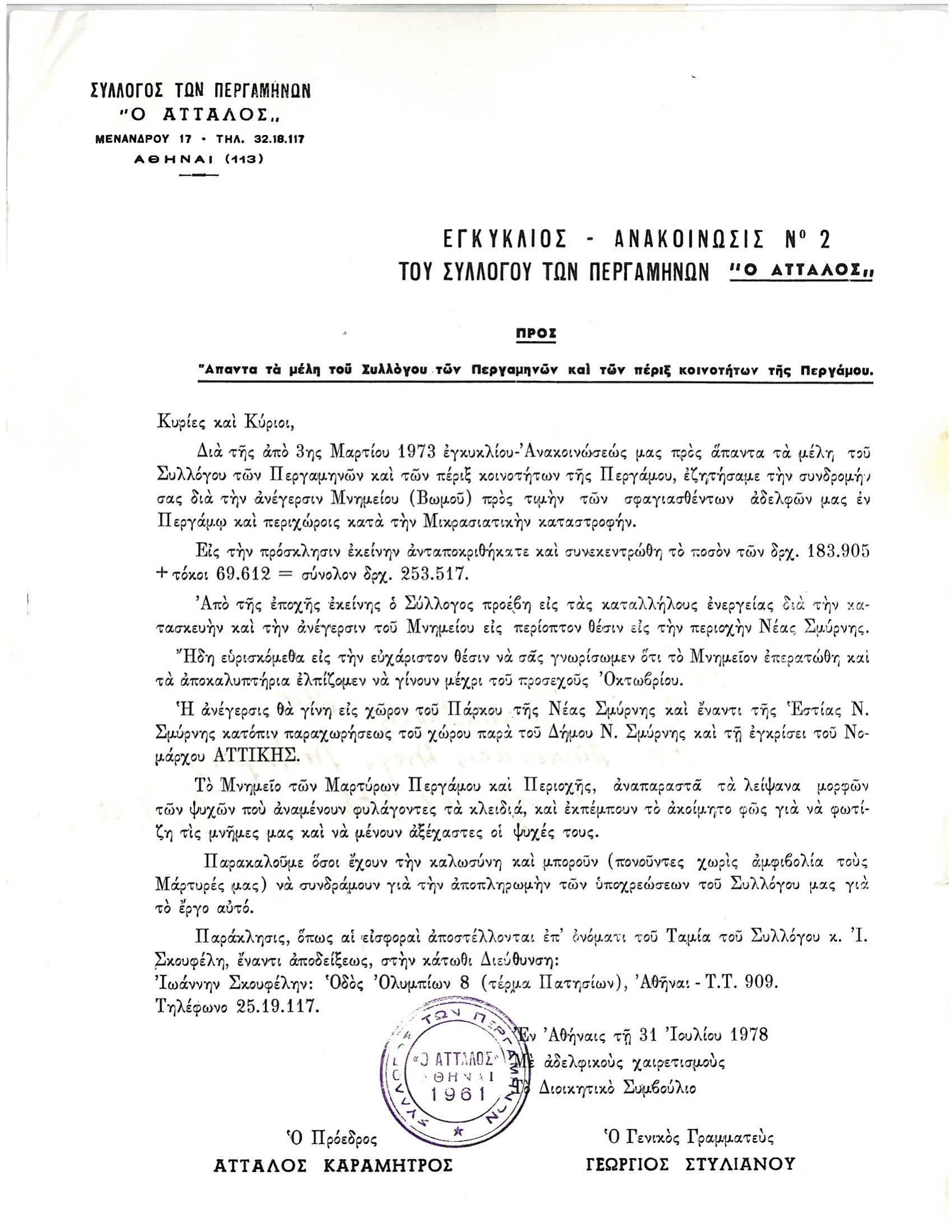
Decades later, a 1978 circular from the Athens Association of Pergamenes “Attalos” — a Pergamene-diaspora memorial association — reached the family archive. Its President was a man named Attalos Karamitros: same surname as Eftyhia (in its masculine form), Pergamene leadership role, first name “Attalos” deliberately echoing the ancient Pergamene Attalid kings. He was almost certainly a Karamitrou relative. The mailing was addressed at the period Constantine was living in Santo Domingo, which suggests Constantine maintained contact with his maternal Pergamene cousins through to the end of his life.