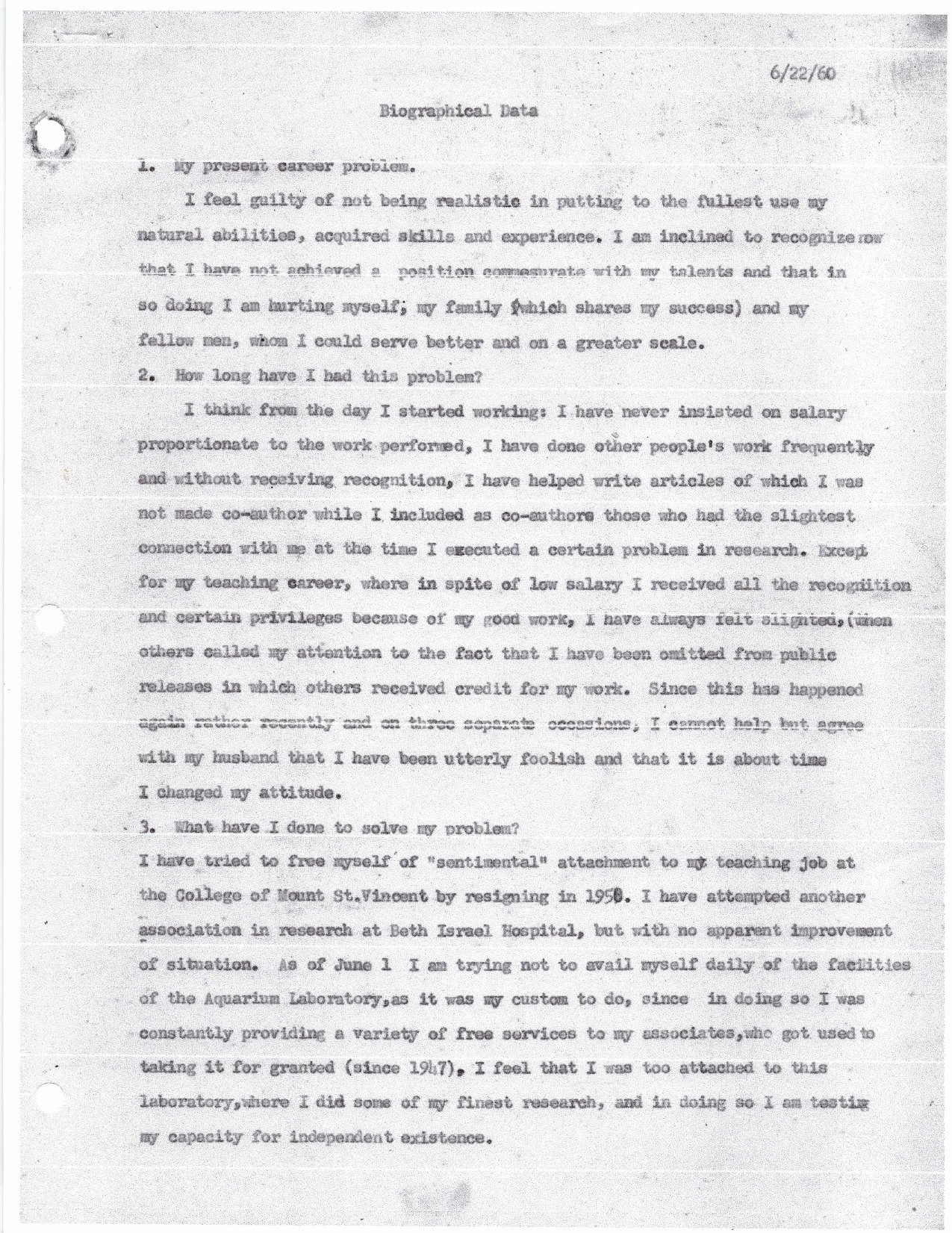
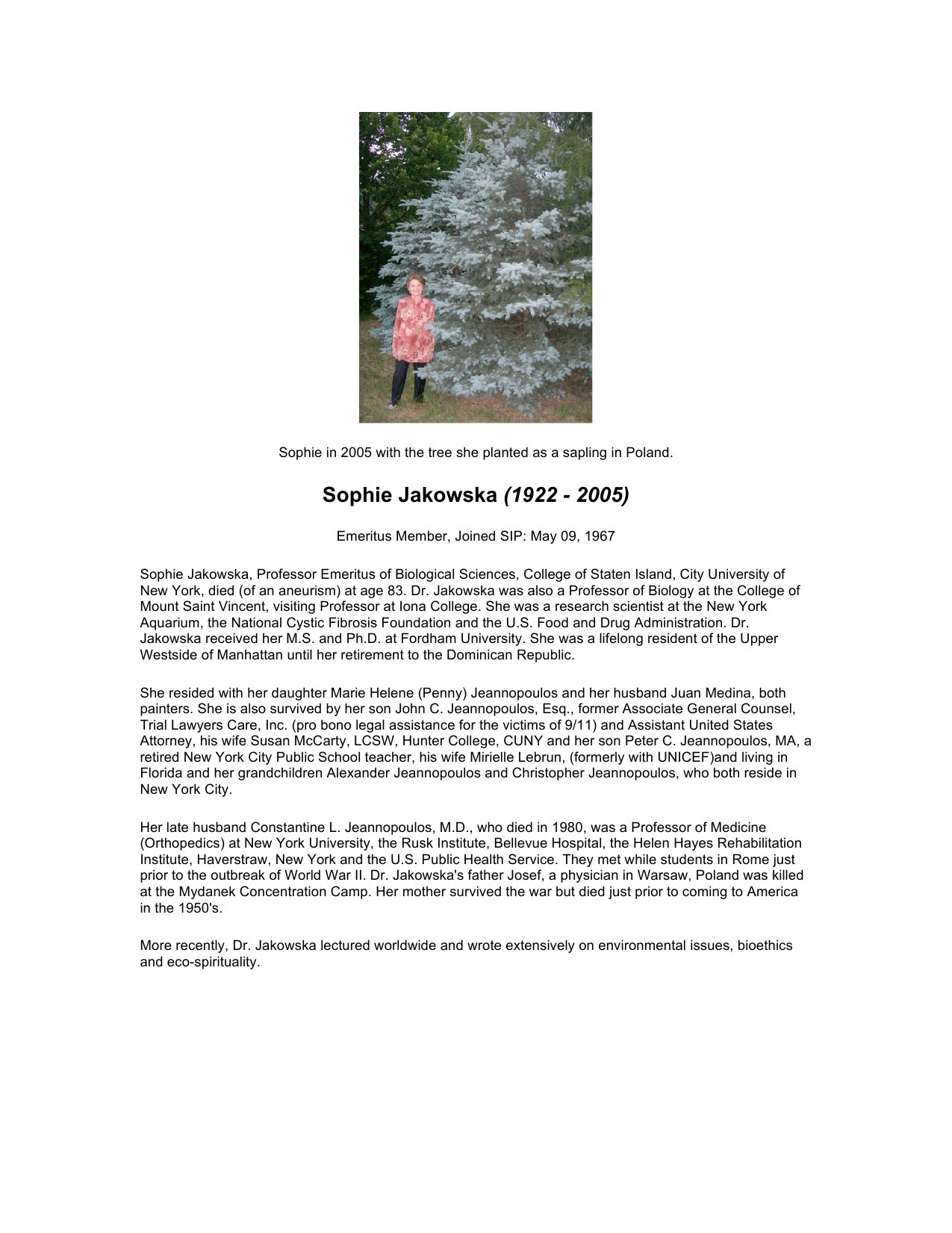
She was born Zofia Julia Teresa Jakowska, in Warsaw, on February 12, 1922 — a date she anchored herself, in her own hand, in 1960, after a 2005 obituary tried to push it three weeks earlier.
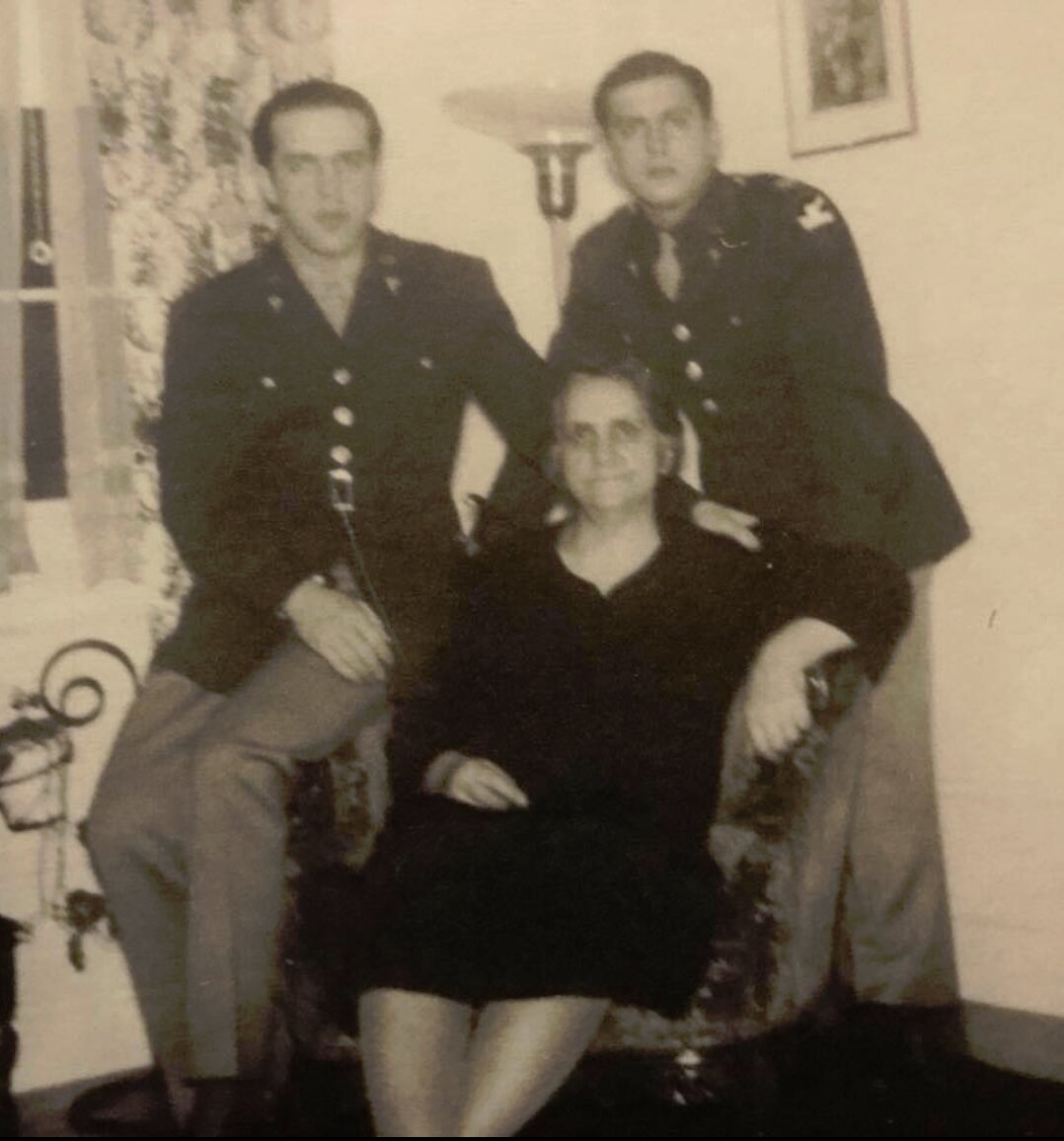
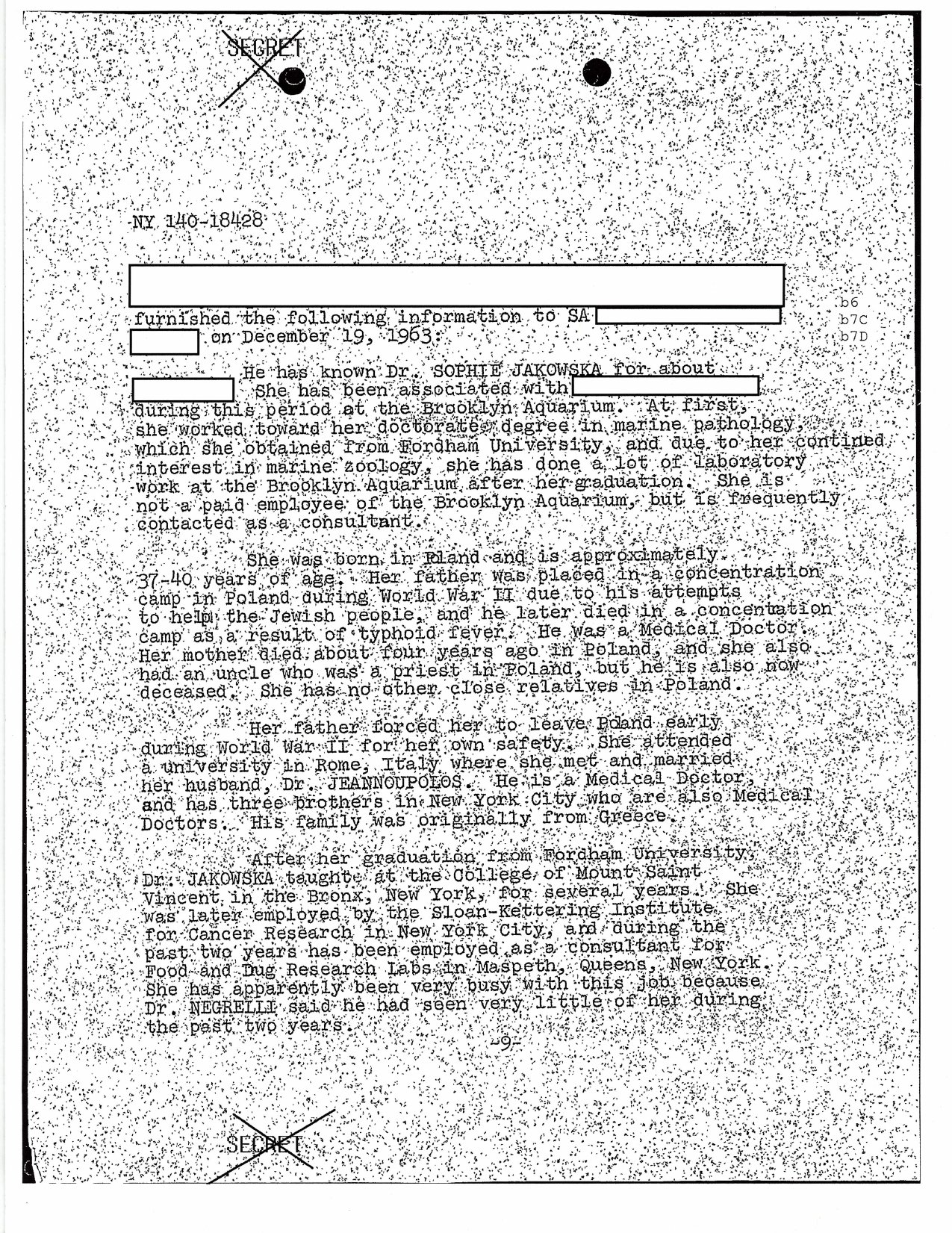
Her father Josef Jakowski was a Warsaw obstetrician. When the Germans came, he was sent to Majdanek — the Nazi concentration camp on the outskirts of Lublin, in occupied Poland — for helping Jewish patients; the FBI sources that later compiled her background record his cause of death there as typhoid. Her mother Maria Świergocka survived the war, but died in Poland around 1959 on the eve of her planned emigration to America. By the early 1960s Sophie had no close living relatives left on the Polish side.
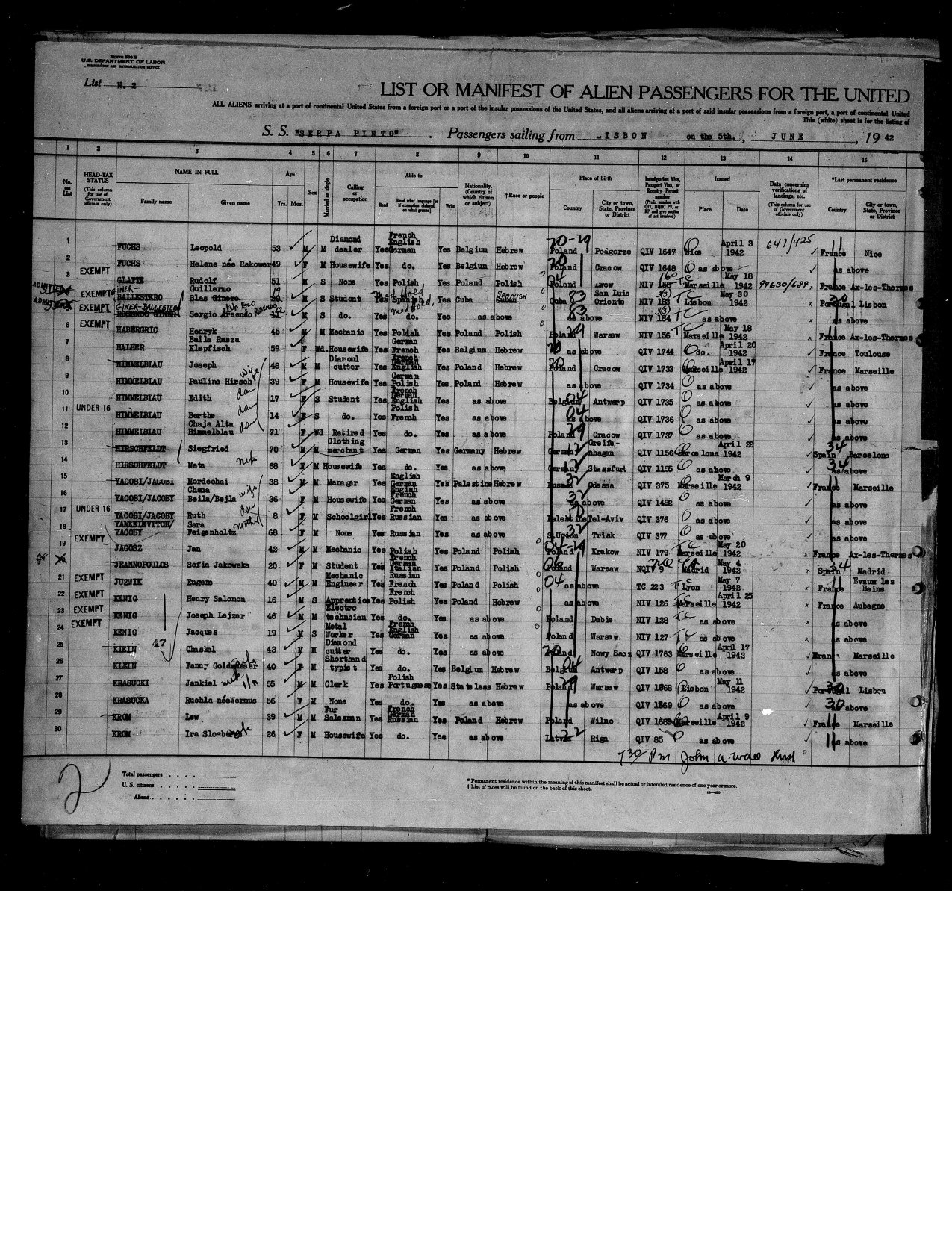
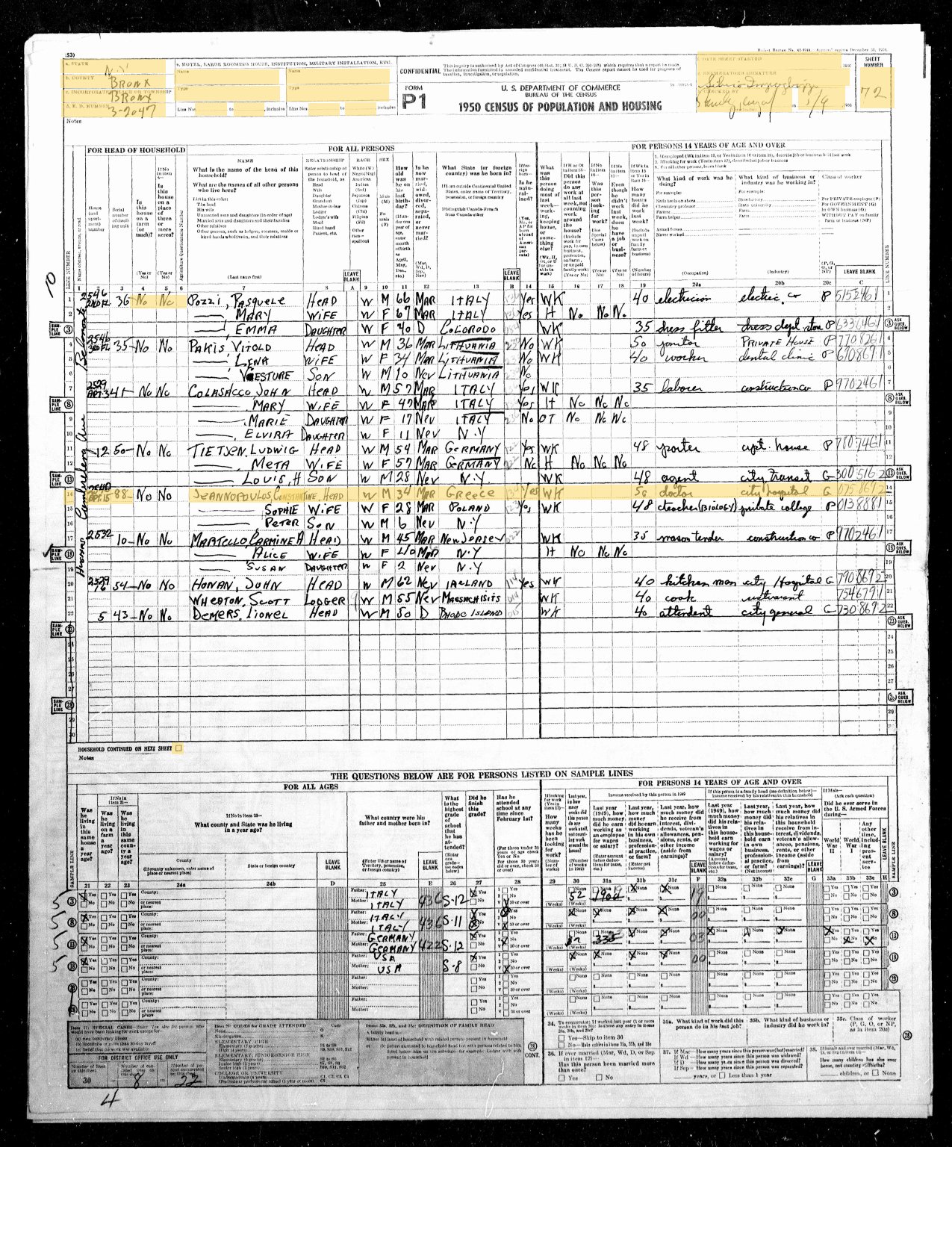
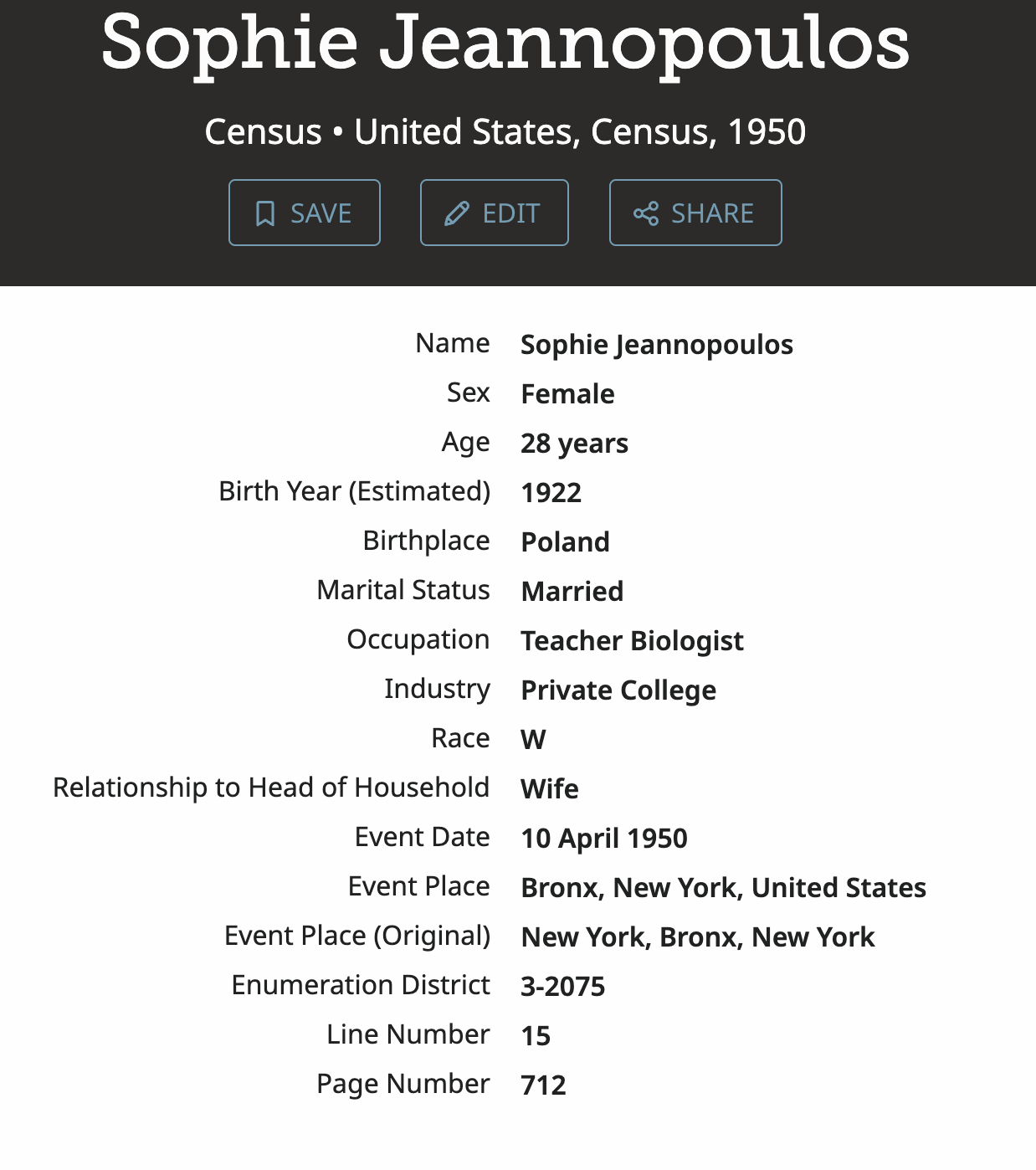
She met Constantine Jeannopoulos as a fellow student at the University of Rome in the late 1930s — Mussolini’s Rome, on the eve of WWII. They married there on June 11, 1941, six weeks before he sailed for New York. Sophie had to get out of Europe on her own. She made it on the SS Serpa Pinto from Lisbon, arriving New York June 5, 1942, at 20, with Évian-les-Bains, France on the manifest as her last European residence.
The 1944 political voice
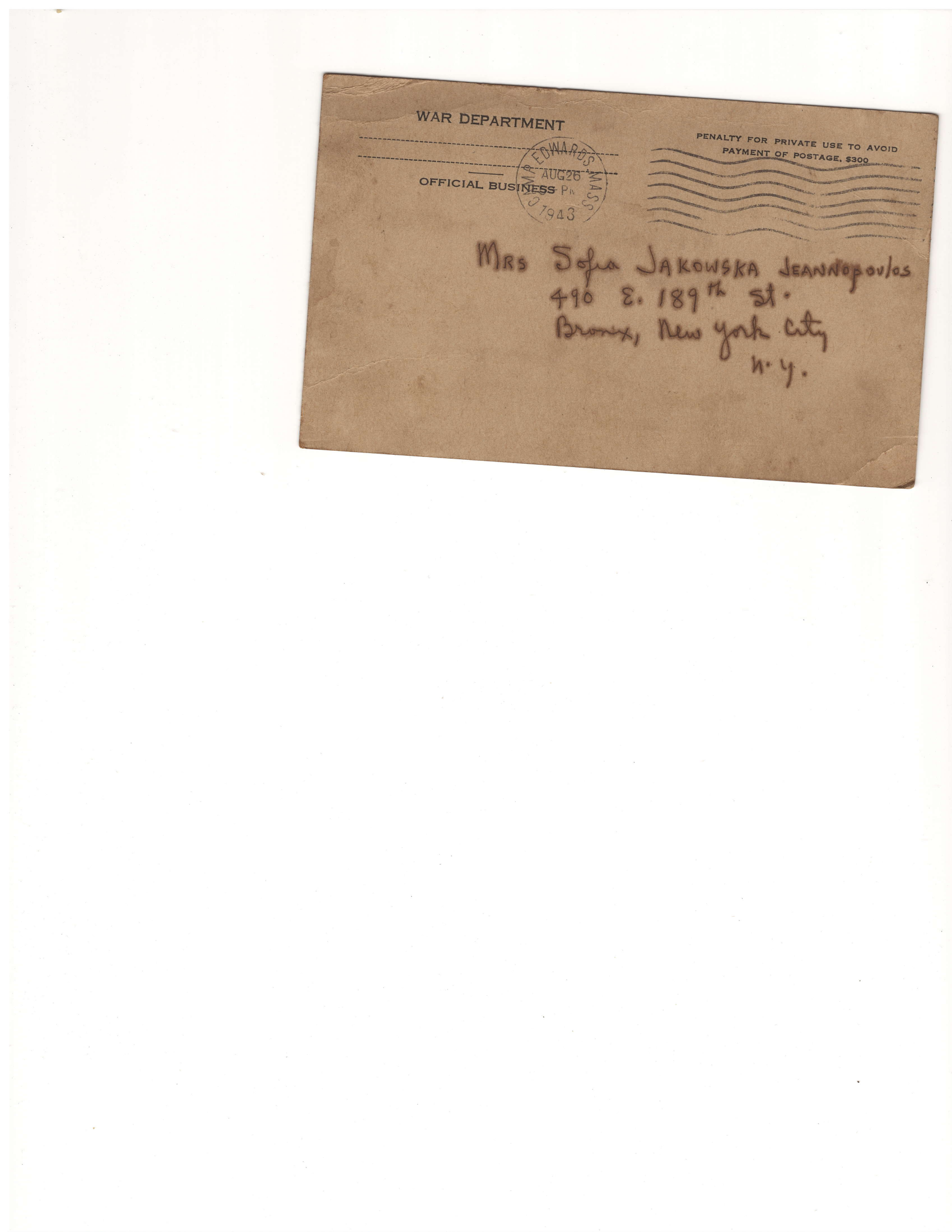
Two years after she stepped off the boat — at the age of twenty-two, before she had even taken a graduate degree — Sophie was already in the national American press. On May 4, 1944, the Daily News of New York ran her letter to the editor under the headline “Orlemanski Episode,” attacking Father Stanislaus Orlemanski’s controversial trip to meet Stalin in Moscow:
“Father Stanislaus Orlemanski’s trip to Russia was a twofold phony. He played unfairly with the Catholic Church by leaving his residence without his bishop’s permission to conspire against Poland, a Catholic country. And he double-crossed humanity by favoring Red tyranny over Poland. American Catholics in general and the Poles in particular will laugh this whole business out as a Red devil show.” — Sophie Jakowska, Bronx, NY · Daily News, May 4, 1944
Three weeks later it was reprinted in the Times Herald of Washington DC under a headlined box of its own. The political voice — anti-Soviet, fiercely pro-Polish-Catholic — was active and nationally syndicated by the time Sophie had been in America two years. It would carry through to her anti-Trujillo activism in the Dominican Republic decades later. Her politics were a through-line, not a late-life emergence.
The scientific career
She completed her PhD at Fordham University in June 1947, at 25, under faculty advisor Dr. E.R. Witkus of the Biology department; the dissertation, “A Study of Abnormal Growth Responses in Allium Cepa”, used the common onion as a model for plant-tumor biology under Agrobacterium tumefaciens infection — work that bridged into the fish-cancer research she would do with Ross F. Nigrelli at the NY Aquarium just three years later (their 1951 British Journal of Cancer paper with Myron Gordon, “The Invasion and Cell Replacement of One Pigmented Neoplastic Growth by a Second, and More Malignant Type in Experimental Fishes,” is one of her earliest preserved publications).
She built a long American scientific career thereafter: Sloan-Kettering Institute, the College of Mount Saint Vincent (associate professor of biology, resigning in 1959), the National Cystic Fibrosis Research Foundation (helping establish the national Network of Cystic Fibrosis Centers and a pioneering computer-aided Patient Data Registry), the Food and Drug Research Laboratories as Head of Pathology, Brookhaven National Laboratories, visiting professor at the Graduate School of Arts and Sciences at St. Louis University, and a senior emeritus appointment at CUNY College of Staten Island. She organized and edited five NY Academy of Sciences international symposia, published more than 100 articles in American and foreign journals, spoke nine languages, and delivered a 1962 paper in Portuguese in Brazil.
The single most consequential paper of her career was the 1959 Ectyonin discovery (she was 37) — with Ross F. Nigrelli of the NY Aquarium and Idelisa Calventi, she isolated an antimicrobial compound from the red-beard sponge Microciona prolifera. Published in Zoologica 44:173 (Dec 31, 1959) and covered the next month on the front page of the Tampa Bay Times: Ectyonin was effective against gram-positive, gram-negative, and acid-fast bacteria — including the Pseudomonas pyocyanea responsible for “blue pus” infections — and proved non-toxic to fish or mice in early animal trials. One of the early marine-derived antimicrobials, a working contribution to mid-century pharmacology, and a piece of marine-biology history.
The Ectyonin paper also rewrote the family’s later geography. Dr. Idelisa Bonnelly de Calventi (b. 1935) — her full name resolved in May 2026, with “Bonnelly” as her maiden name — was the family’s earliest documented Dominican-connected friend. Idelisa would go on to found CIBIMA (the Centro de Investigaciones de Biología Marina at UASD) and is regarded as the founder of Dominican marine biology. Twenty years after the Ectyonin paper, when Sophie and Constantine retired together to Santo Domingo, Idelisa’s scientific establishment was the bridge that made the country feel like home. Sophie’s later Dominican book En una isla como la nuestra would carry a prologue by Idelisa — the relationship spanned from 1959 New York co-authorship through to Dominican-government-published prologues, at least three decades of sustained scientific partnership. When Constantine died in Santo Domingo in 1980, the certifying physician on his death certificate was Dr. Vinicio Calventi — a relative on Idelisa’s married side.
The American homemaker
Sophie and Constantine had three children: Peter (b. 1943), John C. (b. 1953), and Marie Helene “Penny” (b. 1960). She became a US citizen on April 21, 1947, Certificate of Naturalization No. 6705767, NYC, in her married name. They moved between addresses in the Bronx and the Upper West Side; 27 West 96th Street, Apt 8-D was their late-Manhattan home.
Late in life her work pivoted from clinical pathology to environmental issues, bioethics, and eco-spirituality, on which she lectured worldwide. She was a devout Roman Catholic.
Sophie and Constantine moved to Santo Domingo together in the late 1970s — a fact corrected on this record in May 2026 by their daughter Penny, after earlier drafts had implied Sophie moved separately. Constantine died there in 1980. Sophie continued to live in Santo Domingo with Penny and son-in-law Juan Medina until her own death on December 4, 2005, in a hospital in Santo Domingo — the day after her grandson Alex’s wedding in St. Martin.
Four books, two languages, three countries
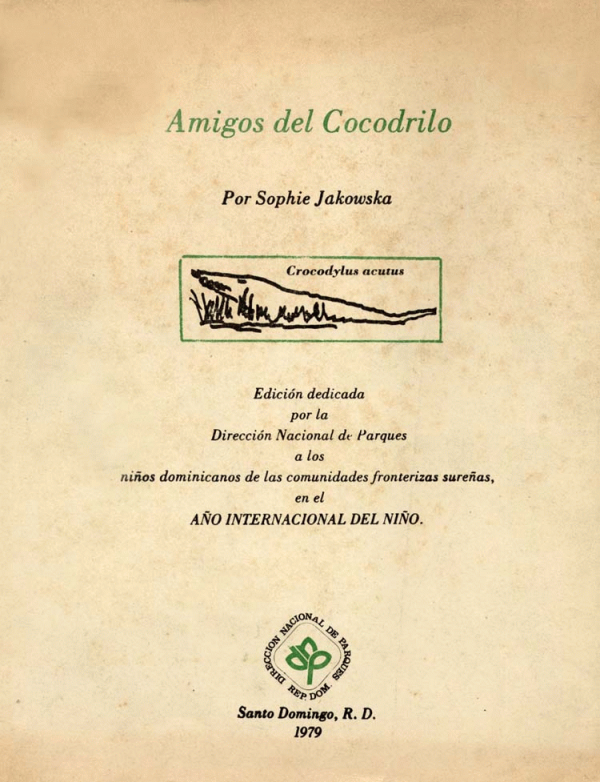
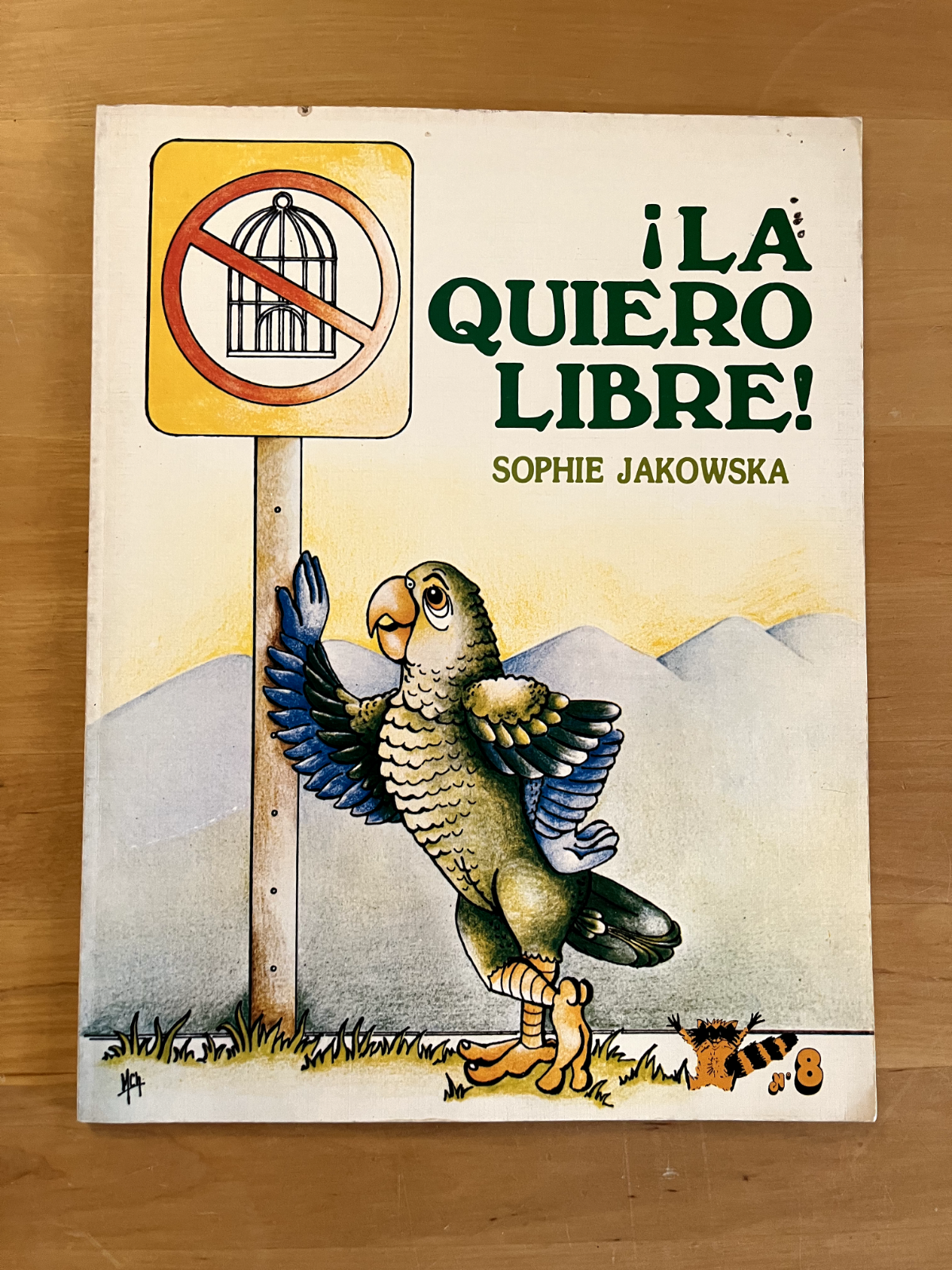
Sophie wrote at least five books across the late stretch of her career: Cystic Fibrosis and Related Human and Animal Diseases (Gordon and Breach, New York, 1970 — her US clinical years); Hijos de la Tierra (Ediciones de Taller, Santo Domingo, 1978 — her literary début in Spanish, a year after she moved); Amigos del Cocodrilo (Dirección Nacional de Parques, Santo Domingo, 1979, prologue by Merilio G. Morell — an official Dominican-government environmental publication, dedicated to Dominican girls of the northern border communities in the UN International Year of the Child); En una isla como la nuestra (CIBIMA + Secretaría de Estado de Agricultura, with prologue by Idelisa Bonnelly de Calventi); and La Quiero Libre! (EUNED, San José, 1986 — a Costa Rican children’s conservation book in the Mapachín series, funded by the Tinker Foundation). The language switch is sharp — English to 1970, Spanish only thereafter — and lines up exactly with her late-1970s move to Santo Domingo.
Beyond the books, her 2005 obituary’s “100+ articles” claim is anchored by three preserved publications that bracket the career: a 1953 Journal of Wildlife Diseases-era paper with Nigrelli describing two new species of Henneguya parasites in the electric eel (Sophie and Nigrelli as type authors); the 1988 Routledge chapter “The emerging conservation mystique in the Dominican Republic” — her most-cited Dominican environmental academic paper, framing Haitian desertification as the cautionary tale for Dominican conservation; and her last preserved piece, the 2001 Ciencia y Sociedad article “Conflictos ambientales — luchas sin vencedores”, written at 79 in the chronic-pain years, on the bioethics-of-environment frontier the Dominican government would commemorate her for six years later.
The Brazilian network — Fiocruz and Dyrce Lacombe
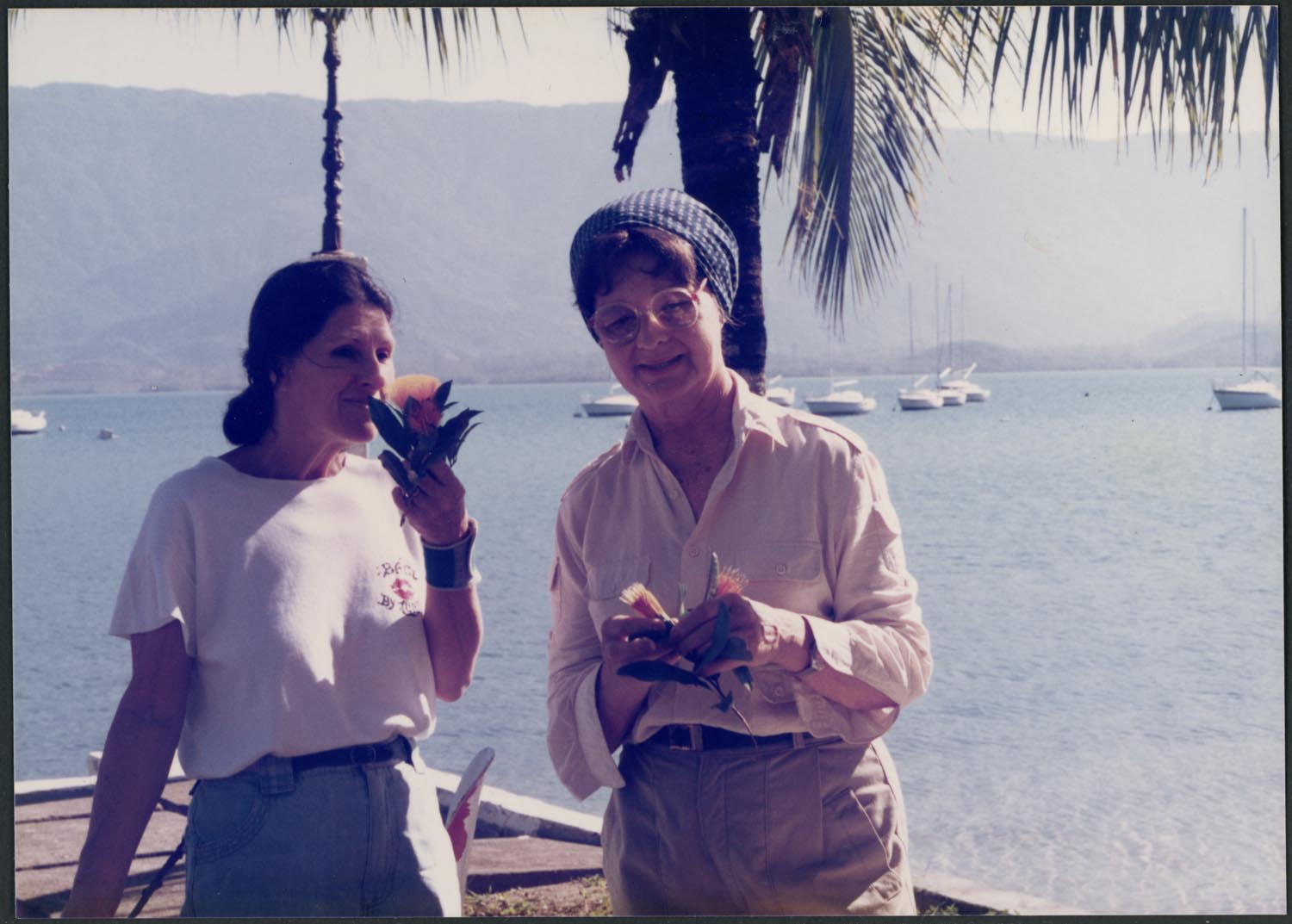
Sophie’s Brazilian connection is documented at the institutional level: the Casa de Oswaldo Cruz, the historical archive of Brazil’s national biomedical research foundation Fiocruz in Rio de Janeiro, preserves at least one letter in her hand and one photograph of her. Both are filed in the personal-documents series of Dr. Dyrce Lacombe (1924–2014), a Brazilian zoologist at Fiocruz who specialized in the Triatominae — the kissing-bug vectors of Chagas disease. The 1999 letter to Dyrce — written from Sophie’s Santo Domingo apartment six years before her death — brokers a young Dominican parks-architect colleague’s professional visit to Brazil, asks Dyrce to host him in Rio, and closes with a postscript about Dyrce’s triatomine specimens (“Tus Triatomíneos son preciosos”). The letter and the accompanying waterfront photograph survive together in the Casa de Oswaldo Cruz archive under catalog identifiers BR RJCOC DL DP IC 03.25 and DL-VP-RF-03-031.
Precursora de la Bioética — the 2007 Dominican stamp issue
Two years after her death, the Dominican Republic government issued a five-stamp commemorative postal series in her name. Authorized by Presidential Decree 333-06 of August 8, 2006, and released by the Instituto Postal Dominicano (INPOSDOM) on December 7, 2007, the series carries her photograph, her handwritten signature, and four of the Dominican wildlife species she championed (manatee, hawksbill sea turtle, Hispaniolan parrot, American crocodile). All five stamps bear the inscription “Dra. Sophie Jakowska (1922–2005) — Precursora de la Bioética” — Pioneer of Bioethics. For a Polish-refugee biologist who arrived in Santo Domingo in the late 1970s, it is an unusual posthumous honor: a foreign-born scientist commemorated by her adopted country’s national postal service as the founder of an entire field.